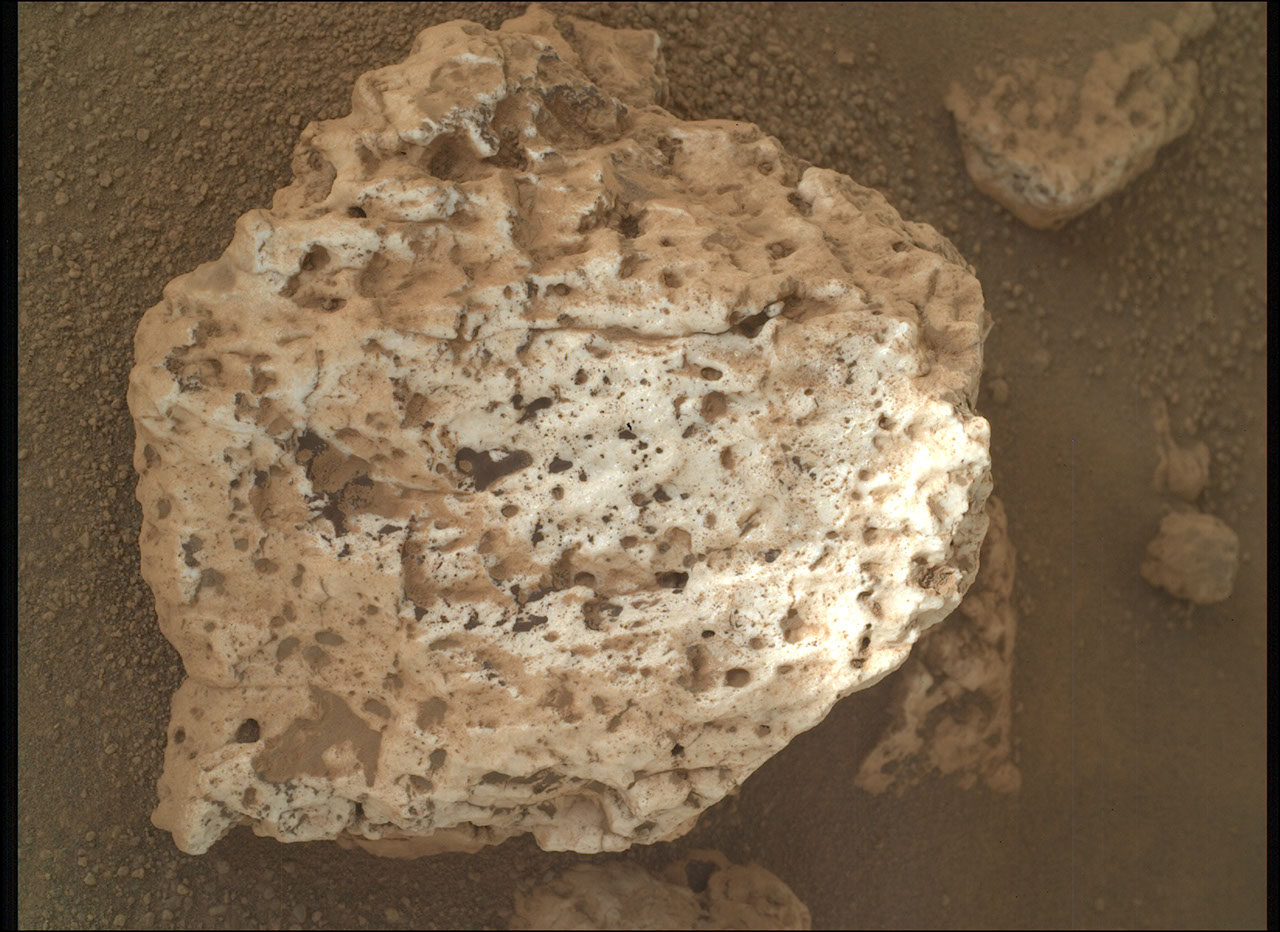
NASA’s Perseverance rover has made a sparkling discovery on the Red Planet: mineral crystals that exhibit luminescence characteristic of rubies. While not gemstones ready for jewelry, these findings provide scientists with a unique window into Mars’ violent ancient past, suggesting that massive meteorite impacts may have caused localized geological changes on the planet.
Unveiling Luminescence: A Ruby’s Glow on Mars
The Perseverance rover’s SuperCam instrument, designed to analyze Martian rocks and soil, detected an unexpected phenomenon: strong, narrow peaks of light at specific wavelengths when lasering a light-toned rock. This luminescence, occurring at 692.7 and 694.1 nanometers, originates from delayed atomic transitions in chromium atoms embedded within a corundum mineral structure. Corundum is the mineral that forms rubies when containing chromium and sapphires with other elements. The SuperCam team confirmed that this emission indeed came from chromium within corundum, a finding published earlier this year in Geophysical Research Letters.
Impacts and Metamorphism: Rewriting Martian Geology
The presence of corundum, a mineral typically formed through metamorphism or in pegmatitic environments, is surprising for Mars, a planet lacking active plate tectonics. However, scientists theorize that the intense heat generated by large meteor and asteroid impacts could create localized areas of metamorphism. The rover is exploring an ancient terrain near the rim of Jezero crater, an area likely to bear the scars of such cosmic collisions. As the first mission to extensively study this type of terrain, Perseverance is revealing unexpected geological processes that shaped the Red Planet billions of years ago. The team is now frequently using this time-resolved luminescence technique on light-toned rocks to find more evidence of past impact events.
Source: NASA