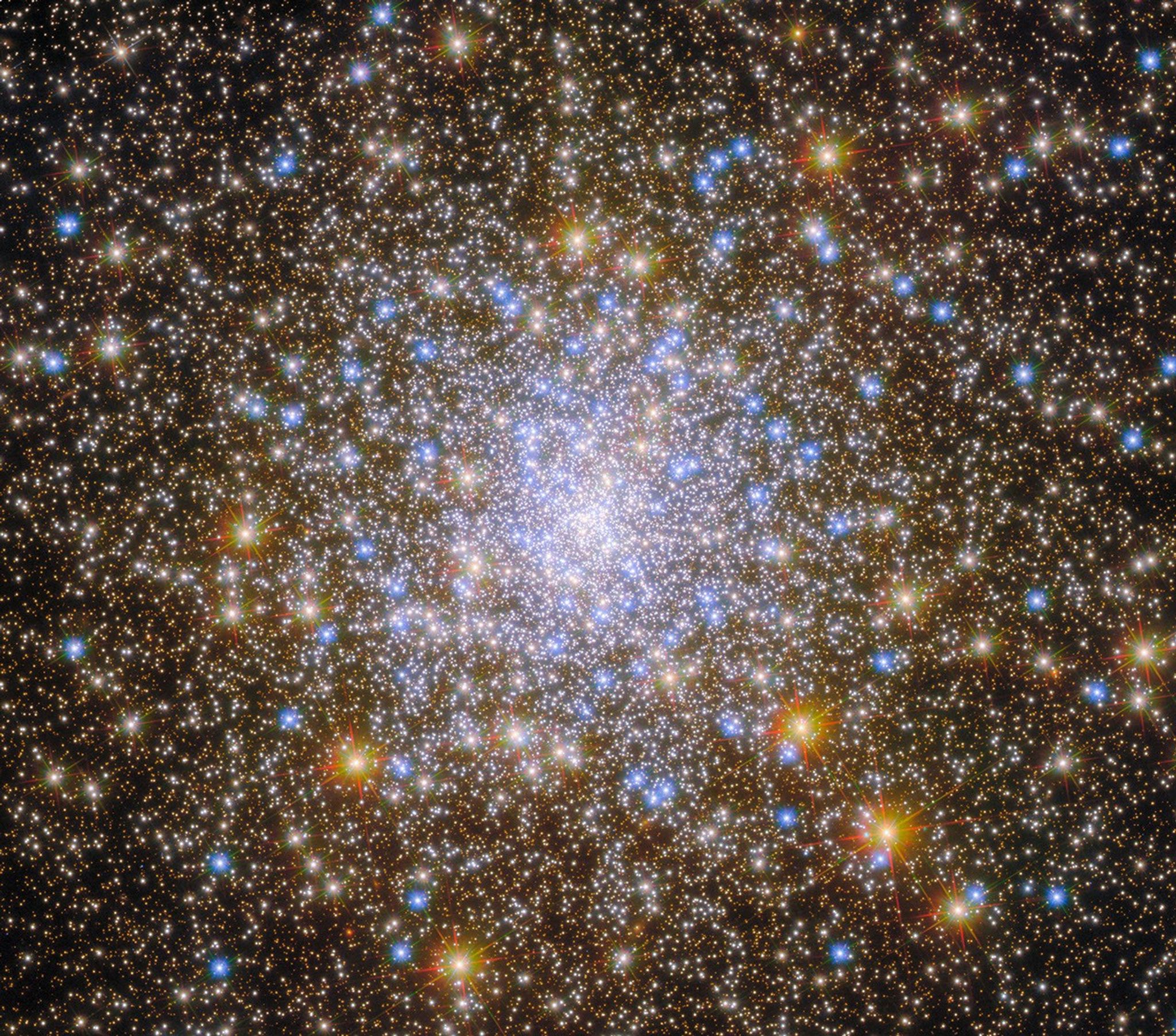
NASA has released a breathtaking image captured by the Hubble Space Telescope, showcasing the dense and ancient globular star cluster known as M30. Located approximately 26,000 light-years away in the constellation Capricornus, M30 is a treasure trove of stars, with its core being particularly rich.
Globular clusters are spherical collections of hundreds of thousands to millions of stars, tightly bound by gravity. They are among the oldest structures in the galaxy, offering astronomers a unique window into the early universe. M30 itself is estimated to be around 10 billion years old.
The Hubble image highlights the extreme density of stars within M30’s core. The close proximity of these stellar bodies creates a dazzling display, with countless points of light merging into a luminous haze. This central region is a subject of intense study, as it is believed to contain a significant population of stellar remnants, such as white dwarfs and possibly even a central black hole, though the latter remains a topic of ongoing research.
Hubble’s advanced capabilities allow it to resolve individual stars even in the crowded heart of M30, enabling scientists to study their properties, ages, and chemical compositions. Such observations are crucial for understanding stellar evolution and the formation and dynamics of galaxies.
This recent unveiling of M30’s sparkling stars by NASA, through the lens of the Hubble Space Telescope, continues to enrich our understanding of the cosmos and the fascinating objects it holds.