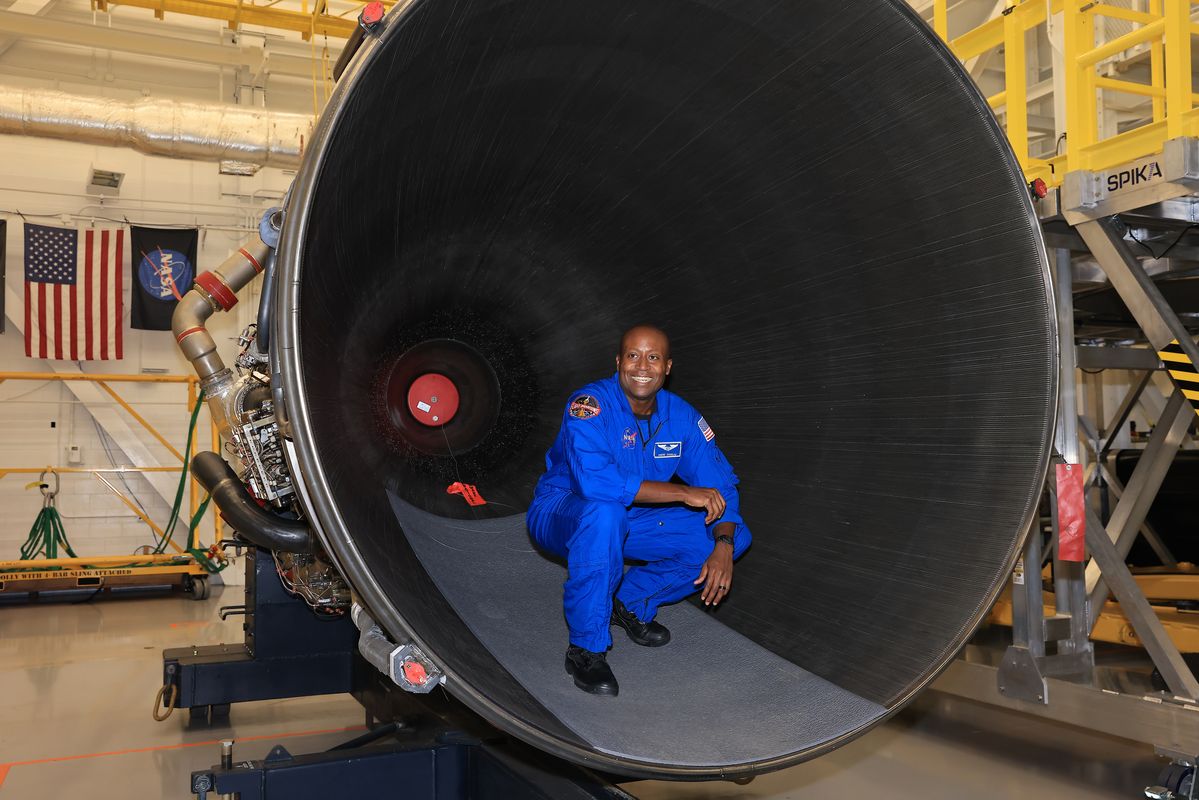
NASA astronaut André Douglas, a specialist assigned to the Artemis III mission, recently visited the Vehicle Assembly Building (VAB) at Kennedy Space Center in Florida. This visit marks a significant step in preparations for the Space Launch System (SLS) rocket’s launch, which will conduct critical docking tests of the Orion spacecraft with the lunar lander in low Earth orbit. This phase is considered key for the planned human return to the Moon under the Artemis IV mission.
Tour of the Vehicle Assembly Building
During his November 17, 2026 visit, Douglas gained an in-depth look at one of the RS-25 engine test stands. The RS-25 is one of the four powerful engines that will propel the SLS rocket during the Artemis III mission. This exclusive inspection provided the astronaut with a deeper understanding of the technology and mechanisms behind one of the world’s most powerful rocket systems.
Significance of Artemis III for Lunar Exploration
The Artemis III mission signifies a new era for human lunar exploration, returning astronauts to the Moon after decades. Its primary objectives include:
- Conducting docking and system tests of the lunar lander in low Earth orbit.
- Laying the groundwork for future crewed landings on the lunar surface.
- Demonstrating the technologies and skills necessary for sustained human presence on the Moon.
- Preparing for the broader expansion of space exploration, including the Artemis IV program.
These complex operations are vital for NASA’s subsequent steps in building a sustainable lunar presence and advancing humanity’s reach into the solar system.