NASA’s Curiosity rover is gearing up for its next significant scientific endeavor on Mars, focusing on a region nicknamed ‘Nazca’ that exhibits intriguing crystal formations. This mission aims to unlock clues about Mars’ ancient environment, including its past temperature and fluid availability.
Unveiling ‘Nazca’s’ Secrets
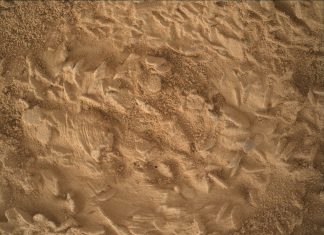
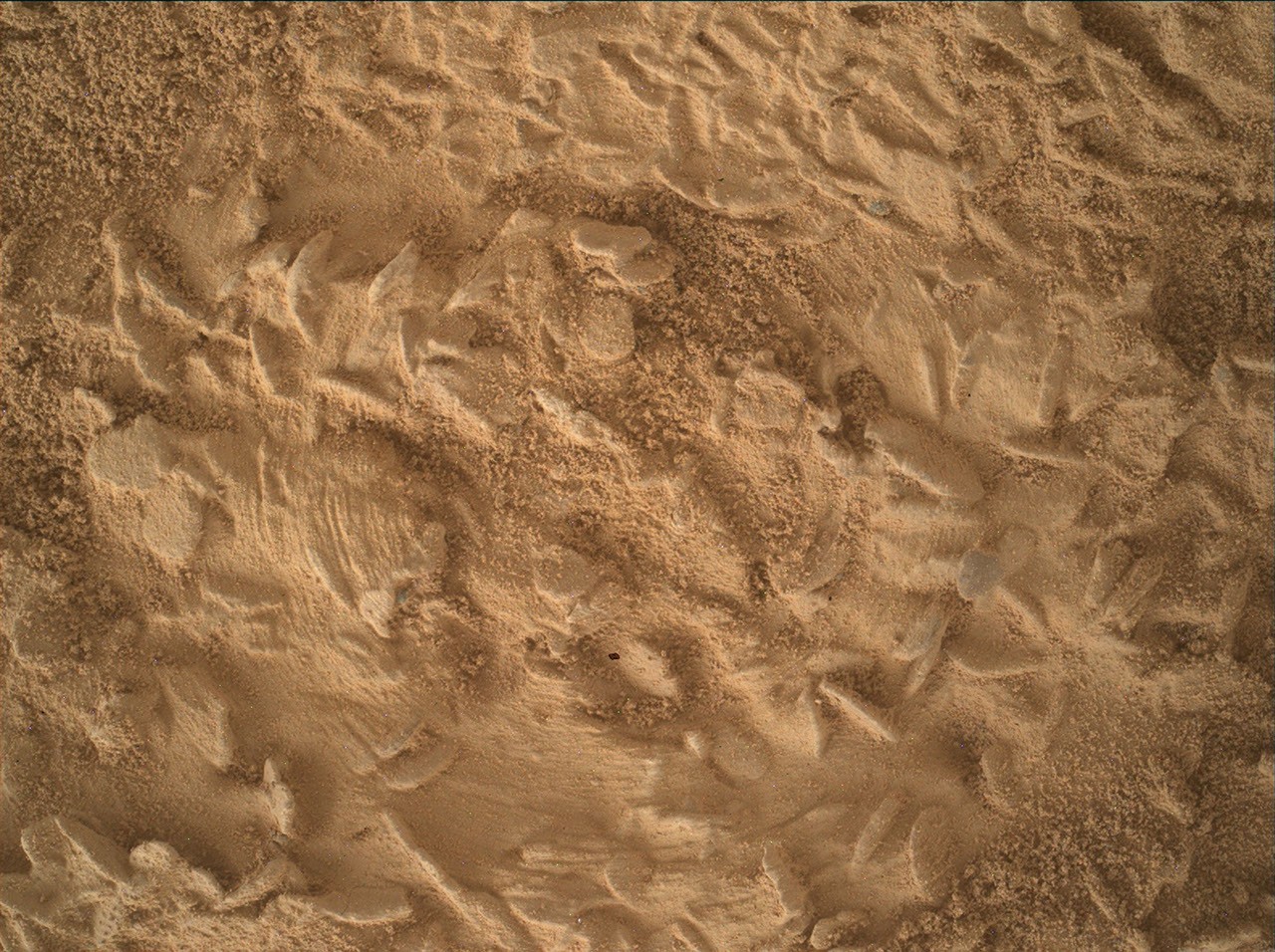
Following its exploration of the ‘Basque Lakes’ area, Curiosity has moved a short distance to investigate a promising new target. This location, now informally named ‘Nazca,’ features an abundance of disc- and needle-shaped mineral formations. Scientists believe these formations are remnants of crystal growth, offering insights into the conditions under which they formed billions of years ago. The size and shape of these mineral structures can help researchers deduce the temperature at the time of their crystallization and the prevalence of salts and fluids in ancient Martian water.
Advanced Analysis Techniques
To thoroughly investigate ‘Nazca,’ Curiosity will employ a suite of sophisticated instruments. The Mars Hand Lens Imager (MAHLI) will capture high-resolution, multi-focus images to create detailed 3D models of the crystal formations. Additionally, the ChemCam instrument will conduct a ‘depth profile’ experiment using its laser to vaporize small amounts of rock. This technique will allow scientists to analyze the composition of the crystal formations at different depths, revealing whether the interior composition differs from the surface, which could be altered by Mars’ modern environment or the original crystallization process.
Before the drilling operation, the rover’s instruments, including the Laser-Induced Breakdown Spectroscopy (LIBS) and the Alpha Particle X-ray Spectrometer (APXS), will conduct comprehensive surface composition analyses on ‘Nazca.’ Another nearby rock target, ‘Condor,’ which displays a finely layered texture, will also be examined by the LIBS instrument. As part of its ongoing environmental monitoring, Curiosity will also capture images of Mars’ moon Phobos, which can help scientists estimate the size of particles in Martian clouds during the twilight cloud season.
Source: NASA