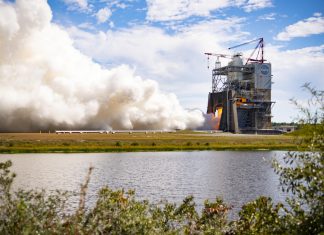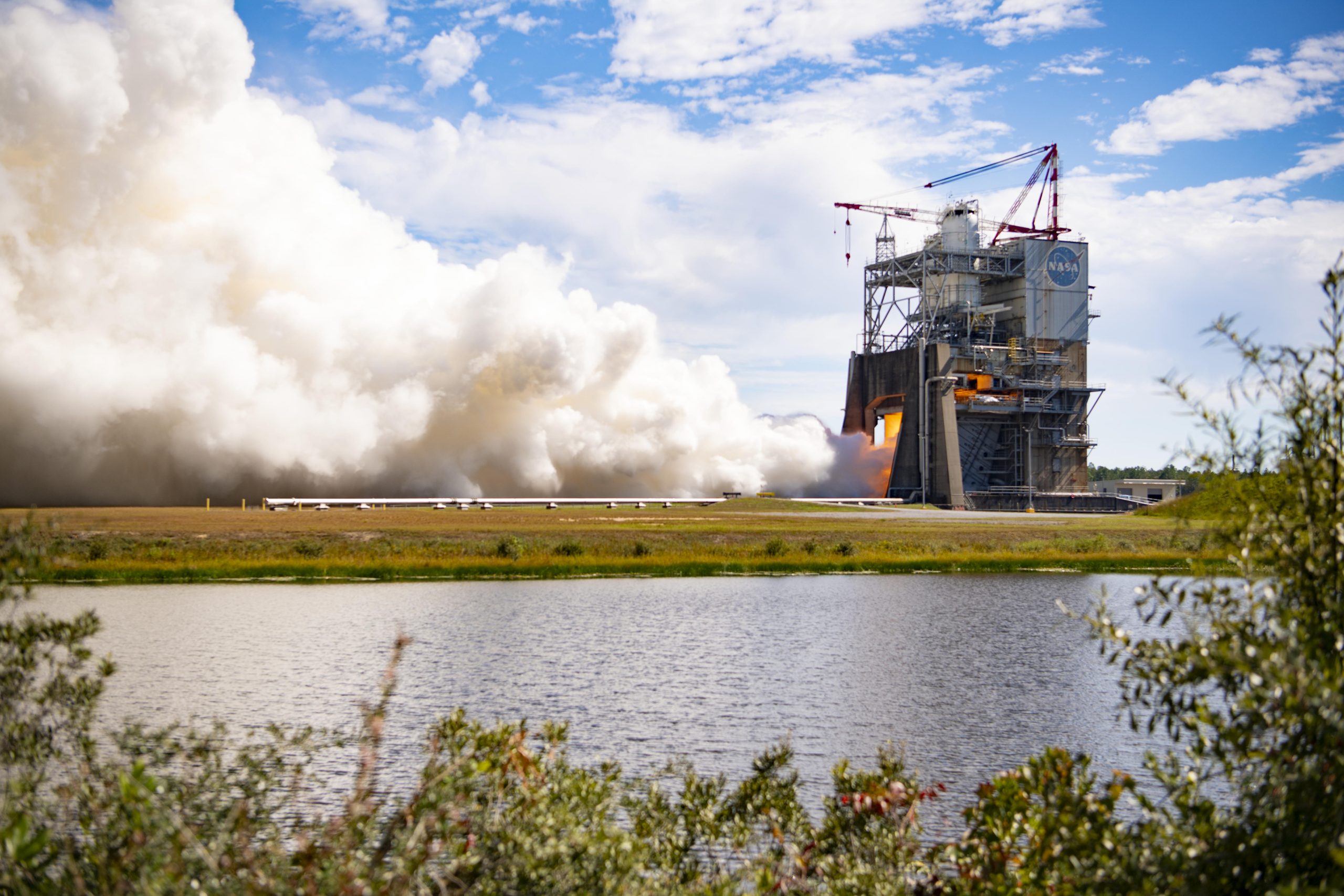
NASA’s Stennis Space Center has successfully conducted a crucial hot-fire test of an RS-25 engine, a vital component for the Space Launch System (SLS) rocket that will propel astronauts to the Moon. The eight-and-a-half-minute test, which simulated the full duration of an SLS launch, pushed the engine to 111% of its power level, demonstrating its readiness for the ambitious Artemis missions.
Powering Lunar Journeys
The RS-25 engines are the powerhouse behind the SLS rocket, generating an immense combined thrust of up to 2 million pounds. During each Artemis launch, four of these engines work in tandem to lift the massive rocket off the launchpad. Ensuring the flightworthiness of these engines is paramount, and Stennis Space Center serves as the critical testing ground. This latest developmental engine test, while not destined for flight, is instrumental in gathering vital data to further enhance the performance and reliability of the engines that will carry humanity back to the lunar surface.
Data-Driven Advancements
The successful hot-fire test provided NASA and its prime engine contractor, L3Harris Technologies, with invaluable insights. By meticulously analyzing the data captured during the extreme conditions of the test, engineers can refine engine design and operational parameters. This continuous improvement cycle is essential for the success of the Artemis program, aiming to establish a sustainable human presence on the Moon and prepare for future deep-space exploration.
Source: NASA