NASA is enhancing the safety and reliability of its space missions by revolutionizing how it analyzes the intense forces that rockets and spacecraft endure during launch. Engineers at Kennedy Space Center have developed a new, standardized workflow for shock and vibration analysis, leveraging advanced digital software to predict and mitigate potential risks before hardware even leaves the launchpad. This innovation promises to make launches safer and more efficient, ensuring delicate scientific instruments and critical components can withstand the rigors of spaceflight.
Predicting the Unseen Stresses of Ascent
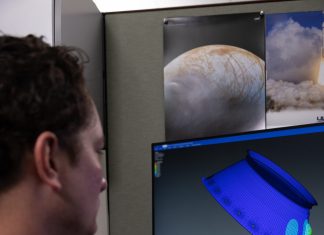
The journey into space is an extreme test for any spacecraft. Rockets experience violent shaking, bending, and immense stress as they punch through Earth’s atmosphere. To ensure that everything from intricate scientific payloads to the rocket itself survives this ordeal, NASA engineers meticulously analyze these forces. The Dynamic Environments Group at NASA’s Launch Services Program Office has adopted a commercial digital software tool, applying it in a novel way to create a standardized modeling workflow. This approach uses finite element modeling to predict how rockets and spacecraft will behave under extreme conditions. By simulating these stresses, engineers can identify weak spots and potential failure points early in the design process, allowing them to make necessary adjustments on the ground, where corrections are feasible.
A Smarter, Faster Approach to Verification
Previously, engineers relied on estimations and scaling data from past missions, a method that, while functional, was heavily dependent on engineering judgment and approximations. This new standardized workflow replaces older, more cumbersome tools, offering a guided template that significantly streamlines the complex process of analyzing vibration profiles and shock conditions. Finite element analysis, the core of this new method, breaks down complex structures into smaller elements, allowing computers to accurately predict a spacecraft’s response to specific forces and launch environments. This digital foresight is crucial because once a rocket is launched, most issues are irreparable. The team recently utilized this new workflow to certify a commercial launch provider’s rocket, gaining valuable insights into shock during transport and verifying the provider’s testing results for flight environments. This advanced analysis has already saved months of work by enabling independent analysis and the identification of previously unconsidered risks, ultimately boosting mission assurance.
Source: NASA