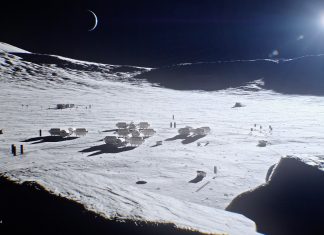
NASA is significantly bolstering its lunar exploration ambitions with a series of new investments and mission updates focused on expanding research capabilities, scientific projects, and infrastructure for a future moon base. These moves, driven by a resurgence of global interest in lunar settlement, include advancing commercial robotic delivery services, initiating the PROMISE nuclear-powered rover, and developing robust transportation systems for both orbital cargo and surface delivery. The agency is actively collaborating with American industry to establish a sustainable presence on the Moon’s south pole.
CLPS Enters New Phase for Commercial Moon Deliveries
To strengthen its network of cargo landers essential for supporting a lunar base, NASA has selected eight companies to advance to the next stage of its Commercial Lunar Payload Services (CLPS) initiative. These companies will compete for future cargo delivery missions to the lunar surface under the new CLPS 2 program. The selected companies include:
- Blue Origin
- Firefly Aerospace
- Intuitive Machines
- iSpace US
- Lockheed Martin Space
- Northrop Grumman Space Systems
- SpaceX
- Voyager Technologies
Under CLPS 2, these companies will provide lunar delivery services, encompassing the management, development, and operation of landers tasked with transporting NASA’s scientific instruments, technologies, and infrastructure components. The CLPS 2 blanket contract is valued at up to $10 billion over 10 years. The existing CLPS 1.0 contract value was also increased from $2.6 billion to $4.2 billion to support initial base objectives.
PROMISE: A Nuclear Rover for Lunar Exploration
NASA has also announced continued development of the PROMISE (Polar Rover for Observation, Mapping, and In-Situ Exploration) rover. This six-wheeled vehicle, equipped with scientific instruments and technology demonstrators, is slated to land on the lunar south pole to investigate the surface and subsurface, assess resources, and gather data crucial for selecting landing sites and informing future research missions. The nuclear-powered rover is designed to operate through extended lunar nights and in permanently shadowed regions, areas believed to hold vital water ice – a key resource for sustained human presence on the Moon.
NASA’s Jet Propulsion Laboratory in Southern California will manage the mission and construct the PROMISE rover, leveraging existing components and engineering models from the Curiosity and Perseverance Mars rovers. This approach aims to significantly reduce costs and expedite integration and testing of the complex PROMISE rover. NASA has conducted compatibility assessments confirming component resilience to the harsh environmental conditions near the lunar south pole. PROMISE will feature a regolith drill, spectrometers, temperature and radiation sensors, and visible-light cameras. The rover is anticipated to launch in late 2028, with a mission duration of 18 months. Blue Origin has secured a $94 million contract (with an option for an additional $140 million) for PROMISE’s lunar delivery.
Transportation Network: From Earth to the Moon
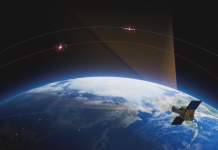
Establishing a lunar base necessitates a reliable transportation system connecting Earth and its natural satellite. Orbital Transfer Vehicles (OTVs) will serve as long-range cargo haulers in space, with landers providing the final delivery to the surface. NASA has awarded six agreements under the Venture-Class Acquisition of Dedicated and Rideshare (VADR) contract for launch services. These contracts have been awarded to Arrow Science and Technology, Blue Origin, and Impulse Space for integrating and transporting cargo for the lunar base. This will offer NASA the flexibility to launch scientific and technology demonstrations as they become ready.
Source: NASA