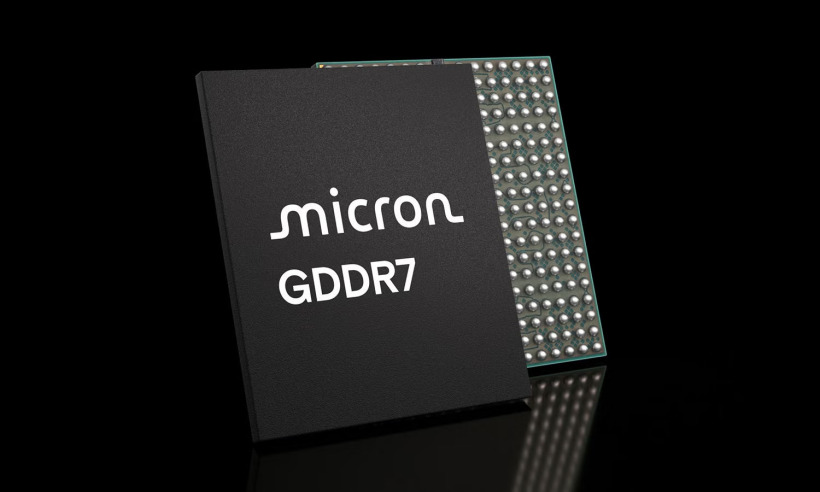
Micron Technology, a leading name in memory solutions, has apparently ended the lifecycle for its officially listed 16Gb GDDR7 memory products. This development, as noted by UNIKO’s Hardware, means that the two specific 16Gb (2GB) GDDR7 memory part numbers previously available on Micron’s website are now marked as ‘End of Life’ (EOL).
EOL Declared for Key GDDR7 Modules
The two affected components are identified by their part status codes. The first, with part number MT/SM68A512M32DF-32:A, offered an impressive equivalent speed of 32Gbps. The second, MT/SM68A512M32DF-28:A, provided a slightly lower, yet still substantial, speed of 28Gbps. Both utilize a 1.2V I/O voltage and are designated as GDDR7 16G X32 TFBGA. The EOL status suggests that Micron is discontinuing active sales and support for these particular configurations.
It remains unclear whether there are other 16Gb (2GB) GDDR7 products from Micron that are still in production but have not yet been officially listed or marked as EOL on their website. However, the company continues to ship its 24Gb (3GB) GDDR7 offerings, indicating ongoing development and availability in higher-density variants.
Market Implications and Alternatives
This move by Micron could have implications for the graphics card and high-performance computing markets, which rely on cutting-edge memory technologies like GDDR7. While Micron’s specific 16Gb modules are now out of active production, customers, including major players like NVIDIA, still have options. Competitors such as Samsung Electronics and SK Hynix continue to offer their own 16Gb GDDR7 memory solutions, ensuring that the supply chain for this advanced memory technology remains robust.
The demand for higher bandwidth and performance in graphics processing and AI acceleration continues to drive innovation in memory technology. GDDR7 represents the next generation of graphics memory, promising significant speed improvements over its predecessors. The EOL status of these initial 16Gb offerings might signal a strategic shift by Micron towards focusing on higher capacities or newer iterations of GDDR7 technology, as suggested by industry reports hinting at the eventual introduction of 32Gb and 48Gb single-die packages in the coming years (2027-2028).
For consumers and manufacturers awaiting the widespread adoption of GDDR7, this announcement from Micron, while seemingly a step back for specific products, is unlikely to halt progress. The availability of alternatives from other leading manufacturers and Micron’s continued support for 24Gb variants suggest a dynamic and evolving market. The industry will be watching closely to see how Micron’s future GDDR7 roadmap unfolds.