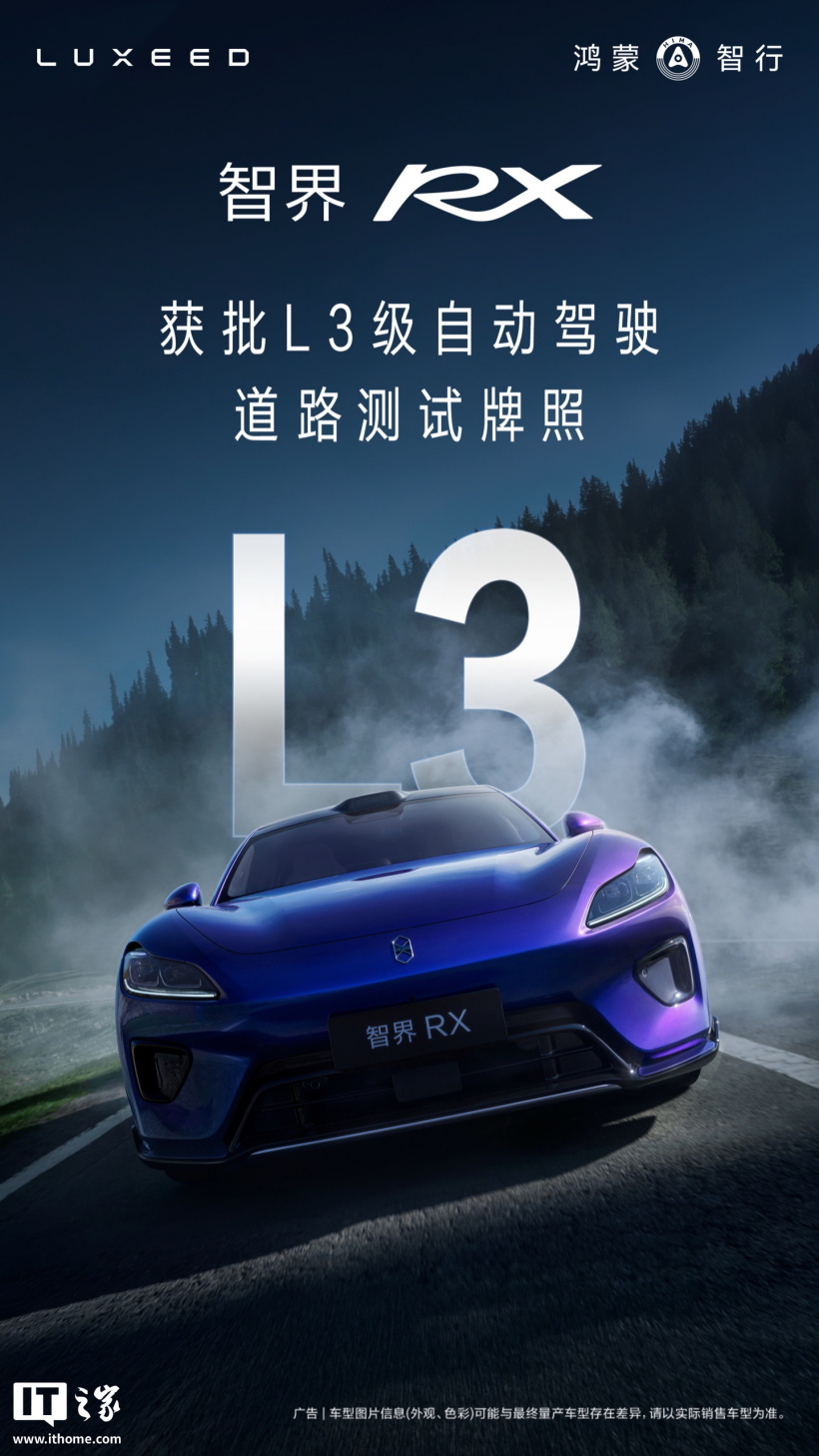
The Luxeed RX, an electric vehicle developed under the HarmonyOS Intelligent Vehicle Solutions (鸿蒙智行) brand, has officially received its L3-level autonomous driving road test license. This significant milestone allows the vehicle to conduct real-world testing on public roads, a crucial step towards the commercialization of advanced driver-assistance systems.
L3 Autonomy Undergoing Real-World Scrutiny
Huawei executive Richard Yu, who holds key positions including Executive Director and Chairman of the Consumer Business Group, confirmed that the Luxeed RX is actively undergoing comprehensive testing on complex urban expressways. This phase of testing is designed to rigorously evaluate the vehicle’s L3 autonomous driving capabilities in dynamic and unpredictable traffic scenarios.
Recent video footage shared by blogger @我鸿 showcases the Luxeed RX L3 test vehicle operating on public roads. According to the blogger, the primary focus of this public road testing is on urban expressways, which represent a high-frequency driving environment for most users. The testing aims to refine the system’s performance in critical situations such as merging and exiting traffic, complex traffic weaves, sudden lane changes, and significant speed variations.
Intuitive Interface for Autonomous Operation
The visual evidence from the test drives reveals an intuitive interface for the L3 system. The steering wheel of the Luxeed RX test vehicle features a distinct “A” button. When activated, this button emits a soft blue light, signaling the engagement of the L3 autonomous driving mode. During operation, the vehicle’s AI assistant, XiaoYi, announces the current status of the intelligent driver assistance system, while the central control screen clearly displays the message “L3 Autonomous Driving in Progress.”
Extensive Pre-Testing Validation
Before hitting public roads, the Luxeed RX has undergone an extensive suite of validation processes. This includes a massive volume of simulated tests and closed-course real-vehicle testing, adhering to relevant industry standards. These preliminary tests covered seven critical scenarios:
- Traffic signal recognition and response
- Road infrastructure and obstacle recognition and response
- Pedestrian and non-motorized vehicle recognition and response
- Recognition and response to surrounding vehicle movements
- Automatic emergency avoidance
- Minimum risk maneuver strategy
- Dynamic driving task intervention and takeover
This rigorous pre-testing ensures a foundational level of safety and performance before the vehicle encounters the complexities of everyday urban driving. The progression to public road testing, particularly on challenging urban expressways, marks a significant step forward for the Luxeed RX and Huawei’s ambitions in the autonomous driving sector.