Hyundai Motor is gearing up for a significant leap in electric vehicle technology, announcing ambitious plans to cut battery costs by 30% and extend battery life by 20% through the development of its own battery cells. These advancements are slated to begin appearing in Hyundai’s electric vehicles starting in 2027.
In-House Battery Cells for 2027 Models
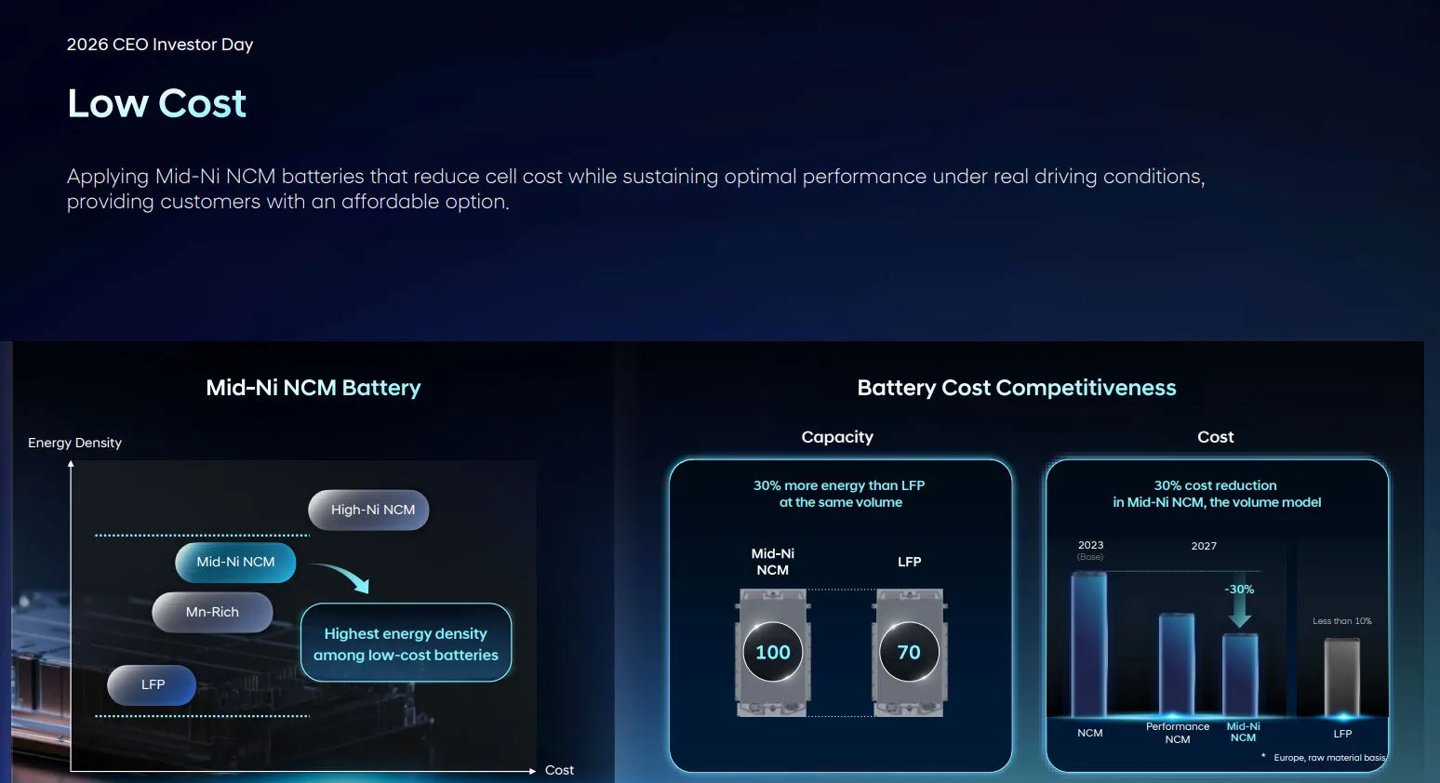
At its CEO Investor Day event held in Seoul, South Korea, on August 27th, Hyundai revealed its strategy to achieve these substantial improvements. The company plans to adopt new mid-nickel NCM (Nickel Cobalt Manganese) battery cells from 2027 onwards. These internally developed cells are expected to maintain optimal performance under real-world driving conditions while simultaneously reducing battery costs by approximately 30%.
Hyundai highlighted that these new cells will boast a 30% higher energy density compared to LFP (Lithium Iron Phosphate) batteries of the same size. Furthermore, the output power of these new cells is projected to be more than double that of the high-nickel cells previously used, leading to a 40% reduction in charging time.
The company indicated that these innovative cells might first be implemented in upcoming models such as the Santa Fe or Genesis extended-range variants, signaling a strategic rollout for its latest battery technology.
Extended Battery Life Through Cloud-Based Management
Beyond the physical battery cells, Hyundai is also focusing on optimizing battery management. The company aims to enhance its cloud-based battery management system by 2028. This advanced system is reportedly designed to extend the average lifespan of vehicle batteries by an impressive 20%.
This dual approach, combining advancements in battery cell chemistry and sophisticated management systems, underscores Hyundai’s commitment to making its electric vehicles more affordable, durable, and efficient. The move towards in-house battery development also reflects a broader industry trend of automakers seeking greater control over their supply chains and technological roadmaps.
While specific technical details are still emerging, the announcement suggests a significant push by Hyundai to address key consumer concerns regarding EV ownership: cost and longevity. By tackling both aspects head-on, Hyundai is positioning itself to be a more competitive player in the rapidly evolving electric vehicle market.