Europe’s Galileo satellite navigation system is getting a significant upgrade with the development of its Second Generation (G2) satellites. At the heart of these advanced spacecraft is a new, highly sophisticated signal generation module, essentially the ‘brain’ that will dramatically boost positioning, navigation, and timing capabilities for billions of users worldwide. This next phase of Galileo promises unprecedented flexibility and robustness, adapting to future needs we can’t even anticipate today.
The Evolution of Galileo’s Navigation Core
Currently, Galileo is recognized as the world’s most precise satellite navigation system, providing essential services for everything from smartphones to critical infrastructure like rail and maritime transport, agriculture, and emergency operations. The upcoming Galileo Second Generation (G2) satellites, being built by Airbus Defence and Space and Thales Alenia Space, will carry a suite of innovative features. Among these is the advanced signal generation module, which takes precise timing data from onboard atomic clocks and crafts the signals that guide us on Earth. This module is set to be significantly more intelligent than its predecessor, capable of generating a variety of navigation signals in real-time and, crucially, being reprogrammed in orbit. This revolutionary capability means Galileo can adapt and evolve its signals to offer enhanced resilience against interference, faster signal acquisition, and even greater positioning accuracy, ensuring it remains at the forefront of global navigation technology.
Assembly Line Innovation and Testing
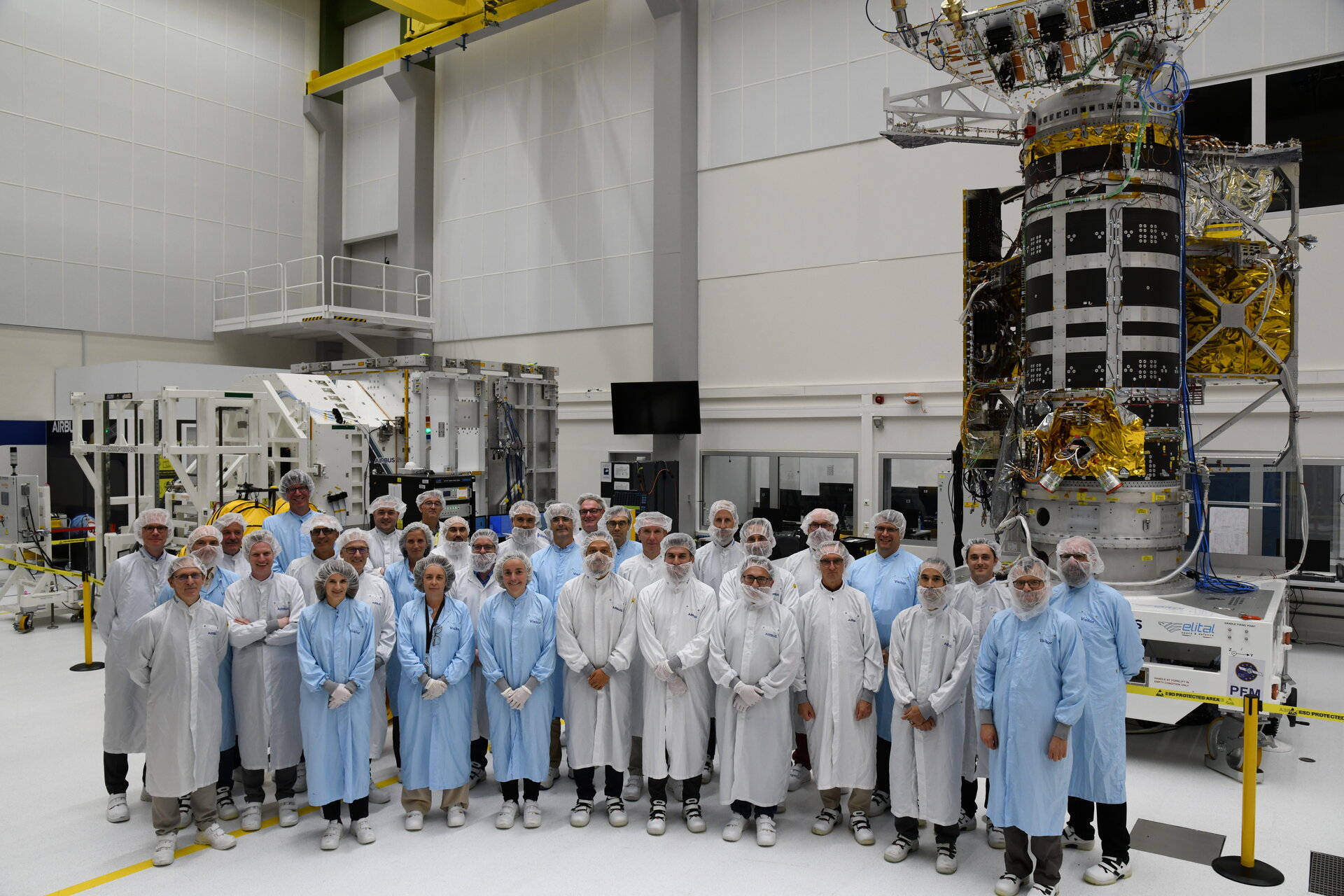
The development and integration of these G2 satellites are progressing rapidly across Europe. At the Airbus Defence and Space factory in Friedrichshafen, Germany, multiple G2 satellites are in various stages of assembly, resembling a high-tech production line. The new signal generation module, the ‘brain,’ has already undergone successful testing in Toulouse, France, and is back in Friedrichshafen for further integration. It will soon be combined with the radio frequency (RF) output module – the ‘mouth’ – to form the satellite’s payload, which will also undergo rigorous testing. In parallel, other crucial components like the ‘speakers’ of the system, the navigation antennas, have been evaluated and declared ready for flight. These combined efforts across various European sites are paving the way for the full integration of the first G2 flying satellite model next year, bringing the next generation of Galileo closer to deployment.