The European Space Agency (ESA) is rolling out a significant upgrade for its Galileo navigation system. Twelve second-generation (G2) satellites are set to join the orbital fleet, promising unprecedented capabilities in positioning, navigation, and timing. At the heart of this advancement is a new signal generation module, effectively the ‘brain’ of these sophisticated spacecraft.
Assembling the Satellite ‘Brain’
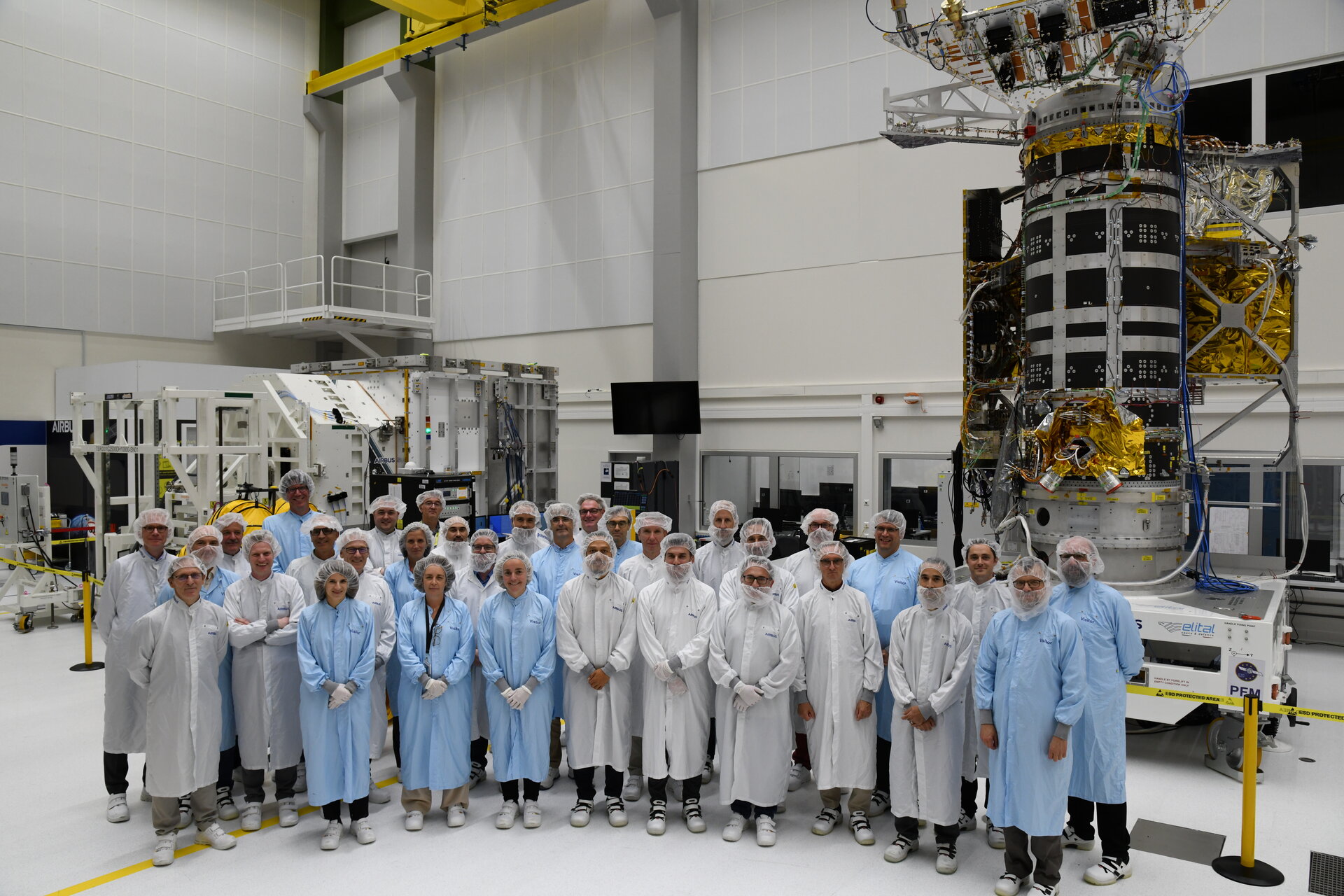
At Airbus Defence and Space (ADS) facilities in Friedrichshafen, Germany, the integration of six second-generation Galileo satellites is well underway. Collaborating with partner Thales Alenia Space (TAS), these companies are developing the G2 series, which will feature a suite of innovative technologies. These include an electric propulsion system, inter-satellite communication links, an enhanced atomic clock configuration, an improved navigation antenna, and, crucially, the new signal generator.
In a navigation satellite, the signal generator acts as its ‘brain’. It receives precise timing information from the onboard atomic clocks and shapes the signals that are then transmitted to Earth. The new G2 module is designed to be far more intelligent than its predecessors. It will possess the ability to generate diverse navigation signals in real-time and can be reprogrammed while in orbit to create new ones. This offers Galileo significantly greater flexibility to adapt to evolving user needs while maintaining a high level of performance.
The Future of Navigation: Flexible and Resilient
This innovative capability for in-orbit reconfiguration will enable the creation of signals that are:
- More resilient to interference.
- Allow for faster position fixes.
- Achieve higher positioning accuracy.
- Adapt to future needs that are yet to be foreseen.
Airbus recently completed successful testing of this new ‘brain’ in Toulouse, France. Once all tests are concluded, the first module will return to Friedrichshafen for further integration stages. It will soon be connected to the radio frequency (RF) output module – the ‘mouth’ that vocalizes the ‘brain’s’ commands, forming the satellite’s payload. Subsequently, the ‘brain’ and ‘mouth’ will be installed into the satellite’s ‘body,’ or platform. Concurrently, development and testing of other components are ongoing, including navigation antennas, the evaluation of which recently took place in Madrid, Spain. These pan-European efforts are bringing the next generation of Galileo closer to launch.
Galileo is currently the world’s most accurate satellite navigation system, serving billions of users. All smartphones sold within the European single market are guaranteed to be equipped with Galileo support. The system also plays a vital role in sectors such as rail and maritime transport, agriculture, financial services, and emergency operations.