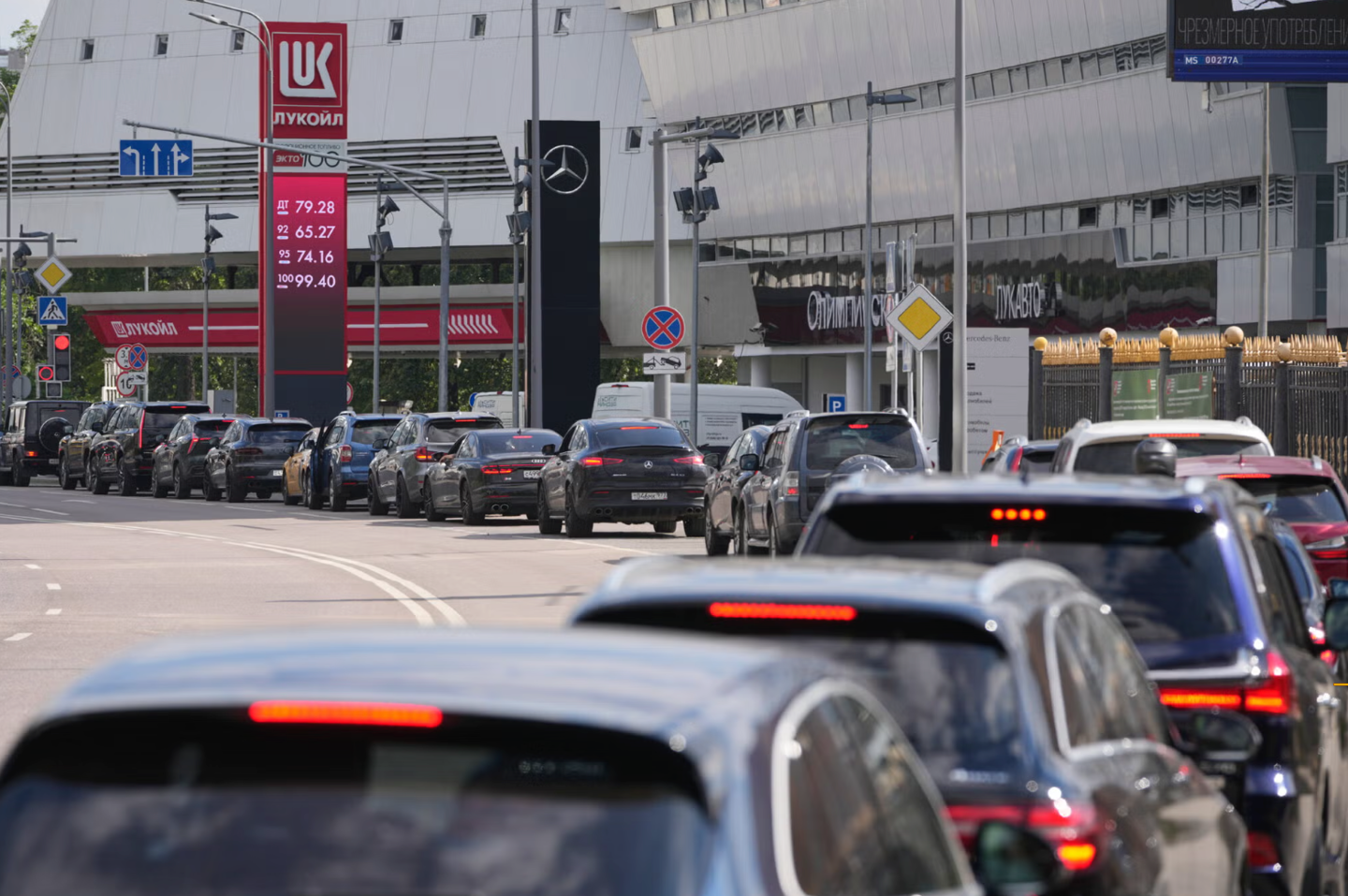
The ongoing conflict in Ukraine and subsequent attacks on Russian oil refineries have triggered a significant fuel deficit across Russia, leading to an unexpected boom in the electric vehicle market, predominantly dominated by Chinese manufacturers.
Surge in Electric Vehicle Demand
According to The New York Times, the Russian electric vehicle market has more than doubled in size since late June. The vast majority of these sales are attributed to Chinese brands, signaling a notable economic pivot for Moscow amid Western sanctions.
Sergey Tselikov, a leading expert on the Russian automotive market, shared his personal experience of purchasing an electric hatchback from China’s Great Wall brand after struggling to refuel his traditional internal combustion engine cars. “I tried to refuel one of my cars, driving around five nearby gas stations, but they only had diesel or low-quality gasoline,” he stated. The fuel scarcity caused prices for electric vehicles to skyrocket by approximately $2,000 in just a few days.
Causes of the Fuel Shortage
As the war in Ukraine increasingly extends to Russian territory, the country’s automotive infrastructure has been impacted. Attacks by Ukrainian drones on Russian oil refineries have disrupted fuel supplies nationwide.
Data from the service Gdebenz revealed that on a recent Friday, only 46% of gas stations in Russia had fuel available. In Moscow, this figure stood at 53%, resulting in queues at some stations. Nizhny Novgorod fared worse, with only 27% of stations reporting fuel availability.
The Russian government attempted to mitigate the problem by permitting the sale of lower-quality gasoline and diesel. However, this led to vehicle breakdowns, including clogged diesel particulate filters, as reported by Alexander, an auto service manager in Moscow.
Growing Share of Electric Vehicles
Statistics from the Russian Ministry of Industry and Trade indicate that over 83,000 electric vehicles and hybrids were sold between January and August of the current year, a substantial increase from the 43,000 sold during the same period last year. By the end of September, electric and hybrid vehicles, which can operate without gasoline, accounted for 11.5% of the Russian automotive market, up from around 5% at the beginning of the year.
Russia is rapidly catching up in electromobility. While other countries spent years building supply chains and charging infrastructure for EVs, Russia, relying on its status as a major oil producer with low gasoline prices, neglected this development. However, electric vehicles are now becoming increasingly common, especially in major cities.
Even in Moscow, queues are appearing at charging stations, though not as extensive as those at gas stations. This trend is particularly noticeable for new, rebranded Chinese models, such as the “Moskvich,” which is based on Chinese designs.
Chinese Brands as an Alternative
As Western companies have exited the Russian market, Chinese automakers have stepped in to fill the void. Many Russian automotive plants that previously manufactured Western brands have now been reoriented to assemble Chinese vehicles.
One dealership in Moscow, once dominated by Western, Japanese, and Korean brands, now hosts over 25 showrooms for Chinese makes. The brand Evolute, assembled in Russia using Chinese models as a base, has completely sold out its inventory and is no longer accepting new orders.
Government Support
The Russian government has actively supported the development of electromobility since 2022, subsidizing the construction of fast-charging stations and grid connections. In 2023, new building codes mandate the inclusion of EV infrastructure in new residential developments. The number of public charging stations has surged from fewer than 1,500 in 2022 to over 8,000 this year.
In many Russian regions, EV owners are exempt from transport taxes. In Moscow and other large cities, they receive free parking, which can cost up to $9.50 per hour for other drivers. Additionally, Russian electric vehicles benefit from government subsidies and free passage on most toll roads.
Challenges and Prospects
Despite the growth, electric vehicles in Russia still face challenges. Prices remain high, and while charging infrastructure is expanding, it is not yet sufficient. Some Russians, like 40-year-old Alexander, still find purchasing an EV impractical.
Some residents are opting for electric bicycles, scooters, or converting their existing vehicles to run on gas. Others are turning to public transportation.
Igor, a 51-year-old Moscow resident, expressed skepticism: “I would never buy an electric car. It’s too expensive and might be harmful to male health.”
However, companies involved in charging infrastructure development see market potential. Konstantin Alyabyev, CEO of Punkt E, Russia’s largest charging station operator, stated that his company is accelerating the construction of 100 new stations despite bureaucratic hurdles.
In summary, the fuel crisis in Russia, exacerbated by the war in Ukraine, has unexpectedly catalyzed the development of the electric vehicle market, although this progress is accompanied by both growth and significant challenges.