While residents in peaceful regions voice frustration over slow video loading times, broadband connectivity just a few kilometers from the active frontlines remains a life-saving necessity. In frontline settlements across Donetsk and Kharkiv, digital infrastructure provides the sole channel to request emergency services, reach field medics, or connect with families following artillery shelling.
To evaluate physical network resilience, support localized internet service providers (ISPs), and accelerate preparations for the upcoming 2026–2027 autumn-winter season, a delegation from the Ministry of Digital Transformation of Ukraine conducted working visits to the Kharkiv and Donetsk regions.
Kramatorsk: Repairing Fiber-Optic Networks Under FPV Drone Strikes
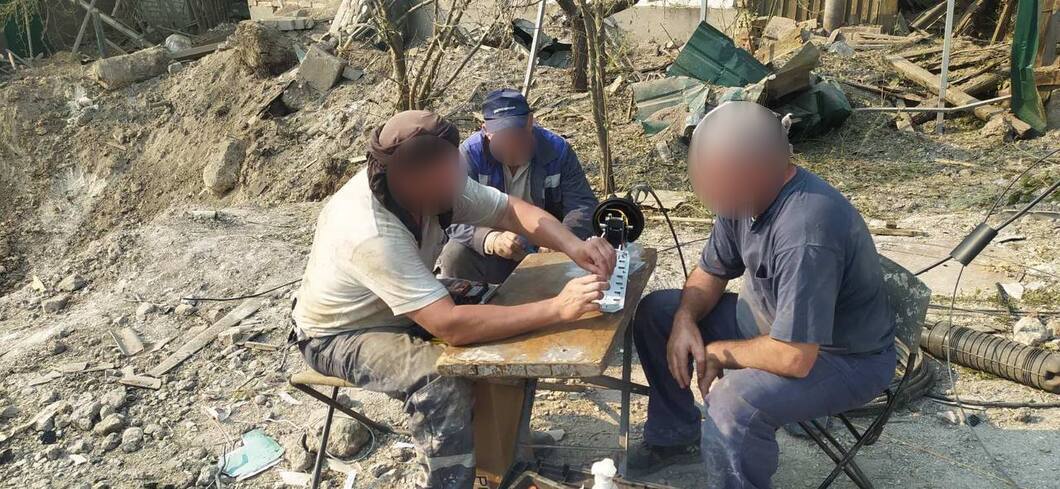
Ensuring uninterrupted connectivity in Kramatorsk presents constant life-threatening risks to field technicians. Russian FPV strike drones systematically target telecommunications towers and optical lines, frequently conducting double-tap strikes against emergency repair crews attempting to patch severed cables.
During a recent maintenance run, a loitering kamikaze drone struck a service vehicle belonging to local provider Elite Line. The repair crew narrowly escaped seconds before impact. Despite persistent aerial threats, local ISPs continue to operate within the city, repairing main trunk lines and onboarding new residential subscribers.
During field meetings in Kramatorsk, Ministry of Digital Transformation representatives conferred with Elite Line management to establish international donor pipelines for replacing destroyed network hardware.
Kharkiv Region: Base Station Energy Autonomy and Blackout Preparedness
In the Kharkiv region, the Ministry delegation met with the Kharkiv Regional Military Administration and mobile network operators to assess infrastructure readiness for extended winter grid disruptions.
Key mitigation strategies focus on sustained autonomous operations:
-
Backup Power Stress Tests: Engineers are evaluating LiFePO4 battery banks and backup diesel/gasoline generators at cellular base stations under active stress conditions.
-
Fuel Reserves: Establishing dedicated fuel reserves to ensure multi-day operation of core switching nodes during prolonged power outages.
-
Physical Armor: Enhancing passive physical protection around critical telecom hubs to mitigate damage from shrapnel and blast waves.

Frontline Telecom Readiness Matrix
| Region / Location | Primary Challenges | Solutions & Deployed Actions |
| Kramatorsk (Donetsk) | Targeted FPV drone attacks on crews, severe technician shortages. | International hardware aid, optical line redundancy. |
| Kharkiv Oblast | High risk of prolonged blackouts, missile strike hazards. | Generator stress tests, battery upgrades, physical hardening. |
| All Frontline Sectors | Continuous kinetic destruction of fiber infrastructure. | GPON network deployment, procurement of backup power units. |
Xpert Take for hitechexpert.top
The dedication of telecom engineers operating in frontline zones underpins the digital integrity of the entire country. Systematic preparations for winter—ranging from GPON rollouts to base station battery upgrades—are essential to maintaining civil connectivity amid ongoing infrastructure attacks. Securing international technical assistance and prioritizing physical protection for repair crews must remain top strategic priorities for regional defense councils.