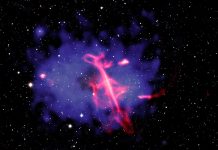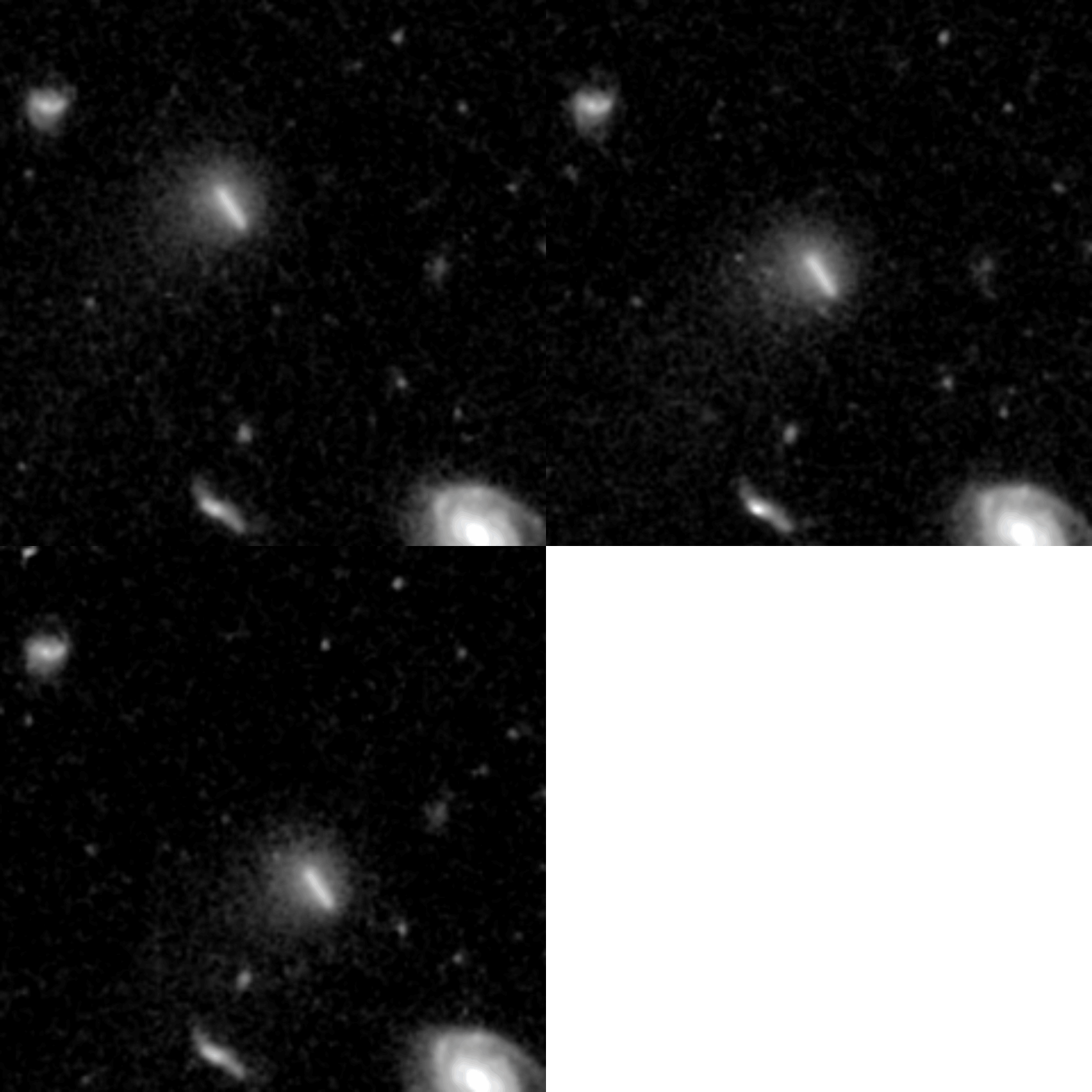
In a surprising achievement for a telescope designed to peer into the universe’s deepest reaches, the European Space Agency’s (ESA) Euclid spacecraft has discovered its very first previously unknown comet. This celestial interloper, now designated C/2026 S1 (Euclid), was spotted in images captured between September 16 and 24, 2026, demonstrating Euclid’s unexpected prowess in tracking fast-moving objects within our own Solar System.
An Unlikely Discovery from a Galaxy Hunter
Euclid’s primary mission is to map the large-scale structure of the universe and unravel the mysteries of dark matter and dark energy by observing billions of galaxies. This involves taking incredibly deep, steady images, making the detection of nearby, swift-moving objects like comets a significant challenge. However, sophisticated software developed by Mikko Pöntinen of the University of Helsinki, a PhD student and member of the Euclid Consortium’s Solar System Objects Science Working Group, flagged a peculiar ‘streak’ across multiple images. This anomaly, indicative of a fast-moving object, was then meticulously tracked and analyzed.
“I was excited to see my software flag a ‘streak’ smeared across several images – the result of a fast-moving object,” Pöntinen explained. Further inspection revealed a fuzzy cloud around the object, a tell-tale sign of a comet shedding dust and gas as it nears the Sun. After ruling out any known comets or asteroids by cross-referencing with existing catalogs, the observations were reported to the International Astronomical Union’s Minor Planet Center (MPC), which subsequently confirmed its status as a new comet.
Implications for Future Missions and Solar System Studies
The discovery of Comet C/2026 S1 (Euclid) is significant not only because it’s a new addition to our Solar System’s catalog but also because it highlights Euclid’s potential to detect comets far from the Sun. This early detection capability is crucial for missions like ESA’s future Comet Interceptor, which aims to visit a pristine comet in interstellar space. While this particular comet isn’t a direct target for Comet Interceptor due to its orbit, the rapid discovery and validation process serve as a vital test case for inter-mission coordination.
Located approximately 1.3 billion kilometers (about 800 million miles) from Earth – roughly between the orbits of Jupiter and Saturn – the comet’s current position is notably ‘straight up’ from the Sun’s perspective, arcing over the planetary plane. Euclid is designed to avoid this plane to minimize glare from dust, making such discoveries even more challenging. The mission’s ‘step-and-stare’ imaging strategy, which typically observes each sky patch only once, adds another layer of difficulty.
“Very few comets are expected to be discovered by Euclid, so it was a happy coincidence that the combination of the comet’s orbit and Euclid’s scanning over those days captured the object in multiple images,” said Bruno Altieri, Euclid Archive Scientist. Valeria Pettorino, Euclid Project Scientist, added, “While this particular comet is not a suitable candidate for Comet Interceptor, the process of discovery and alert gives us a real test case for how our two mission teams will coordinate in the future. And we are of course happy to have discovered a previously unknown comet for the Solar System community to follow-up on.”