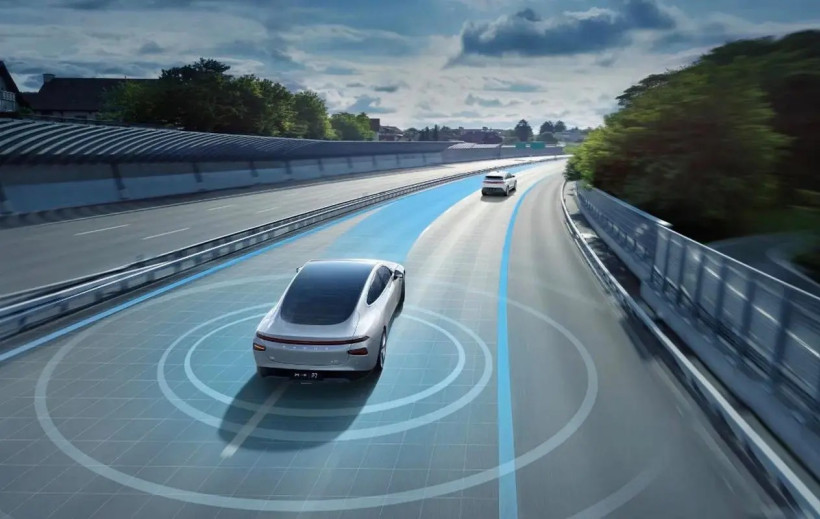
China is taking a significant step towards regulating autonomous driving technology with a proposed revision to its Road Traffic Safety Law. The draft, submitted for its first review to the 14th National People’s Congress Standing Committee today, August 25th, aims to clarify responsibilities and establish a framework for vehicles with advanced driving capabilities.
Key Provisions for Autonomous Vehicles
A dedicated chapter in the revised draft, titled “Special Provisions for Autonomous Driving Vehicles,” addresses crucial aspects of this emerging technology. It clearly defines autonomous driving and driver assistance functions. Crucially, when an autonomous vehicle is operating with its autonomous driving function activated and commits a traffic violation, the responsibility for handling the offense will fall upon the vehicle’s manufacturer or importer.
The draft specifies that vehicles operating with autonomous driving features activated will be subject to these new regulations. However, if the autonomous driving function is not activated, or if the vehicle is equipped solely with driver assistance functions, it will be managed under the existing regulations for non-autonomous vehicles. This distinction is vital for ensuring clear accountability as the technology evolves.
Addressing Current Road Safety Challenges
Beyond autonomous driving, the revision tackles several pressing issues in current road traffic safety. The draft introduces measures to combat drunk driving, driving without proper visibility (often referred to as ‘blind driving’), the issue of ‘zombie cars’ (vehicles that are uninsured or unregistered and left on roads), and ‘over-standard vehicles’ (vehicles that do not meet regulatory standards).
Furthermore, the proposed law includes updated regulations for electric bicycles, a common mode of transport in China, and addresses the management of large groups of cyclists or pedestrians, sometimes referred to as ‘riotous walking groups,’ to improve safety and order on the roads.
Evolution of China’s Road Safety Law
The current Road Traffic Safety Law has been in effect since 2004 and has undergone several amendments in 2007, 2011, and 2021. This latest revision, comprising 9 chapters and 170 articles, represents a comprehensive update to align with modern transportation challenges and technological advancements.
The proposed changes aim not only to enhance road safety but also to introduce measures that facilitate public convenience and ease of travel. The legislative process involves a thorough review by the National People’s Congress Standing Committee, indicating a deliberate and careful approach to enacting these new regulations.
Implications for the Automotive Industry and Consumers
The explicit assignment of liability to manufacturers for violations committed by autonomous systems when active is a landmark decision. It signals a shift towards greater producer responsibility, potentially encouraging rigorous testing and safety protocols from automakers before their autonomous vehicles are deployed on public roads. This could also influence the development of insurance models specific to autonomous driving.
For consumers, this means greater clarity on who is responsible in the event of a traffic violation involving an autonomous vehicle. It also highlights the importance of understanding the operational status of a vehicle’s driving functions – whether it is fully autonomous, partially autonomous with driver assistance, or operating under traditional manual control.
As China continues to push the boundaries of automotive technology, this revision to the Road Traffic Safety Law is a crucial step in ensuring that innovation is balanced with safety, accountability, and the well-being of all road users.