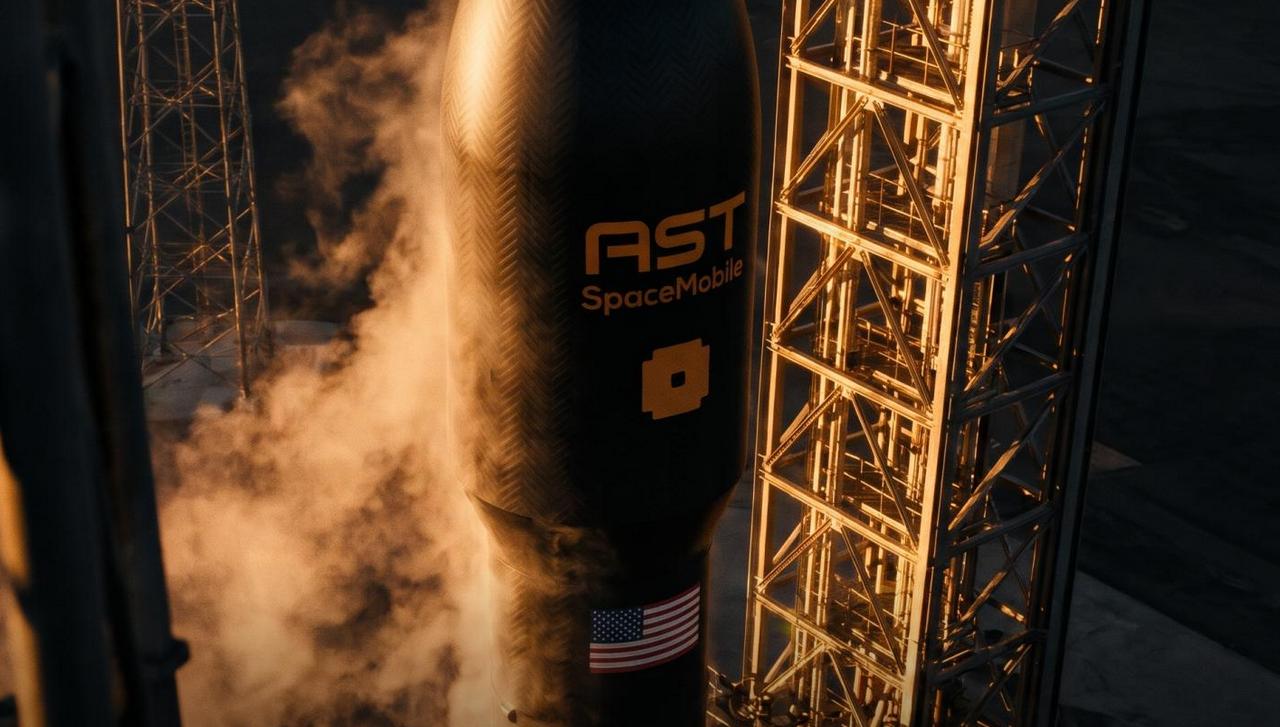
AST SpaceMobile, a company developing a global cellular broadband network powered by satellites, has announced the development of its own reusable launch vehicle, codenamed “Blacklift.” The company plans its first launch of the new rocket for 2028, aiming to secure stable access to low Earth orbit (LEO) and reduce satellite deployment costs.
Strategic Move Towards Independence
The development of “Blacklift” is a key part of AST SpaceMobile’s strategy for vertical integration and reducing its reliance on third-party launch providers. “The Blacklift rocket is a stepping stone to significantly expanding our total addressable market, providing AST SpaceMobile with regular, unfettered access to orbit and the most favorable economics in the industry,” stated Abel Avellan, Founder, Chairman, and CEO of the company.
This initiative is expected to accelerate the company’s mission to build a new layer of global connectivity that extends beyond terrestrial networks, facilitating AI-powered services for people everywhere they live, work, and travel.
Technical Details and Partnership
The “Blacklift” rocket is designed to deliver up to 20 tons of payload to LEO. Each launch will be capable of deploying up to five BlueBird satellites, which form the backbone of AST SpaceMobile’s satellite network. These satellites are notable for their record-breaking antenna size, measuring 223 square meters, making them the largest commercial satellites in LEO. To date, AST SpaceMobile has launched 13 BlueBird satellites using launch vehicles from SpaceX, Blue Origin, and the Indian Space Agency.
To expedite the development of “Blacklift,” AST SpaceMobile has entered into an agreement with Firefly Aerospace. Firefly will provide the rocket engines (Miranda for the first stage and Vira for the second stage) and engineering services for the initial three launches. Following this, AST SpaceMobile intends to manufacture these engines independently under license. While the Miranda and Vira engines have not yet completed flight missions, the Miranda engine has successfully undergone extensive ground testing.