The rise of Artificial Intelligence in various industries is undeniable, but its foray into the culinary world, specifically through AI-generated food images on restaurant menus, is sparking a debate. While some restaurants see AI as a cost-saving tool, consumers are increasingly voicing their distaste for the often bizarre and unappetizing visuals.
A Taste of the Unappetizing
The trend came to a head for Gil Sennett, a nurse from Denver, who encountered a pop-up Jamaican barbecue restaurant whose AI-generated menu images depicted meat that looked like “leather straps crawling with tiny beetles.” She shared her revulsion on X (formerly Twitter), resonating with hundreds of others who expressed similar disgust. “Eating is one of the most fundamental human experiences,” Sennett stated, deeming the use of such “horrible, weird, unappetizing” images a negative cultural shift.
Despite her aversion, Sennett still ordered chicken and mac and cheese, citing it as one of her few lunch options and a place she had patronized before. Her experience highlights a growing phenomenon: AI-generated food imagery is becoming more prevalent in menus and marketing materials, often to the dismay of diners who find the images unappealing and potentially misleading.
The Business Case for AI
Restaurant operators are increasingly turning to AI to navigate rising food and labor costs and thin profit margins. A 2026 report from the National Restaurant Association indicated that 26% of restaurateurs were already using AI for tasks ranging from marketing and inventory management to staff scheduling and order processing. AI offers a potential solution for cost reduction in these areas.
Consumer Backlash and Real-World Repercussions
However, the backlash against this AI integration can be swift and intense. In San Francisco’s tech-centric Bay Area, a local coffee shop, Grind & Unwind, faced public outcry when patrons discovered their menu board displayed AI-generated images. Vandalism followed, with graffiti appearing on the shop’s exterior, which the owner, Lindsay Lozano, identified as the word “seriously.” Lozano described the reaction as unexpected, initially using the AI-generated signs as a temporary measure. According to SFGate, the couple later removed the signs and spent approximately $700 to repaint the wall covering the graffiti.
On platforms like Reddit, users have lambasted AI food images, with comments describing bread resembling reptile skin or loofahs. The debate over AI’s role in the industry is intensifying as advertising guidelines are still evolving. Some in the food industry are reconsidering where AI can genuinely assist and where it might cause harm.
“American diners are smart. They know what they want and they know what’s real.”
Hunter Lewis, Editor-in-Chief of Food & Wine Magazine
Hunter Lewis, Editor-in-Chief of Food & Wine, noted that while AI can help restaurants streamline back-end operations, it’s best kept out of sight from diners. He believes AI images can be “incredibly off-putting” and that “American diners are smart. They know what they want and they know what’s real.”
The Appeal of Authenticity
In contrast, some restaurants have gained popularity by explicitly stating they “will never use AI,” opting instead for hand-drawn images of their offerings shared on social media. Chugwater Soda Fountain in Wyoming posted a handwritten sign promising no AI, which garnered over 200,000 likes on Instagram. While commenters praised the “raw authenticity,” others pointed out the irony of promoting an anti-AI stance on an AI-driven platform.
Professional food photographer Jamie K. Soja suggests that AI often struggles with the texture and detail of food. “The colors, the textures, the way ingredients are arranged often look just a little bit off,” Soja explained, adding that AI-generated lighting can also appear unnatural. This makes it challenging, even for professionals, to distinguish between AI-generated images and heavily edited real photos.
Platform Involvement and Consumer Perception
Third-party platforms are also integrating AI features, further fueling the controversy. DoorDash, a major food delivery platform, offers AI image tools designed to “enhance the presentation of existing menu photos” by adjusting elements like lighting and color. However, their policy prohibits misleading images, and they claim to review all menu photos for compliance. Some images on the platform now carry an “AI-Enhanced” label when edited using DoorDash’s tools.
Researchers are also investigating how AI-generated food images influence consumer perception and appetite. A 2024 study by Professor Charles Spence at Oxford University found that consumers generally prefer AI-generated images when unaware of their origin. However, upon learning the images are AI-created, their appeal significantly diminishes. Spence also observed that AI tends to enhance elements like fat content when asked to make food look more appealing, potentially influencing subconscious choices towards larger, fattier portions. This could also negatively impact those who work closely with AI daily.
A Matter of Taste
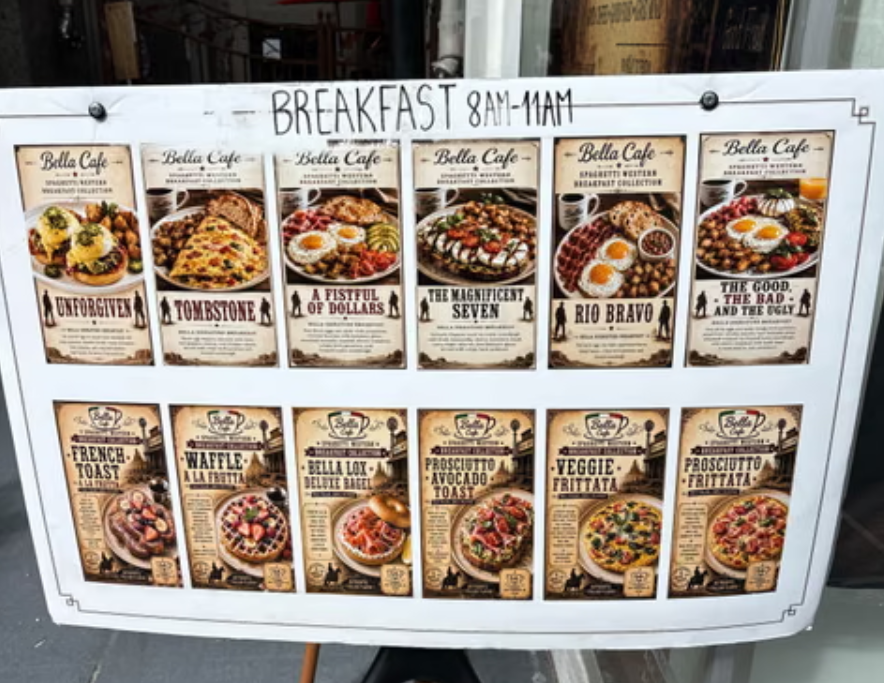
Brandon Hill, CEO of a San Francisco design and marketing agency, shared his strong negative reaction to AI food images at Bella Cafe, posting his observations on X. “Even in San Francisco… some places have started using generative AI for menu images. But you know, they look really unappetizing,” he wrote, adding that such images made him “question what the actual food is going to look like.”
Despite the discussion Hill’s post generated, Bella Cafe owner Neela Norero Salvatorre stated she had received no direct complaints about the AI-designed menu boards, created with ChatGPT. She and her husband, being “old school,” found experimenting with AI a “fun” and novel experience. Salvatorre also uses ChatGPT for employee recommendation letters and staff handbooks, seeing AI as a way to save on design costs and liking the aesthetic results, despite acknowledging some perceptions of artificiality.
As the conversation around AI in marketing and visual representation continues, the food industry is grappling with how to balance technological innovation with the fundamental human desire for authentic, appetizing food experiences.