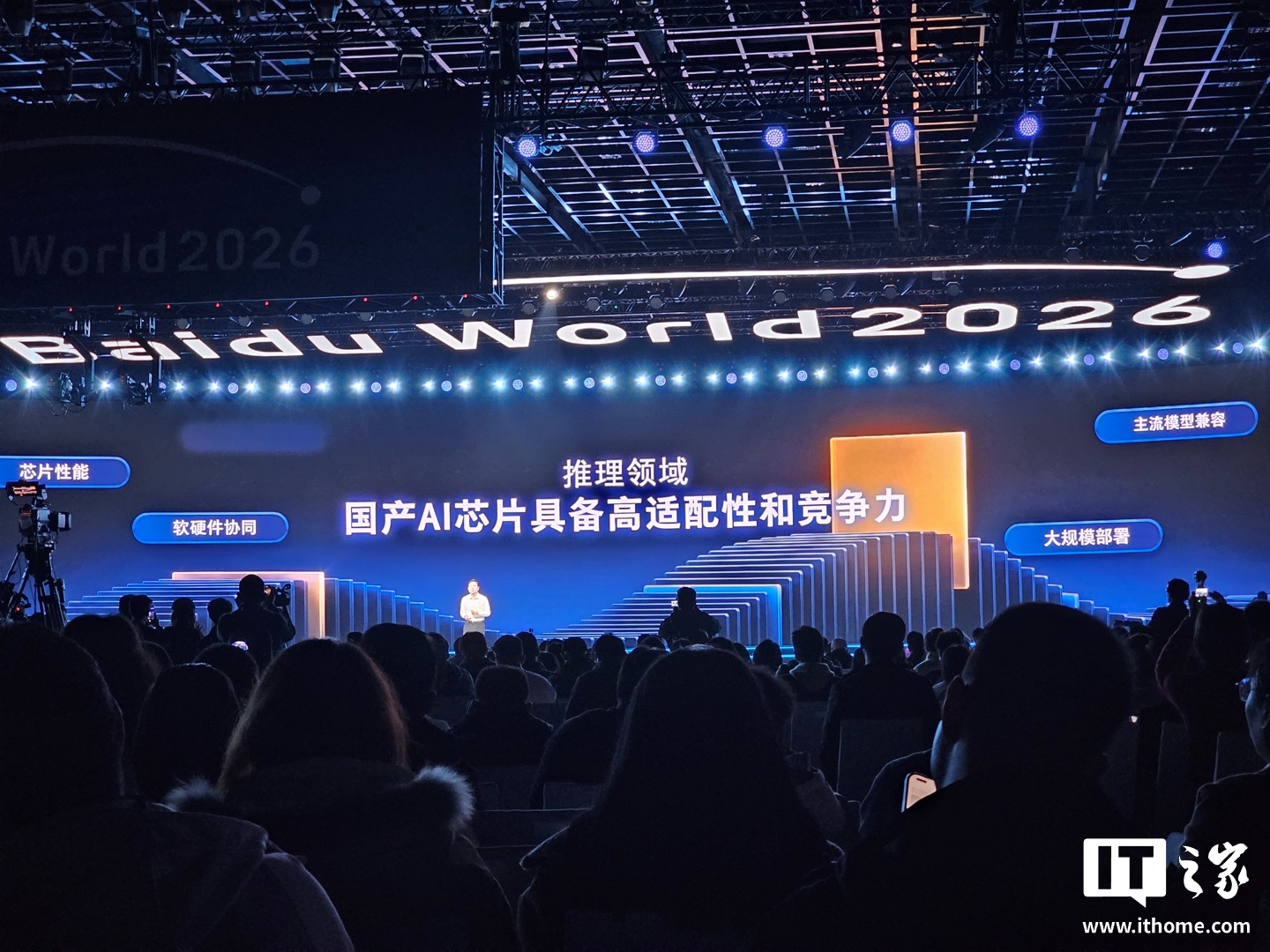
At the Baidu World 2026 conference, Baidu founder Robin Li highlighted the evolving landscape of AI computing power, emphasizing the shift from predominantly training-focused workloads to a balanced approach encompassing both training and inference. This surge in inference demand is largely driven by the widespread adoption of AI agent applications.
Baidu’s AI Chip Roadmap
During the event, Kunlun Chip, Baidu’s AI chip division, unveiled its future product plans. The M100 chip has already been released as scheduled. The upcoming M300 chip is slated for launch next year. While the M100 is positioned for extreme cost-effectiveness, the M300, as the flagship model, promises comprehensive advancements across computing power, storage, and interconnectivity.
Looking further ahead, Baidu aims to introduce multiple chips based on a new N-architecture by 2028. These chips will be meticulously designed to cater to diverse and differentiated application scenarios, ensuring precise performance optimization for various use cases.
Long-Term Investment in Technology
Robin Li reiterated Baidu’s commitment to being a technology-driven company with a willingness for long-term investment. “Kunlun Chip is the result of over a decade of persistent investment, and its commercial value is gaining increasingly broad recognition,” he stated. This long-standing dedication underscores Baidu’s strategic focus on developing proprietary AI hardware to meet the growing and complex demands of artificial intelligence.
The emphasis on both training and inference capabilities reflects the dual nature of modern AI development. Training requires massive computational resources to build sophisticated models, while inference demands efficient and rapid processing to deploy these models in real-world applications. The scalability of intelligent agents, which are essentially AI systems capable of performing tasks autonomously, necessitates a significant boost in inference performance.
The M300 chip is expected to represent a significant leap forward from its predecessor, addressing the bottlenecks that currently limit the performance and efficiency of AI workloads. Enhancements in computing power will likely translate to faster model execution and the ability to handle more complex tasks. Improvements in storage will be crucial for managing the vast datasets used in AI, while advancements in interconnectivity will enable more efficient communication between chips, especially in large-scale distributed systems.
The development of the N-architecture and the subsequent multi-chip strategy by 2028 signals Baidu’s ambition to build a comprehensive AI hardware ecosystem. By creating specialized chips for different applications, Baidu aims to provide tailored solutions that maximize performance and minimize costs for its customers across various industries.
This strategic move positions Baidu not only as a consumer of AI chips but also as a significant player in their design and manufacturing. The company’s sustained investment in Kunlun Chip demonstrates a clear vision for the future of AI, where hardware innovation plays a pivotal role in unlocking new possibilities and driving technological progress.
The growing importance of inference as a key driver for AI chip growth suggests that Baidu’s focus on this area, particularly with the M300 and future N-architecture chips, is well-aligned with market trends. As AI becomes more integrated into everyday life and business operations, the demand for efficient and powerful inference solutions will only continue to escalate.