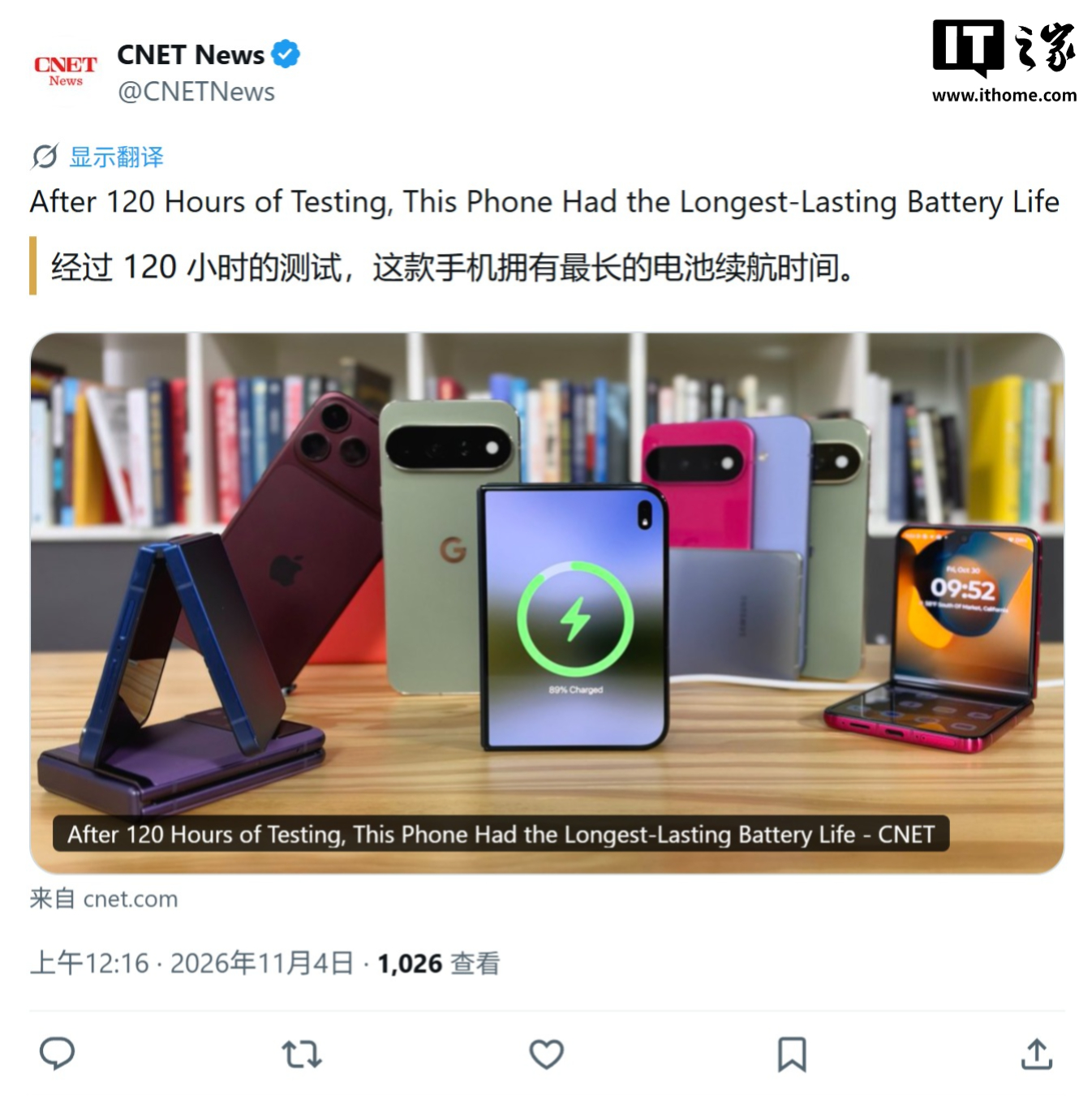
In a comprehensive battery drain test covering 32 popular smartphones, CNET has identified the Apple iPhone 18 Pro Max as the top performer in overall battery endurance. The report, released this month, analyzed devices currently available in the US market.
In-Depth Battery Testing Methodology
CNET’s testing regimen, conducted throughout 2026, involved a rigorous evaluation of 28 recently released phone models, supplemented by four models that did not receive an update this year, bringing the total to 32 devices. The cumulative testing time exceeded 120 hours to ensure reliable results. The methodology focused specifically on battery drain under demanding conditions, comprising two key tests:
- 3-Hour Video Streaming Test: Each phone was subjected to continuous video playback for three hours on Wi-Fi with the screen at maximum brightness and a full charge. The remaining battery percentage was meticulously recorded.
- 45-Minute Stress Test: This test simulated heavy daily usage, including video playback, video calls, gaming, and social media browsing, all performed under a full charge for 45 minutes. Battery drain was again the primary metric.
Performance Highlights and Key Findings
The results revealed the iPhone 18 Pro Max as a standout performer. It tied for first place in the 45-minute stress test, exhibiting a mere 1% battery drain. The iPhone Duo also achieved this remarkable result. Close behind, the Google Pixel 11 Pro XL secured third place with a comparable 3% battery drain.
In the 3-hour video streaming test, the iPhone 18 Pro demonstrated exceptional efficiency, consuming only 6% of its battery. CNET attributes the iPhone 18 Pro Max’s superior overall performance to a combination of factors:
- A larger battery capacity.
- Optimizations within the iOS 27 operating system.
- Enhanced energy efficiency of the A20 Pro chip.
Battery Technology Trends and Future Outlook
Interestingly, the report highlights that a larger battery capacity does not always translate to longer endurance. CNET noted that brighter screens, more powerful processors, and the increasing integration of AI features are all contributing factors that can consume additional power. Consequently, the average battery life among new phones released in 2026 has remained largely consistent with models from 2024 and 2025.
A significant technological shift observed this year is the emergence of silicon-carbon batteries. Devices like the Motorola Razr (2026) and the Samsung Galaxy Z Fold 8 have already adopted this newer battery technology. Silicon-carbon batteries offer the advantage of increased capacity without a substantial increase in physical size. CNET anticipates that this innovative battery technology will see wider adoption across the industry in 2027 and beyond.
This extensive testing provides valuable insights for consumers navigating the complex smartphone market, emphasizing that real-world performance can vary significantly based on hardware and software optimizations, not just raw battery size.