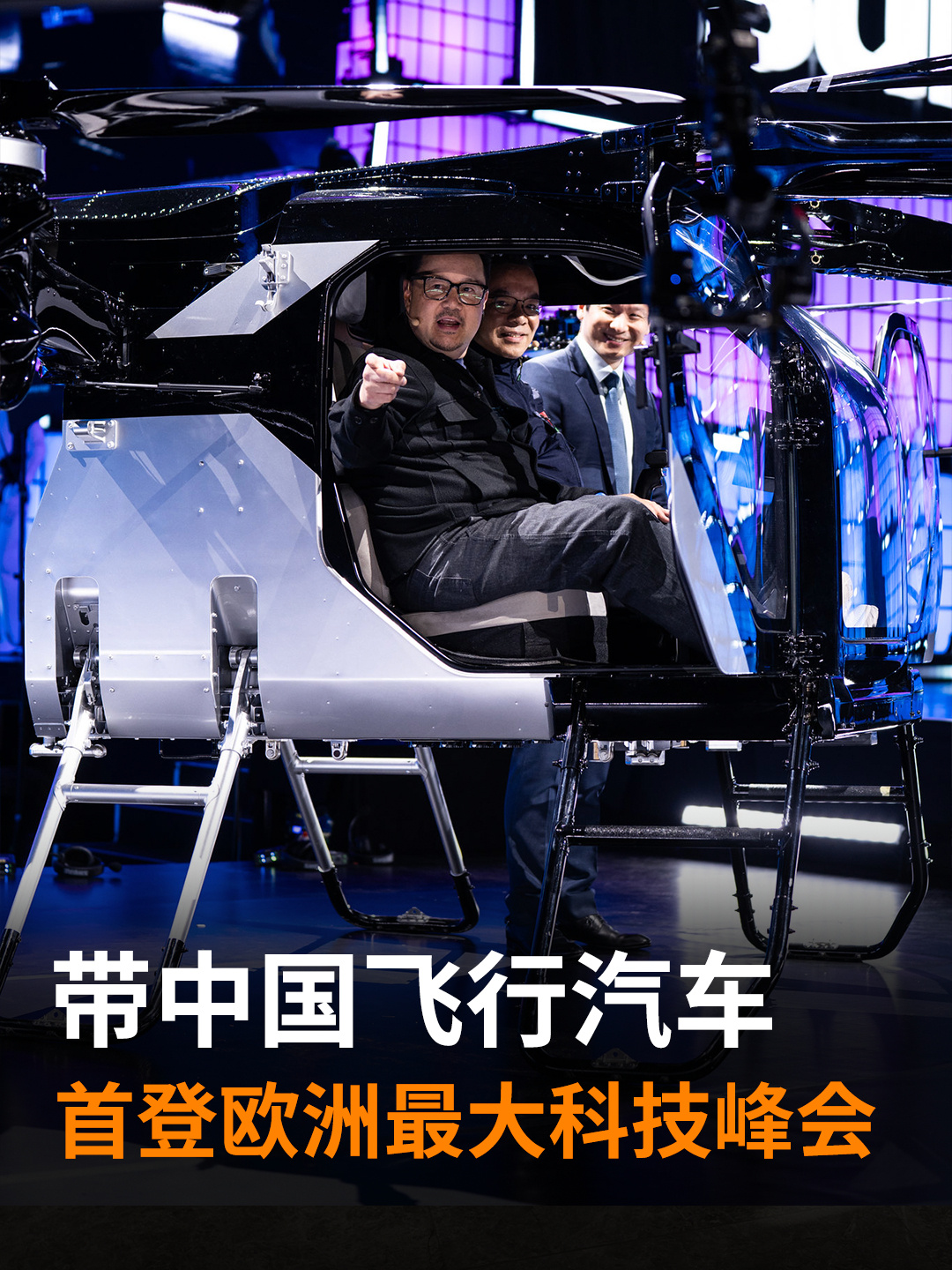
The next ten years are poised to witness a significant boom in the flying car industry globally, according to Zhao Deli, CEO of XPeng AeroHT. He expressed this optimistic outlook in a recent Weibo post, coinciding with the 2026 Web Summit, which he noted features an unprecedented lineup of Chinese enterprises championing world-leading advanced technology.
Global Tech Leaders Converge at Web Summit
The Web Summit, taking place from November 9-12 in Lisbon, Portugal, is a premier global technology conference attracting approximately 70,000 participants from 157 countries and regions. This year’s event highlights a strong presence from China, with over 50 Chinese speakers scheduled to present. Notable companies and innovators such as MiniMax, Unitree, Zhixuan, Xiaomi, Tencent, and Manus are among those taking the stage, underscoring China’s growing influence in cutting-edge technological development.
XPeng AeroHT’s Vision for Future Mobility
XPeng AeroHT, a subsidiary of the electric vehicle manufacturer XPeng, is at the forefront of this evolving landscape. The company previously announced its ambitious plan to achieve mass production of its first flying car within the current year, aiming to accelerate the transition of low-altitude mobility from a conceptual idea to a tangible reality.
XPeng AeroHT has established a dual-product system for its aerial vehicles. The ‘Land Aircraft Carrier’ is designed to cater to personal low-altitude flight experiences, offering a novel way for individuals to navigate the skies. Complementing this is the new eVTOL model, ‘A868’, which is engineered for more demanding applications, focusing on multi-passenger capacity and extended range for efficient travel. This diversified approach aims to cover a wide spectrum of low-altitude transportation needs, adapting to various distances and scenarios.
The company’s commitment to innovation in this sector signifies a broader trend towards embracing advanced transportation solutions. As urban congestion continues to be a challenge, and the desire for faster, more direct travel grows, flying cars represent a potential paradigm shift in how people and goods move. Zhao Deli’s assertion suggests that the technological hurdles and regulatory frameworks are gradually aligning to permit widespread adoption of this futuristic mode of transport.
The participation of numerous Chinese tech firms at a global event like the Web Summit further emphasizes the nation’s drive to lead in emerging technologies. With companies like XPeng AeroHT pushing the boundaries of what’s possible, the vision of integrating aerial vehicles into everyday life appears closer than ever.