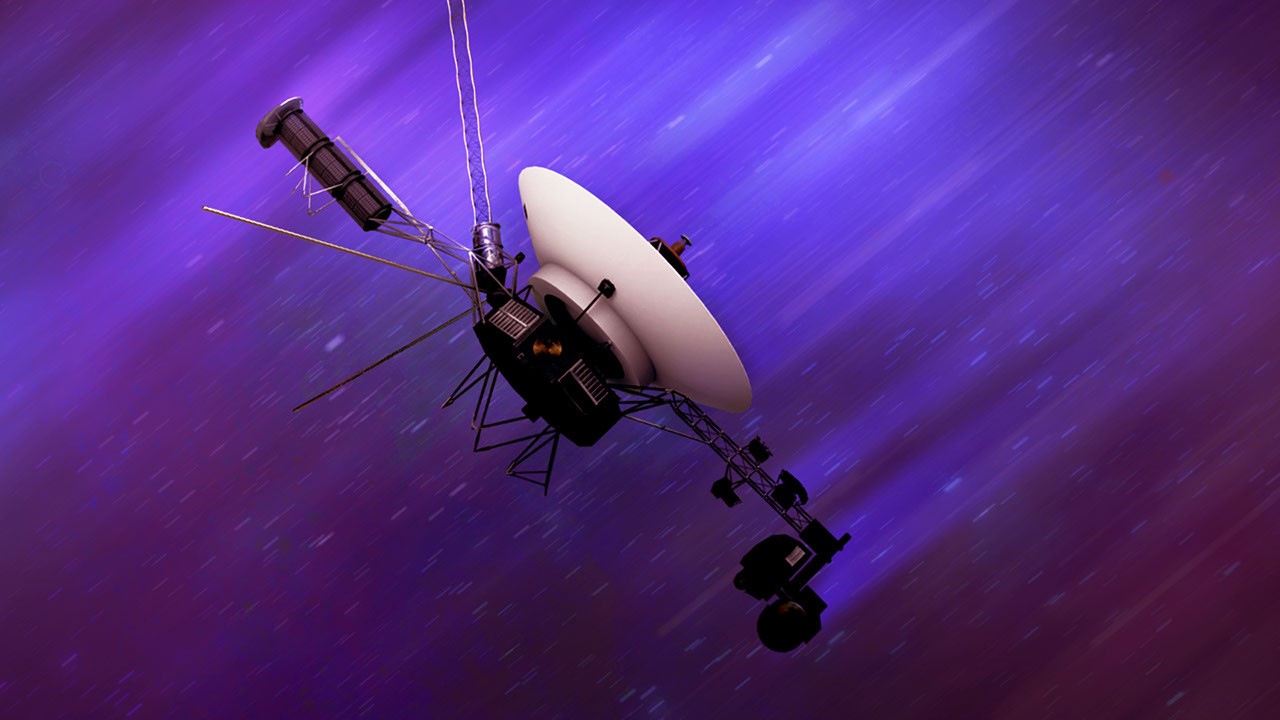
NASA’s iconic Voyager 1 spacecraft is set to achieve a remarkable milestone: crossing the one-light-day mark from the Sun on November 18, 2026. This celestial journey, covering approximately 16.1 billion miles (25.8 billion kilometers), underscores the incredible distances involved in exploring the outer reaches of our solar system and beyond.
The Grand Tour and a Golden Message
Launched in 1977 alongside its twin, Voyager 2, Voyager 1 embarked on an unprecedented mission. Taking advantage of a rare planetary alignment of Jupiter, Saturn, Uranus, and Neptune, the spacecraft utilized gravitational assists from these giant planets to slingshot itself further into the cosmos. This ‘Grand Tour’ provided humanity with its first close-up views of these distant worlds and their moons. As part of its historic voyage, each Voyager spacecraft carries a Golden Record, a time capsule containing greetings, music, and images from Earth, intended as a message to any extraterrestrial civilization it might encounter.
Crossing the Heliopause and Into the Void
Voyager 1’s journey is not just about distance; it’s about venturing into entirely new realms. In August 2012, the spacecraft officially crossed the heliopause, the boundary where the Sun’s solar wind is overtaken by the interstellar medium. This marked humanity’s first entry into interstellar space. The spacecraft continues to send valuable scientific data back to Earth, tracked by NASA’s Deep Space Network, offering unprecedented insights into this unexplored territory. As of late 2026, Voyager 1 is traveling approximately 25.8 billion kilometers (16 billion miles) from the Sun, a distance that takes light over 25 hours to traverse.
Source: NASA