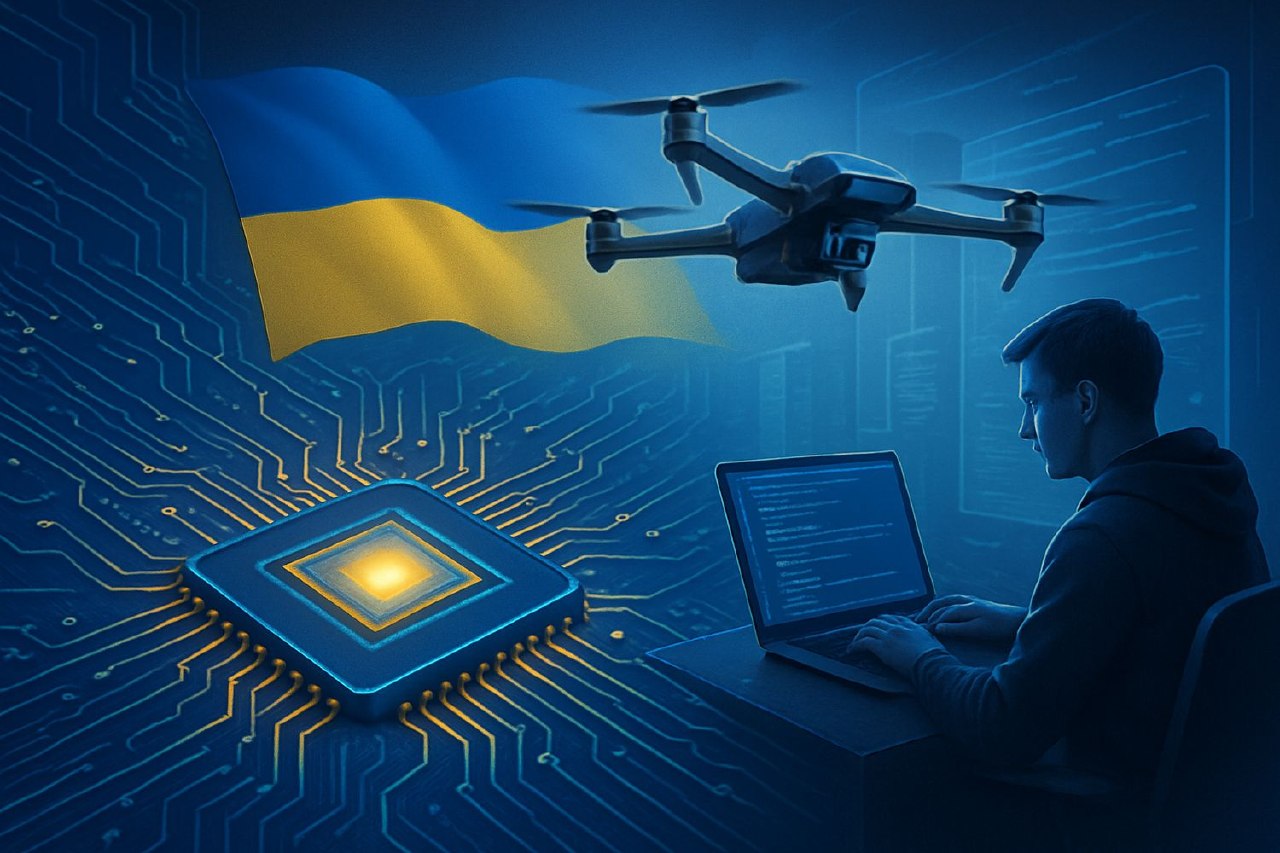
Ukraine is prioritizing the development of its technological sovereignty through the advancement of its own electronic components, defense innovations, and software. Key focus areas include the semiconductor industry, DefenseTech, and dual-use technologies, alongside creating a conducive environment for the Ukrainian hardware business.
Nataliia Denikeieva, Deputy Minister of Digital Transformation, outlined these strategic directions during the TECHNOVATION conference. She emphasized the goal of transforming Ukrainian developments into competitive products that address national needs and can penetrate international markets.

Semiconductors: Ukraine Aims to Develop In-House Components
A cornerstone of Ukraine’s technological policy is the growth of its domestic semiconductor industry. The objective is to foster conditions where local companies can develop their own electronic components and integrate into European manufacturing supply chains.
Microelectronics holds strategic importance across numerous economic sectors. Semiconductor components are vital for telecommunications equipment, navigation systems, drones, industrial automation, automotive electronics, and communication devices.
Reliance on imported components poses risks for manufacturers, including supply chain disruptions, export restrictions, logistical challenges, and price volatility, all of which can impede production timelines.
Information shared at TECHNOVATION indicated that the government is actively working on legislative frameworks to support this sector’s development.
However, establishing a fully-fledged semiconductor manufacturing capability requires substantial capital investment, specialized infrastructure, skilled engineers, and access to cutting-edge technologies. Therefore, integrating Ukrainian companies into European manufacturing chains is seen as a practical pathway for industry growth.
DefenseTech and Dual-Use: Advancing Military and Civilian Technologies
The second priority lies in bolstering Ukrainian defense technologies and dual-use hardware products.
Dual-use technologies are those applicable in both military and civilian contexts. Examples include drone systems, sensors, communication equipment, navigation devices, robotic platforms, and software solutions.
Developing these technologies enables companies to create products for defense needs, with the potential to later adapt specific innovations for industries such as manufacturing, agriculture, logistics, and other civilian sectors.
Promising areas within Ukraine’s DefenseTech landscape include:
- Unmanned Systems: Development of drones, control systems, navigation, and associated software.
- Robotic Platforms: Creation of ground-based and specialized robotic systems.
- Microelectronics: Design of circuit boards, sensors, controllers, and other components for technical systems.
- Communication Equipment: Development of devices for data transmission and ensuring resilient communication networks.
- Software Solutions: Applications for equipment management, information processing, and process automation.
Scaling these developments requires not only engineering expertise but also access to funding, manufacturing facilities, components, and testing capabilities.

Technological Self-Sufficiency: Focus on In-House Production Capabilities
The third area of government focus involves identifying technological sectors where Ukraine will cultivate its own expertise and produce critically important components.
This strategy does not necessarily imply a complete abandonment of imports. Modern industry often relies on international production chains, and producing every component within a single nation can be economically unfeasible.
Instead, technological self-sufficiency means the capacity to independently develop key products, oversee critical manufacturing stages, and possess alternative options for components essential for national security.
To achieve this, the government plans to create favorable conditions for the tech business sector, expand the Diia.City framework, and implement incentives for emerging industries.
Diia.City, with its special legal regime, tax advantages, and investor engagement mechanisms, can serve as a crucial tool for supporting technology companies.
However, for the hardware sector, specific instruments are vital, addressing the realities of physical production: access to equipment, laboratories, industrial spaces, components, and long-term financing.
Why a Domestic Technological Base is Crucial for Ukraine
The full-scale war has starkly illustrated the critical risks associated with dependence on external suppliers for electronics, equipment, and software solutions.
Technological independence, however, does not equate to isolation from the global market. On the contrary, integration into European manufacturing chains can provide Ukrainian companies with access to new technologies, partnerships, and sales markets.
Realizing this strategy necessitates a combination of factors:
- Research and Development (R&D): Support for engineering teams, universities, and laboratories.
- Manufacturing Infrastructure: Creation of environments for testing, prototyping, and serial production.
- Funding: Access to investment for companies involved in long development cycles.
- International Cooperation: Participation of Ukrainian manufacturers in technological projects and supply chains.
- Talent Development: Cultivating expertise in microelectronics, robotics, programming, and engineering.
HiTech Expert Take: From Technological Designs to Domestic Production
The strategic directions outlined at the TECHNOVATION conference encompass several interconnected objectives: advancing microelectronics, scaling defense technologies, and building domestic production capabilities.
These efforts are unified by the aim to reduce critical reliance on imported solutions and foster an environment for the growth of Ukrainian technology companies.
However, a significant gap exists between the announcement of priorities and the emergence of a competitive industrial sector. This requires concrete legislative measures, substantial investments, robust infrastructure, skilled personnel, and sustained demand for Ukrainian products.
The ultimate measure of success will be not the number of initiatives declared, but the ability of Ukrainian companies to design, manufacture, and scale critically important technological products.