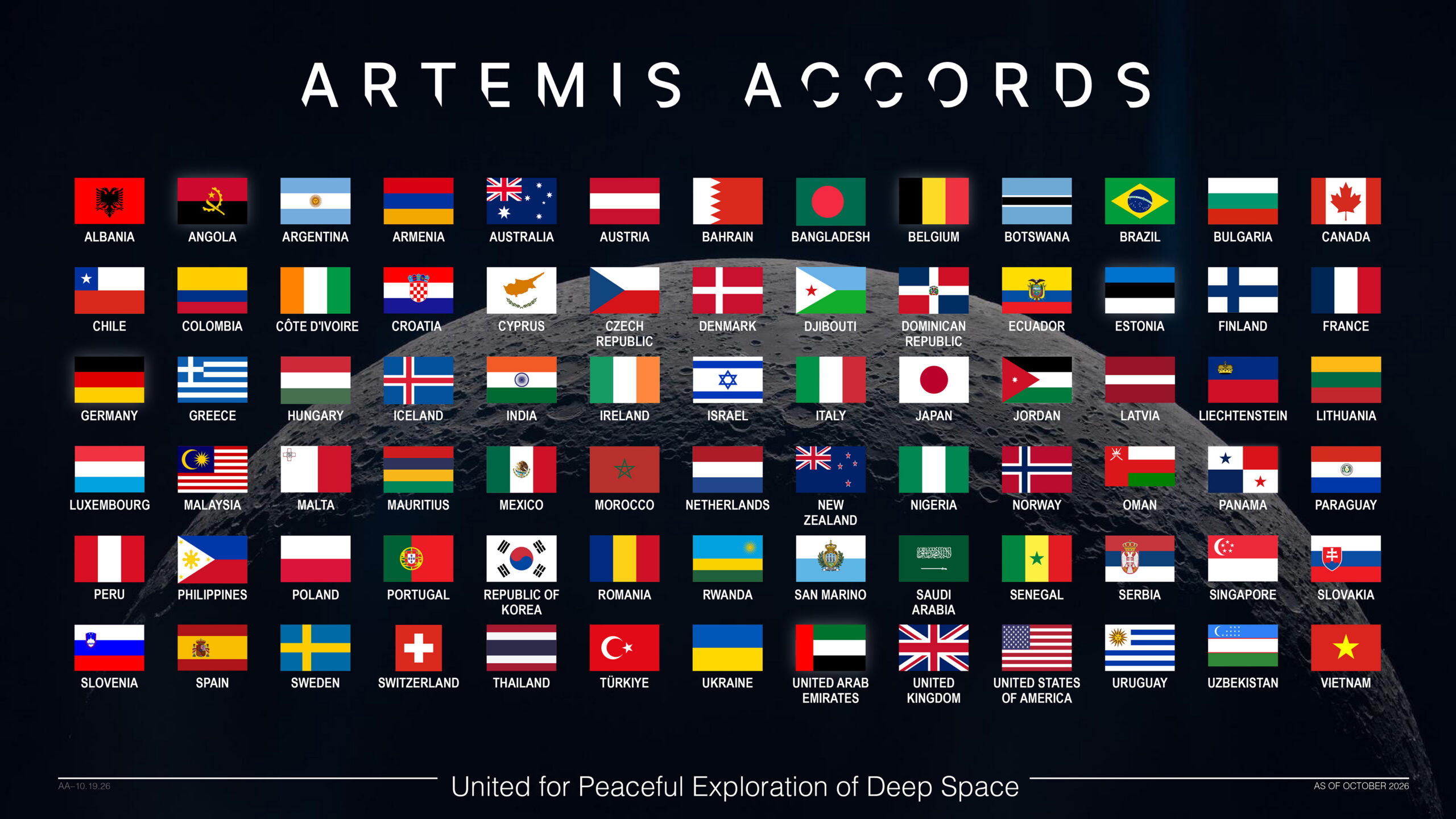
The Socialist Republic of Vietnam has become the 78th nation to sign the Artemis Accords, joining an international coalition committed to the peaceful, transparent, and responsible exploration of space. This significant development broadens the scope of collaboration in the space sector and underscores Vietnam’s increasing role in space endeavors.
Expanding Space Collaboration
NASA Deputy Administrator Matt Anderson highlighted that Vietnam’s accession comes at a pivotal moment for its own space program. NASA and the Vietnam National Space Center already share a successful track record in developing satellites, studying Earth’s surface, and observing our planet using radar technology. The signing of the Artemis Accords ushers in a new era for this relationship, enabling joint efforts to shape the future of space exploration built upon an existing strong foundation.
Vietnam’s Contribution to Space Research
Vietnam’s Minister of Science and Technology, Vu Hai Quan, signed the Artemis Accords on behalf of the country during Vietnam International Digital Week in Ha Long. This move is a natural progression of the long-standing comprehensive strategic partnership between the United States and Vietnam, which encompasses defense, economics, law enforcement, cooperation on the consequences of past conflicts, and technological exchange. Joint projects include support for NASA’s Soil Moisture Active Passive mission, which measures global soil moisture content. Vietnam is also actively advancing its own satellite capabilities through the LOTUSat program, focusing on Earth observation, weather monitoring, and disaster response.
The Artemis Accords, developed by NASA and seven other founding nations in 2020, establish fundamental principles for safe and coordinated activities during the exploration of the Moon, Mars, and other celestial bodies. These principles include:
- Peaceful and transparent exploration of space.
- Providing assistance to those in need.
- Ensuring access to scientific data for all humanity.
- Avoiding interference with other nations’ activities.
- Preserving sites and artifacts of historical significance.
Source: NASA