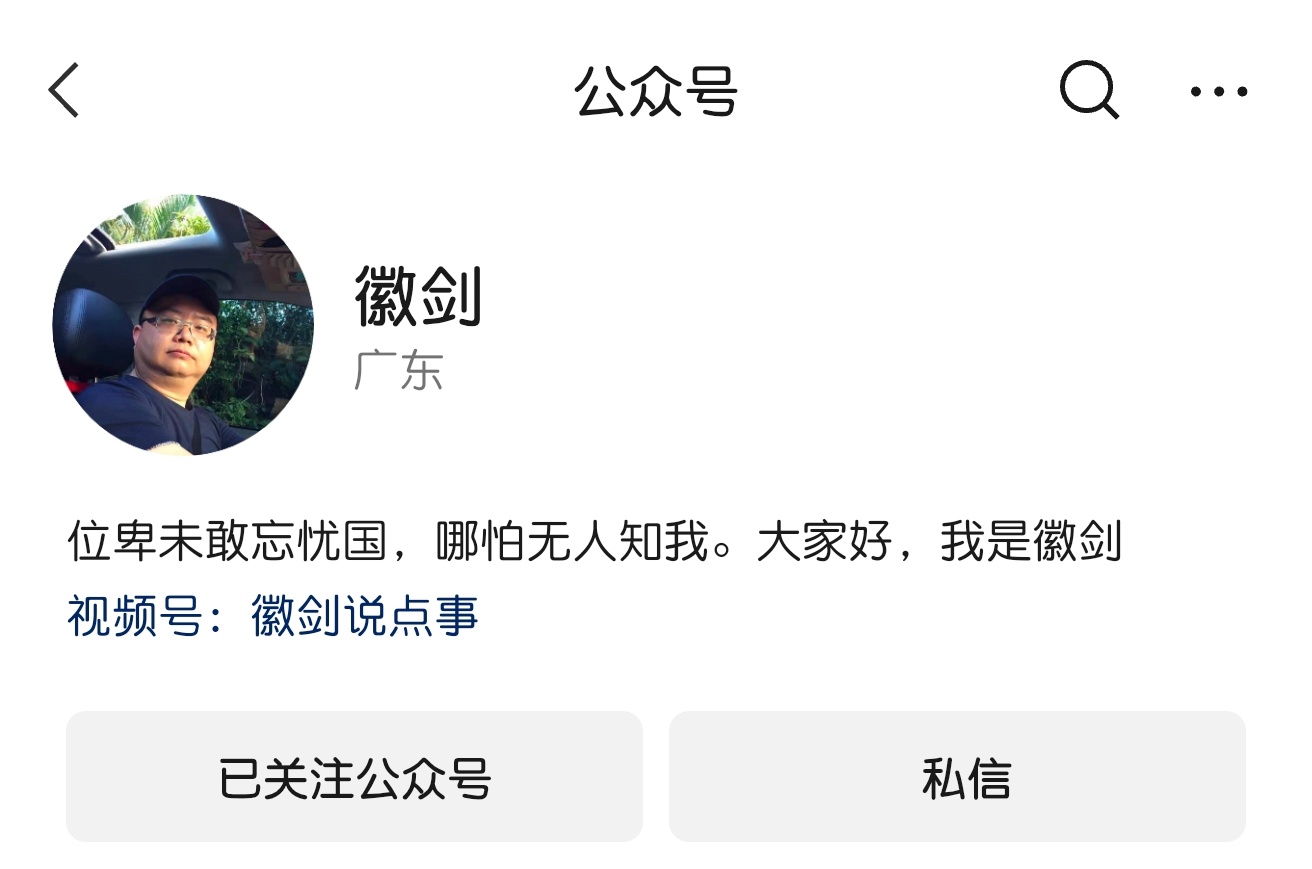
Renowned anti-fraud blogger ‘Hui Jian’, whose real name was Wu Kai, was tragically murdered two years ago. His death has resurfaced amidst ongoing investigations into a major online fraud syndicate. Wu Kai was known for his persistent public accusations against Liu Ren, a key figure in the Cambodian太子 (Taizi) Group and president of the Cambodian Anhui Chamber of Commerce, who was repatriated from Cambodia in June 2026.
Wu Kai, who amassed hundreds of thousands of followers, used his WeChat public account to expose the dark underbelly of telecom fraud operations in Myanmar and Cambodia. The blog’s updates eventually ceased, leading to widespread speculation that he had been arrested for extortion.
However, court documents recently obtained by Jiemian News reveal a more sinister truth. Wu Kai was abducted in Huizhou, Guangdong province, and subsequently moved to Heyuan, Guangdong, and Ganzhou, Jiangxi. He endured prolonged physical abuse before being abandoned on a mountain in Dingnan County, Ganzhou, where he died.
Previously a web planner in Shenzhen, Wu Kai first gained public attention in 2012 under the pseudonym ‘Hui Jian’ for exposing scandals involving a real estate mogul on Weibo. Media outlets like Global People and China News Service reported on his revelations. His focus later shifted to combating overseas telecom fraud, where he frequently detailed the inner workings of scam operations in Cambodia and Myanmar on self-media platforms.
In August 2024, Wu Kai publicly accused Liu Ren of serious crimes, including violent loan sharking at casinos, assault leading to death of a renovation boss, extorting businesses for protection fees, operating fraud parks, and engaging in armed transnational criminal activities. This marked the first time Liu Ren was publicly named and accused.
According to Lao An (a pseudonym), who knew Wu Kai for many years, Wu Kai focused solely on Liu Ren during that period. About a month before Wu Kai’s death, individuals associated with Liu Ren reportedly attempted to gather information about Wu Kai’s domestic address from a friend of Lao An in Cambodia. This request was denied. Despite this, Wu Kai’s detailed home address, recent photographs, and vehicle license plate information eventually surfaced on a stranger’s phone.
A second-instance ruling by the Guangdong High Court indicates that in mid-October 2024, Zhao Bing, born in December 1998 and from Minquan, Henan, accepted a bounty of 300,000 yuan for kidnapping a target. He found the task posted online via the Telegram app by a user named ‘Shao Xiao’ (also known as ‘Tai Ge’). Zhao Bing and the client subsequently communicated via the encrypted messaging app ‘Yeechat’.
Lao An also shared that days after Wu Kai’s murder, someone intentionally transferred 11,000 yuan to his Alipay account. Screenshots of this transaction were then circulated on external online channels, fabricating stories that Wu Kai was involved in human trafficking, extortion, and tax evasion, and had been taken away by the police. Lao An explained that Wu Kai’s large follower base would naturally question his prolonged absence, and falsely portraying his death as an arrest would serve to mislead the public.
Lao An further noted that Wu Kai’s parents had passed away, and he had no close family, leaving him with no one to notice his disappearance or speak out for him after he went missing.
The report from CCTV News in June of this year highlighted the successful repatriation of Liu Ren, described as a core member of Chen Zhi’s criminal group, from Phnom Penh, Cambodia, to China, with significant support from Cambodian authorities. Investigations revealed that in 2016, Chen Zhi, with Liu Ren and others, established the Jinbei Group in Cambodia, operating numerous online gambling platforms that targeted Chinese citizens. Since 2020, the Jinbei Group had been running extensive telecom fraud operations in Cambodia, causing enormous financial losses. Liu Ren is also implicated in serious violent crimes, including illegal detention and intentional assault.
Further information from IT Home previously reported that on January 7, 2024, Chen Zhi, the leader of a major cross-border gambling and fraud syndicate, was escorted back to China from Phnom Penh, Cambodia, by Chinese authorities. On April 1, 2024, Li Xiong, a key figure in Chen Zhi’s criminal group, was also repatriated from Phnom Penh. Additionally, on October 13, the Intermediate People’s Court of Quanzhou City and the People’s Court of Nan’an City in Fujian Province concluded the first instance trials for a series of cases related to the Wei Jia criminal syndicate, handing down death sentences to three defendants and life imprisonment to three others, with 55 defendants receiving sentences ranging from three years and three months to twenty-four years, along with fines, property confiscation, and deportation.