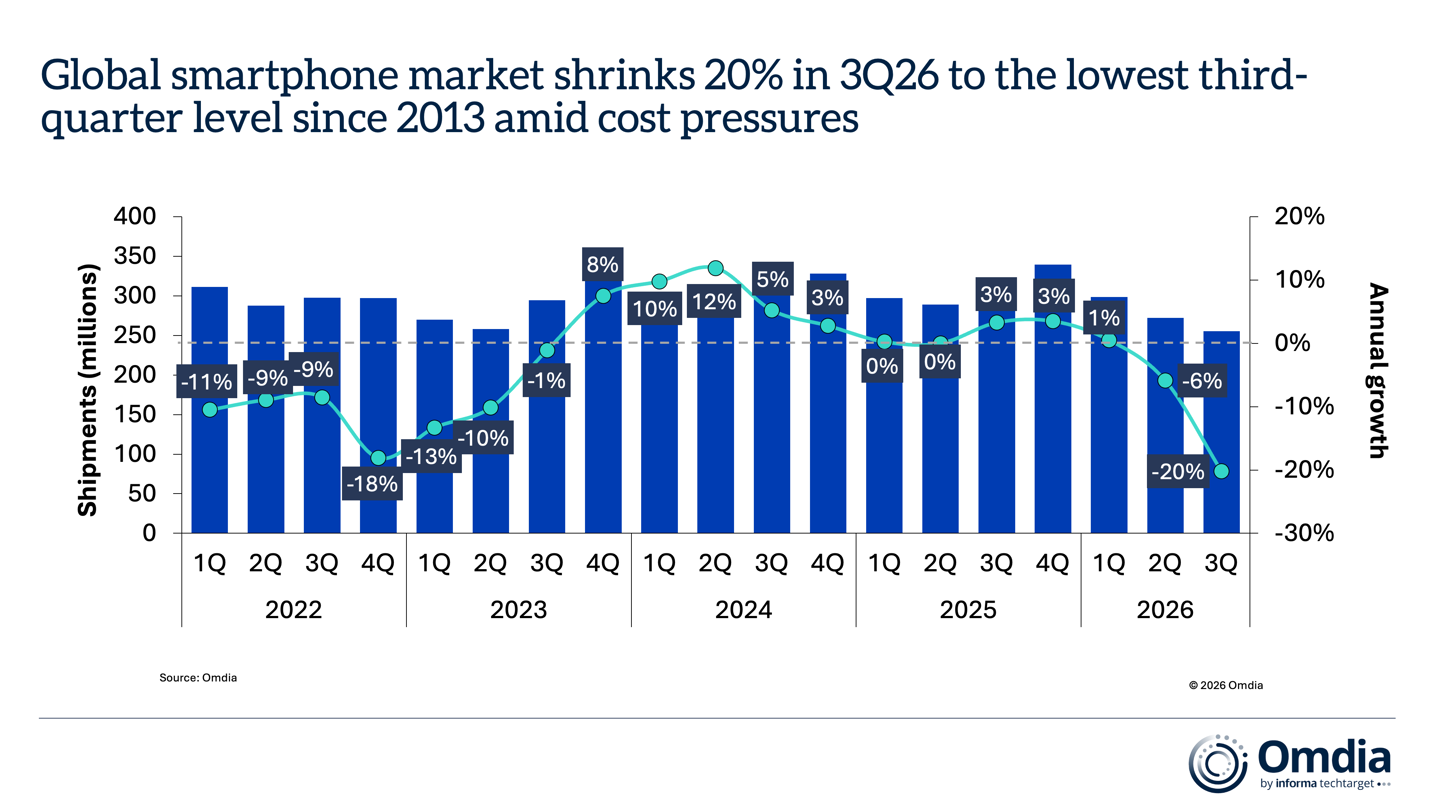
In a significant downturn for the mobile industry, global smartphone shipments experienced a sharp 20% year-over-year decline in the third quarter of 2026. This contraction marks a substantial increase in the rate of decline compared to the 6% drop observed in the previous quarter.
Market Contraction Despite New Launches
The preliminary estimates from Omdia reveal a challenging market environment, with shipment volumes shrinking not only on an annual basis but also sequentially. This dip occurred even as numerous manufacturers launched their latest flagship devices during Q3 2026, indicating that new product releases were insufficient to counteract the broader market headwinds.
Memory Costs and Pricing Pressure
According to Omdia, the persistent pressure from escalating memory costs has severely hampered the pricing flexibility of smartphone brands. This financial strain has compelled manufacturers to reduce shipments of lower-margin devices. In response, suppliers are strategically prioritizing the growth of Average Selling Price (ASP) and optimizing their product portfolios. This approach aims to preserve shipment value and ensure sustained profitability amidst the challenging market conditions.
Market Polarization Intensifies
The smartphone market landscape continues to show increasing polarization, with a significant concentration of market share among the top players. Samsung and Apple, the two dominant forces, collectively captured an impressive 45% of the market in Q3 2026, with Samsung holding 23% and Apple closely following with 22%. This combined market share represents an 8 percentage point increase compared to the same period last year, highlighting their growing dominance.
Following the leaders, Xiaomi secured the third position with 12% of the market share. OPPO came in fourth with 9%, and vivo rounded out the top five with 8%. The widening gap between the top two and the rest of the field underscores the competitive pressures and consolidation trends within the global smartphone sector.
This significant quarterly decline, driven by economic factors and strategic shifts by manufacturers, suggests a period of recalibration for the smartphone industry as it navigates cost pressures and seeks sustainable growth avenues.