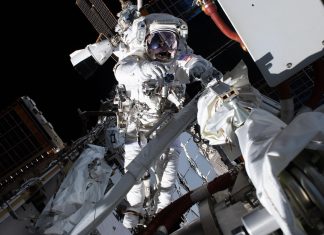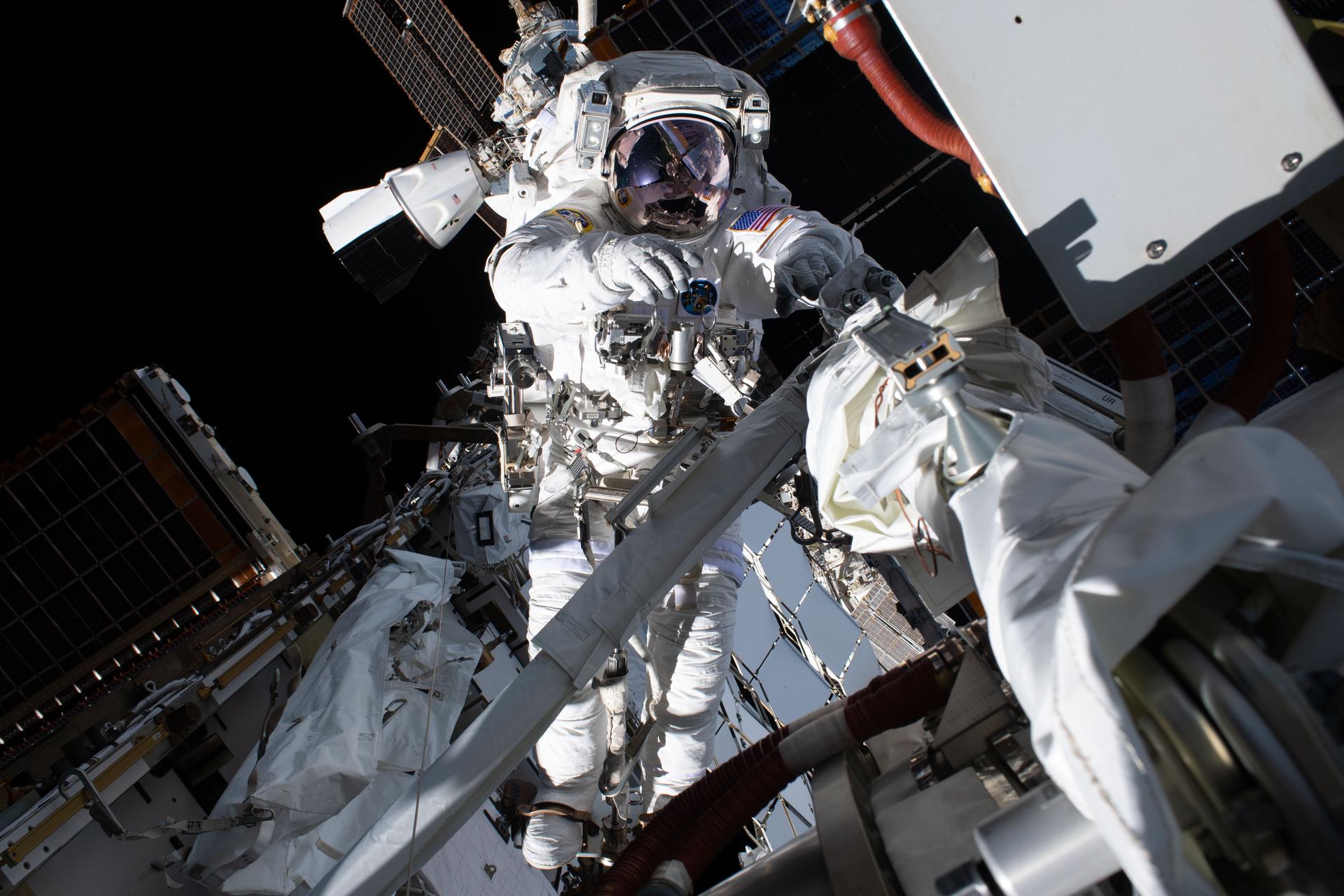
NASA is gearing up for two critical spacewalks, designated U.S. Spacewalks 100 and 101, aimed at significantly boosting the power capabilities of the International Space Station (ISS). These missions, scheduled for late October and early November, will involve the installation of advanced solar arrays, marking a significant step in ensuring the long-term operational efficiency and future upgrades of the orbiting laboratory. The spacewalks are crucial for augmenting the station’s power supply, which is essential for ongoing scientific research and maintaining the health of the station.
Powering Up the ISS: Spacewalks 100 & 101
The upcoming spacewalks will see NASA astronaut Anil Menon and Canadian Space Agency astronaut Joshua Kutryk working in tandem to install the International Space Station Roll-Out Solar Arrays (IROSA). On Thursday, October 29th, they will install the seventh IROSA on the station’s 2A electrical power channel. This will be followed by the installation of the eighth and final IROSA on the 3B channel on Thursday, November 5th. Together, these final two arrays will complete the power augmentation project. The installation of all eight IROSA units will collectively increase the station’s available power by up to 30%, elevating its electric power generation capacity from 160 kilowatts to approximately 215 kilowatts.
A Milestone in Space Station Operations
These spacewalks represent a significant milestone, being the 285th and 286th conducted in support of the ISS’s assembly, maintenance, and upgrades. The successful deployment of these solar arrays will not only provide crucial additional power for the station’s complex operations but also contribute to the safe and controlled deorbit of the ISS in the future. This power upgrade is vital for supporting the wealth of scientific experiments conducted aboard the station and for enabling future technological advancements and expansions.
Source: NASA