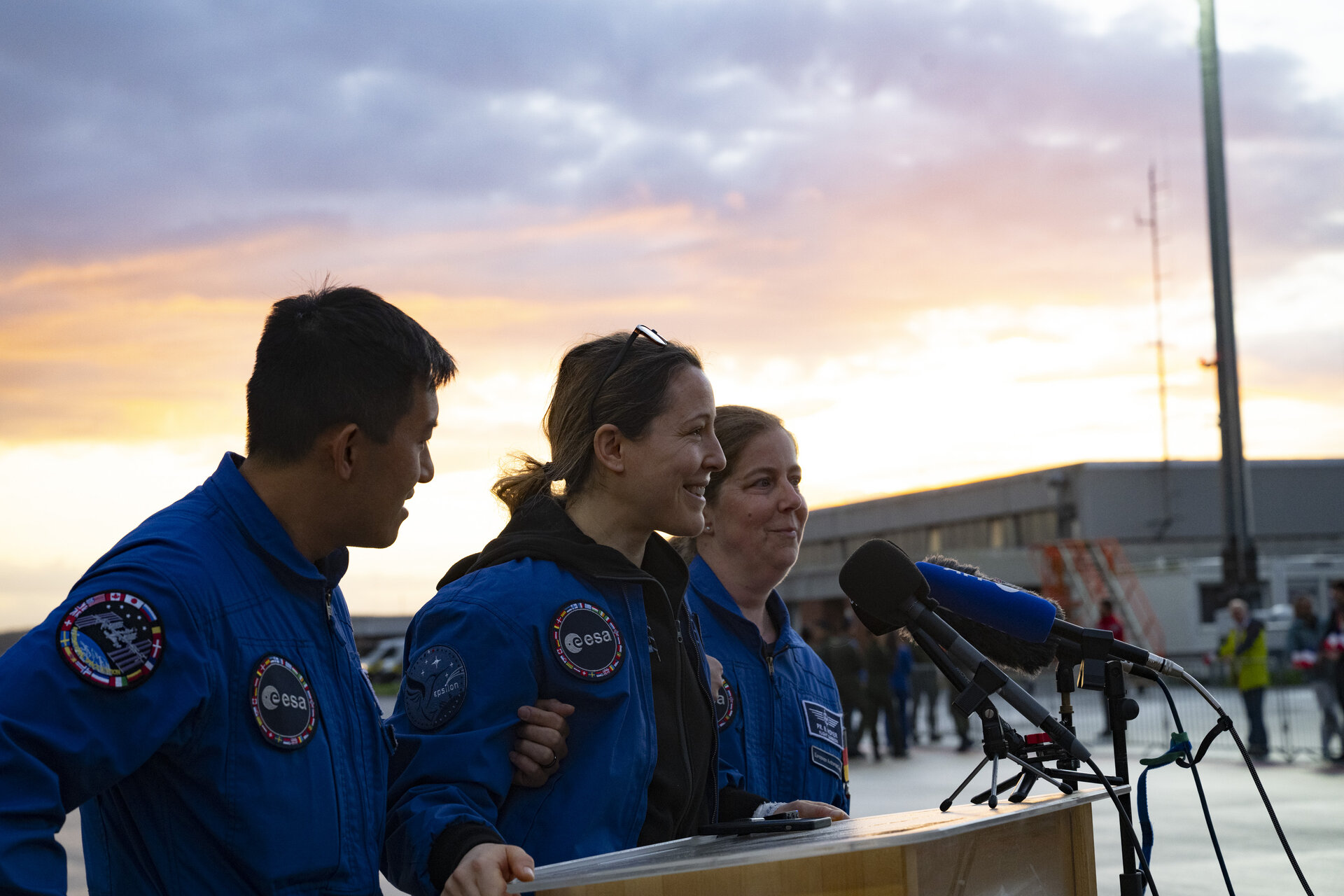
The European Space Agency (ESA) is celebrating the successful return of its astronaut Sophie Adenot to Earth. After nearly eight months aboard the International Space Station (ISS) as part of the εpsilon mission, she landed in Cologne, Germany, concluding her first space journey and setting a new European record for the longest single spaceflight.
A Record-Breaking Voyage to the Stars
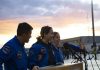
Sophie Adenot, along with her NASA and Roscosmos colleagues, undocked from the ISS on October 7th, beginning a 27-hour journey back home. Following a successful splashdown on October 8th, the astronauts underwent initial medical checks and were transported to Houston, USA, for further post-flight procedures. On October 9th, Sophie traveled to the ESA’s European Astronaut Centre in Cologne, Germany, where she received a warm welcome from family, friends, and colleagues. “We are thrilled to welcome our astronaut Sophie Adenot, who embodied our values through her successful mission,” stated ESA Director General Josef Aschbacher. “The inspiration Sophie has provided with her mission is of great importance, especially at this crucial moment for Europe.”
In total, Sophie spent 237 days, 5 hours, and 18 minutes in space. The εpsilon mission surpassed the previous European record, set by Luca Parmitano, by over 35 days. Furthermore, the Crew-12 flight became the longest in the history of SpaceX Dragon spacecraft missions, exceeding the previous Crew-8 record by two days. Sophie Adenot also made history as the first French woman and the second European woman (after Samantha Cristoforetti) to perform a spacewalk (EVA). She participated in three such excursions, spending a total of 19 hours and 42 minutes outside the station, working on various tasks.
Science, Technology, and Inspiration
Throughout her mission, Sophie Adenot conducted a wide range of European scientific experiments, covering research in medicine, materials science, biology, fluid physics, radiation physics, and fundamental sciences. She also helped test new technologies for future missions, including the innovative European E4D trainer and metal 3D printing technology in microgravity. Sophie spent approximately 218 hours working on 35 European experimental facilities, and about 25 hours on maintenance or upgrades of ESA systems within the Columbus orbital module. She successfully completed all planned experiments for the εpsilon mission.
“Sophie has brilliantly completed her mission, making a significant contribution to the ambitious program of science, technology, and research, representing Europe in international cooperation,” noted Daniel Neuenschwander, ESA Director of Human and Robotic Exploration.
In addition to her scientific work, Sophie actively engaged with the public, sharing moments of her life on the ISS and mission achievements with her multi-million audience on social media. Her content garnered over 403 million views. She also inspired over 290,000 students through educational projects, astronomy contests, and radio broadcasts. In the coming two to three weeks, Sophie will be readapting to Earth’s gravity and undergoing medical examinations at the German Aerospace Center (DLR).