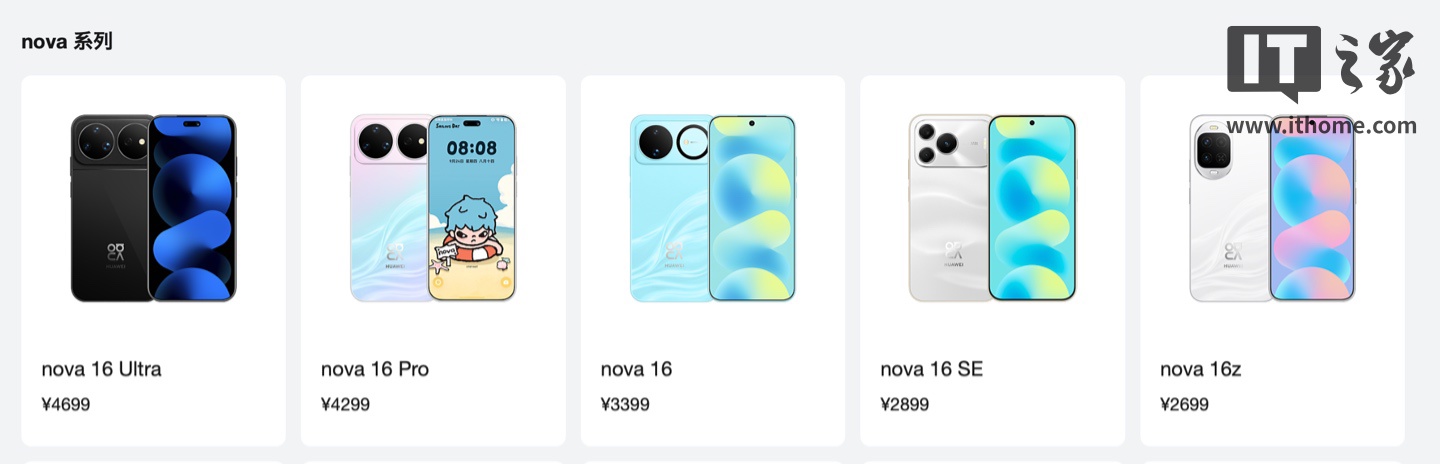
Huawei has officially announced a price increase for several models within its popular nova 16 smartphone lineup. The affected devices include the nova 16 SE, nova 16, and nova 16 Pro. This adjustment is attributed to a significant rise in global memory component costs.
Price Revision Details
According to Huawei’s official website, the following price revisions have been implemented:
Huawei nova 16 SE (Increased by 200 Yuan)
- 128 GB: from 2499 Yuan to 2699 Yuan
- 256 GB: from 2699 Yuan to 2899 Yuan
- 512 GB: from 3199 Yuan to 3399 Yuan
Huawei nova 16 (Increased by 400 Yuan)
- 12 GB + 256 GB: from 2999 Yuan to 3399 Yuan
- 12 GB + 512 GB: from 3499 Yuan to 3899 Yuan
Huawei nova 16 Pro (Increased by 400 Yuan)
- 12 GB + 256 GB: from 3899 Yuan to 4299 Yuan
- 12 GB + 512 GB: from 4399 Yuan to 4799 Yuan
- 12 GB + 1 TB: from 4999 Yuan to 5399 Yuan
It is important to note that the Huawei nova 16z and Huawei nova 16 Ultra models have not seen any price changes. Their pricing remains as follows:
Huawei nova 16z
- 12 GB + 256 GB: 2699 Yuan
- 12 GB + 512 GB: 3199 Yuan
Huawei nova 16 Ultra
- 12 GB + 256 GB: 4699 Yuan
- 12 GB + 512 GB: 5199 Yuan
- 12 GB + 1 TB: 5799 Yuan
Reasons Behind the Price Hike
Richard Yu, Huawei’s CEO and head of its Consumer Business Group (Terminal BG), explained the rationale behind these price adjustments in an interview with international media. He highlighted that a sharp increase in memory component prices has led to additional costs exceeding $200 USD (approximately 1343 Yuan at current exchange rates) per smartphone.
“Overall, this is definitely a huge challenge for the entire industry. We see many smartphone manufacturers increasing prices. We are increasing prices very slowly because we try to absorb some of the costs ourselves so that consumers don’t have to. But honestly, our overall profit margin has dropped sharply. Looking ahead, we also have to increase prices. If we incur losses, our business cannot exist, and the company must first be able to survive,” stated Richard Yu.
This indicates that the rising cost of components is a global trend compelling manufacturers to re-evaluate their pricing strategies. Huawei, like many other market players, is striving to minimize the impact of these changes on the end consumer, though it is becoming increasingly difficult.
The price increase for Huawei’s nova 16 smartphones may influence purchasing decisions, but the company appears to be prioritizing its long-term business stability, even at the expense of temporary profit reduction. This situation underscores the escalating production costs of modern mobile technology and the challenges manufacturers face amidst volatile component markets.