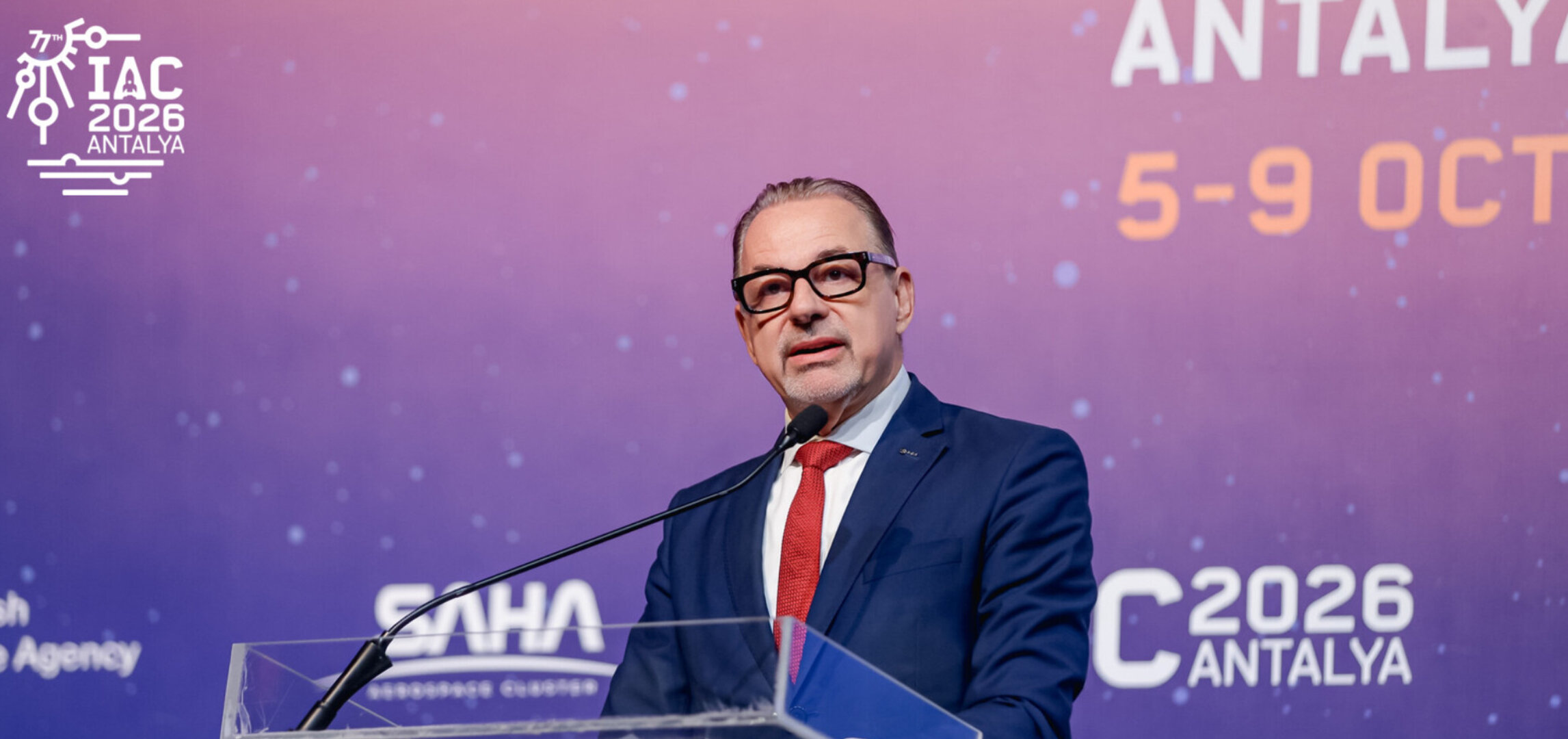
Europe’s commitment to strengthening its independent space capabilities while fostering deeper international collaboration took center stage on the first day of the 77th International Astronautical Congress (IAC) in Antalya, Türkiye. ESA Director General Josef Aschbacher underscored the agency’s strategic vision, emphasizing Europe’s role as a vital partner in a rapidly evolving global space landscape, from ambitious exploration missions to leveraging space for societal benefit.
Charting a Course for European Autonomy and Collaboration
The IAC 2026, held for the first time in Türkiye, convened space leaders, government officials, industry pioneers, and academics under the banner ‘The World Needs More Space’. A key focus of ESA’s engagement was the ministerial round table, ‘Space: a national strategic priority?’, moderated by Director General Aschbacher. This high-level discussion brought together ministers from Türkiye, the United Arab Emirates, Spain, Poland, and Uzbekistan to deliberate on the strategic importance of space endeavors. Later, in the ‘One-to-One with Heads of Space Agencies’ plenary session, Aschbacher highlighted ESA’s crucial contributions to international partnerships, including the Artemis missions with NASA. He also emphasized the growing collaboration with a diverse array of nations like Japan, Australia, the United Arab Emirates, and India, alongside long-standing partner Canada. Inspired by NASA’s innovative approaches to lunar exploration, Aschbacher reiterated Europe’s dedication to becoming a stronger, more autonomous partner. This includes preparing for key decisions at the Intermediate Ministerial Meeting in Rome regarding enhanced European capabilities in human and robotic exploration, potentially including the development of independent astronaut transportation systems. This drive for autonomy, he stressed, is not about isolation but about becoming an even more valuable collaborator.
Space as a Catalyst for Societal Progress
Beyond exploration, ESA is keenly focused on demonstrating how space directly benefits humanity. Aschbacher articulated that the IAC’s theme, ‘The World Needs More Space,’ should translate into tangible improvements for people, societies, and nations. He pointed to the indispensable role of space systems in modern life, supporting critical services like navigation, communication, weather forecasting, environmental monitoring, and emergency response. Citing data from the Organisation for Economic Co-operation and Development (OECD), he noted that space-based systems underpin more than half of the 16 critical infrastructure sectors within OECD countries, underscoring their fundamental importance.
Preparing for the Future of Space Exploration
In preparation for the eventual end of the International Space Station’s operational life, ESA is actively exploring future opportunities for European astronauts and microgravity research. A significant step in this direction was the signing of a Memorandum of Understanding with Vast, a private space company, during the first day of IAC 2026. This agreement signals a deepening collaboration and paves the way for potential future ventures in low-Earth orbit. ESA also showcased its strategic vision at its extensive exhibition booth, themed ‘European Space Agency: Elevating the Future of Europe’. The display featured mission models, images, and videos highlighting the agency’s Strategy 2040 goals, recent achievements, and upcoming missions, all underscoring the indispensable nature of international partnerships. Discussions at the booth included an insightful session on the space economy with ESA’s Head of Space Economy and Industrial Policy Division and a representative from the RAND School of Public Policy.