As the automotive industry rapidly embraces intelligence, traditional luxury brands are focused on establishing their unique advantages in intelligent driving. BMW recently offered a glimpse into its strategy with the first public road test drive of its intelligent driving assistance systems in Nanjing, China.
“BMW-Flavored” Intelligent Driving Meets Chinese Roads
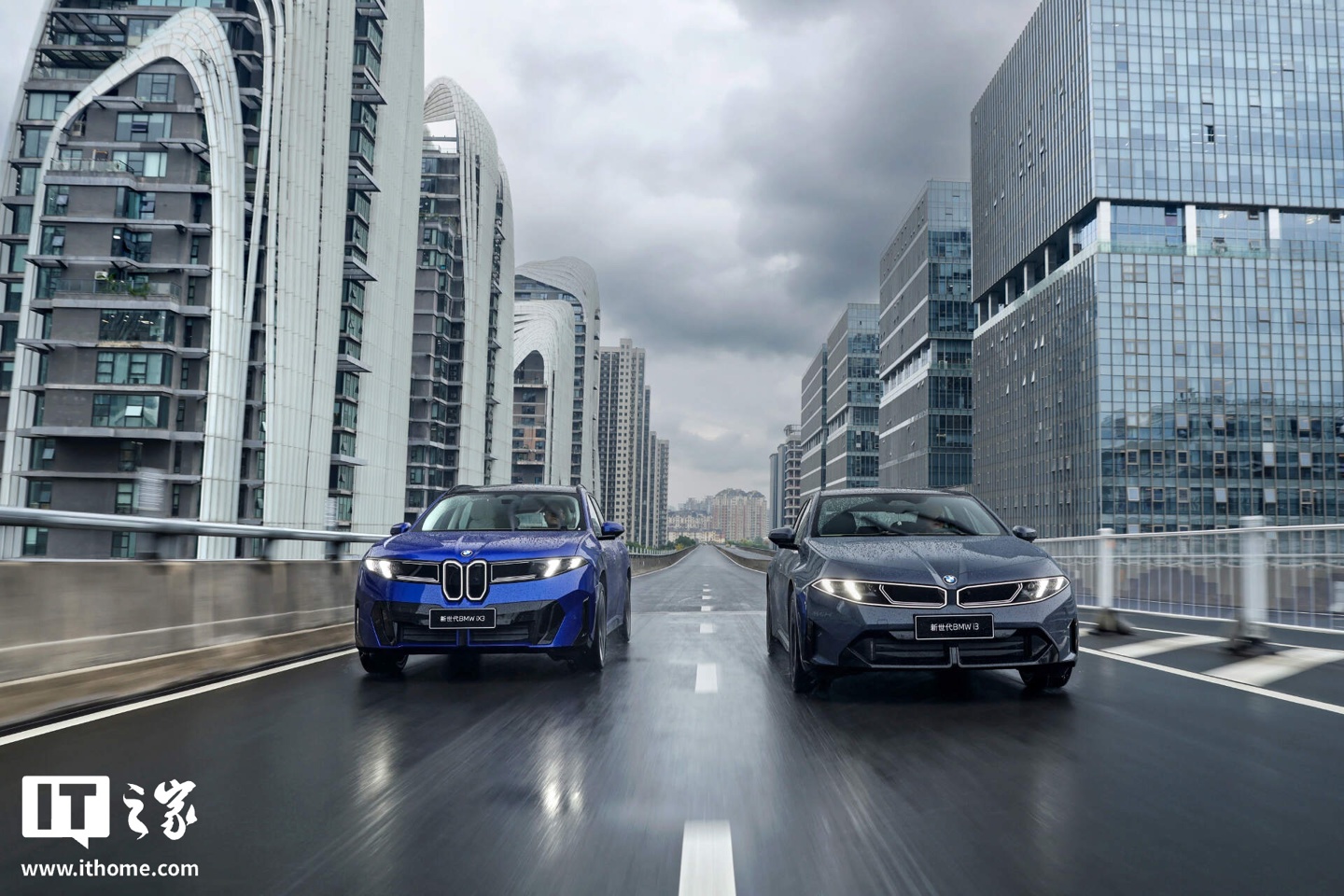
The test drive, covering approximately 25 kilometers through Nanjing’s urban areas, expressways, tunnels, and the winding roads around Zijin Mountain, featured the new generation BMW i3 and iX3. The new intelligent driving assistance system was put to the test in diverse real-world traffic conditions, from city driving and expressway merging to complex intersections and challenging bends.
The core takeaway from the experience is that BMW’s intelligent driving isn’t just about letting the car drive itself; it aims to make the vehicle smarter while preserving the familiar, engaging driving dynamics that BMW is known for.
Powered by 15 Billion Kilometers of Data
To navigate Nanjing’s intricate traffic, a robust technological foundation is essential. Unlike some international automakers who struggle with local road conditions, BMW’s system is a deep collaboration with Chinese intelligent driving company Momenta, specifically tailored for China’s unique traffic scenarios.
At its heart is Momenta’s R7 World Model. This advanced system goes beyond simply identifying obstacles; it understands the complex interactions between road users and can predict their future movements. This represents an upgrade from merely ‘perceiving the environment’ to ‘understanding the environment’.
The system is trained on over 15 billion kilometers of Chinese road data and 168 million curated scenarios, with an additional 10 million kilometers simulated daily. This extensive data allows the system to handle dynamic situations naturally. During the test drive, the system demonstrated a smooth response to sudden braking and assertive lane changes by other vehicles, avoiding jarring halts. It accurately judged right-of-way at complex intersections and managed merges with confidence. Even on winding mountain roads, the system maintained BMW’s hallmark of precise and agile handling, with smooth speed adjustments and fluid steering inputs.
Key Scenarios Highlighted:
- Lane Changes: The system seamlessly executed lane changes to avoid slow-moving vehicles.
- Left-Turn Waiting Zones: It correctly identified and entered waiting zones at intersections, adapting to traffic light sequences.
- Dynamic Obstacle Avoidance: While navigating narrowing lanes, the system detected approaching vehicles and performed a smooth lane change to avoid them.
- Tunnel Driving: Continuous environmental recognition ensured stable driving within tunnels.
- Narrow Lane Maneuvers: The car expertly navigated tight spaces, dynamically avoiding an entering vehicle.
“Seamless Braking” for Enhanced Comfort
A notable feature is BMW’s ‘seamless braking’, achieved through motor torque control, which results in exceptionally smooth deceleration with minimal head-nodding or jolting. Even during sudden braking maneuvers, the i3 maintained a smooth, controlled stop. BMW staff also indicated that this method, by utilizing motor torque for braking, could extend brake pad life significantly, potentially reducing the need for replacement for up to 100,000 kilometers.
The “BMW Taste” of Intelligent Driving
BMW emphasizes a philosophy of ‘co-driving’ and ‘seamless handover’, where intelligent driving assistance enhances, rather than replaces, the driver’s involvement. Unlike systems that might abruptly disengage, BMW’s approach allows the driver to intervene—like gently applying the brakes or making minor steering corrections—without the system immediately exiting. The system intelligently adapts to driver inputs and resumes full control once the driver relaxes. This ensures the driver always remains the core participant.
An interesting aspect is BMW’s driver monitoring system, which focuses on the driver’s gaze rather than just steering wheel input. If the driver’s attention deviates from the road for too long, the system provides timely alerts. Repeated inattention, even with hands on the wheel, can lead to a temporary deactivation of the system, requiring a restart procedure to ensure driver focus.
BMW has also developed the ‘Roaming Lane Assistant’ for the Chinese market, enabling the system to recognize traffic lights and assist with continuous intersection passage even without active navigation. Lane changes and turns are initiated by simple driver inputs via the turn signal stalk.
‘One Car, One Tuning’ and ‘Electrified and Fuel-Powered Intelligence’
BMW adheres to a ‘one car, one tuning’ principle, meticulously calibrating its intelligent driving systems to the specific chassis, powertrain, and driving characteristics of each model. This ensures a consistent and natural driving experience across different BMW vehicles, maintaining their unique personalities.
Furthermore, BMW demonstrates ‘electrified and fuel-powered intelligence’ by equipping both electric and internal combustion engine models, like the new BMW 7 Series, with the same advanced intelligent driving assistance systems, powered by the Momenta R7 World Model. This technology is slated for wider deployment across the BMW lineup, regardless of powertrain.
The New BMW Panoramic iDrive: Driver-Centric Information
Inside, the new generation BMW iX3 showcases a radical interior design centered around the new Panoramic iDrive system. This user interface prioritizes keeping the driver’s hands on the wheel and eyes on the road. Key elements include a panoramic display at eye level, a 3D head-up display, a curved central infotainment screen, and a new steering wheel design.
The design, referred to as the ‘visual cone’, consolidates information and controls within the driver’s primary field of vision and reach. The panoramic display spans 1.2 meters across the windshield base, offering clear visibility even in bright sunlight. The 3D head-up display integrates navigation and driving assistance information directly into the driver’s view, reducing the need to glance at the central screen. The 17.9-inch curved display is angled towards the driver, shortening reach and minimizing eye movement away from the road.
A BMW That’s Still a BMW
The exterior design of the new generation BMW i3, while bold, retains recognizable BMW cues like the kidney grille and quad headlights, now reimagined as ‘digital angel eyes’. The iconic ‘shark nose’ and Hofmeister kink are updated with cleaner, more modern lines. The extended wheelbase, specific to the Chinese market, provides ample rear passenger space without compromising the car’s sleek sedan profile.
While photos might not fully capture the nuances of the design, seeing the car in person reveals its layered and sculpted form. Despite the significant advancements in intelligent driving and interior technology, and the bolder design choices, BMW remains committed to preserving the core driving pleasure that defines the brand. The intelligent systems augment the driving experience, allowing drivers to remain engaged and in control, ensuring that the quintessential ‘BMW feel’ persists.
BMW is embarking on a new era, marked by daring innovations in intelligent driving, iDrive interface, and design. Yet, at its core, the focus remains on the driver, ensuring that the thrill of driving remains an integral part of the BMW experience, even as technology advances.