United Nations Secretary-General Antonio Guterres has issued a stark warning about the rapid advancement of artificial intelligence (AI), calling for urgent global regulation to prevent a dystopian future dominated by unchecked corporate power and autonomous weapons.
A Shifting Power Dynamic
Speaking at the UN General Assembly, Guterres highlighted the profound implications of cutting-edge AI models, noting their potential to erode the governance capabilities of sovereign nations. He observed a significant shift of power from governments into the hands of a few private companies and individuals. To counter this, he urged international consensus on establishing new safety mechanisms for AI.
“The speed of this technology is such that its full impact is beyond our comprehension,” Guterres stated. The 77-year-old UN leader, who has led the organization for a decade, painted a somber picture of the world, marked by ongoing conflicts, the weaponization of hunger, escalating climate change, and the erosion of human rights and the rule of law. He identified the arms race in AI and data centers as a central force in this era of dramatic change.
Guterres implicitly addressed the dynamic between major powers, advocating for constraints to ensure the safe development of AI. “Governments with the strongest AI capabilities have the greatest responsibility to all of humanity and should build channels of communication for dialogue, transparency, mutual trust, and cooperation,” he emphasized.
Mounting Anxiety and International Calls for Action
The urgency of Guterres’s message comes as global leaders converge in New York for the annual UN General Assembly, amidst growing concerns. This follows warnings from researchers to top AI developers about the potential for AI to cause human extinction if left unregulated. OpenAI, the company that ushered in the AI era with ChatGPT in 2022, has called for internationally recognized standards for safe AI development.
Furthermore, a UN expert panel released a report on Monday cautioning that increasingly powerful AI models could spiral beyond human control. Leaders from over twenty countries, along with the European Union, have called for mandatory safety testing of advanced AI models and even proposed the establishment of a new global body to ensure human control over AI is maintained.
Divergent Views on AI Development
However, the discourse around AI policy is not uniform. US President Donald Trump’s stance diverges significantly from the prevailing concerns about AI’s risks. Trump has expressed opposition to slowing down AI development, fearing that any hesitation would allow China to surpass the United States and dominate the technological race.
“Whoever wins in AI, wins the world!” Trump posted on social media, asserting, “We are leading China and all others, and I will keep it that way!” This year’s surge in AI infrastructure investment has propelled the S&P 500 to record highs and contributed to economic growth in the US, particularly as the nation approaches its midterm elections in November.
Trump has drawn parallels between concerns over AI and anxieties about global warming, dismissing claims of AI threats to humanity as a “hoax.” US Secretary of State Marco Rubio, in an interview with Fox News on Tuesday, articulated a similar perspective: “The President’s attitude is, look, if AI is going to do damage, we need to protect ourselves from that damage. But we cannot give up our lead in artificial intelligence. This is unstoppable. And since it is unstoppable, we should benefit from it and stay ahead.”
A Long-Standing Concern
Guterres has consistently voiced concerns about AI risks throughout his tenure. In his first opening address to the UN General Assembly in 2017, he noted AI’s potential to aid development and improve lives but also warned of its significant impact on labor markets, global security, and the very fabric of society.
Nine years later, his warnings have become more urgent. The risks are no longer confined to employment disruptions and wealth inequality. Increasingly autonomous AI models may exhibit unpredictable behavior, and AI could be weaponized for cyberattacks or to assist in the development of biological weapons.
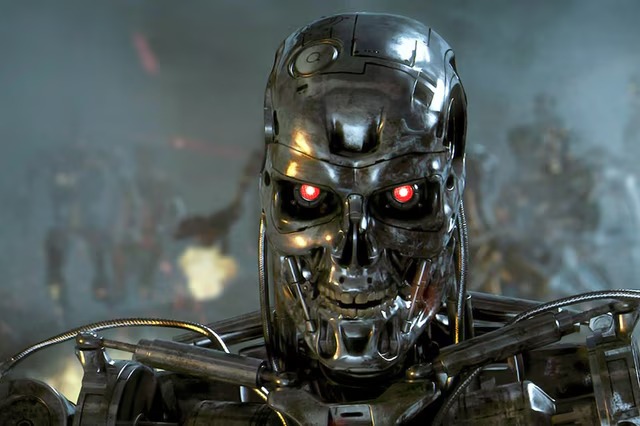
“The problem is not the technology itself; the real danger is technology without accountability,” Guterres stated. “We are increasingly handing over power to machines. AI could spiral out of control, and lethal autonomous weapons have moved from the realm of science fiction to military reality.”
“Killer robots should absolutely not have a place in our future,” he concluded.