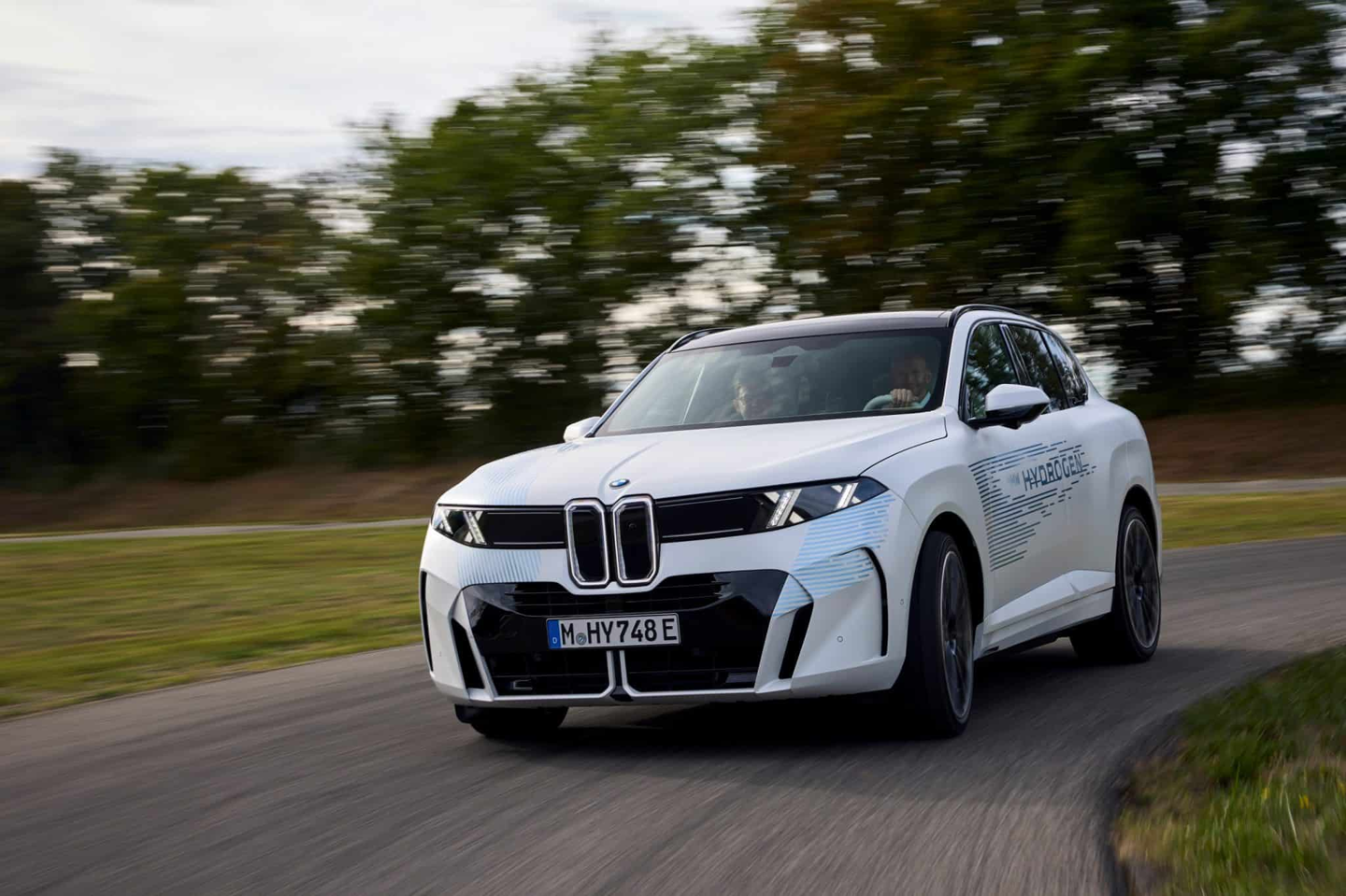
BMW’s hydrogen-powered iX5 Hydrogen is now undergoing real-world road testing, marking a significant step towards its potential production later this decade. The prototype vehicle is being put through its paces to validate the performance of its fuel cell system, electric motors, and overall driving dynamics.
Performance and Efficiency Goals
BMW is targeting an impressive 0-100 km/h acceleration time of under 5 seconds for the iX5 Hydrogen, putting it in line with its pure electric counterparts, such as the iX5 60 xDrive which achieves this in 4.6 seconds. While final power and torque figures for the fuel cell version are yet to be announced, it will feature BMW’s xDrive all-wheel-drive system, with a motor on each axle.
Efficiency is a key focus for BMW, with the company aiming for a WLTP driving range of 750 km on a single hydrogen fill-up. This offers a compelling alternative to battery-electric vehicles, though it is slightly less than the 845 km range of the iX5 60 xDrive equipped with a large 141 kWh battery.
Refueling and Practicality
A major advantage highlighted is the refueling time. BMW anticipates that refilling the hydrogen tanks will take less than 5 minutes, comparable to the time it takes to refuel a gasoline or diesel X5. The iX5 Hydrogen is equipped with seven high-pressure carbon fiber tanks capable of storing up to 7 kg of hydrogen, ensuring that passenger space is not compromised compared to the pure electric iX5.
Technological Advancements
The vehicle utilizes the third-generation fuel cell system, jointly developed by BMW and Toyota. This advanced system is reportedly 25% smaller than its predecessor, contributing to the vehicle’s packaging efficiency.
Testing and Development
The current road tests are designed to rigorously assess the performance of the fuel cell and drivetrain components under various demanding environmental conditions and driving scenarios. BMW engineers are particularly focused on ensuring the hydrogen X5 delivers the characteristic driving feel that customers expect from the brand, aiming to prove that alternative fuels can be integrated without sacrificing driving pleasure.
The Future of Hydrogen Power
The success of hydrogen as a viable alternative to battery-electric power hinges on the development of widespread infrastructure and hydrogen supply chains. BMW believes that a vehicle offering zero emissions, long range, and fast refueling times similar to internal combustion engine cars could attract a significant consumer base.
While the iX5 Hydrogen is still in its prototype phase, these real-world tests signal BMW’s commitment to advancing hydrogen fuel cell technology. The company anticipates that this model, as the fifth powertrain variant for the X5, could potentially reach production as early as 2028. However, it is not expected to be a globally available model.