On November 6, 1572, German astronomer Wolfgang Schuler made an observation that would forever alter humanity’s perception of the cosmos. With the naked eye, he spotted an extraordinarily bright object in the constellation Cassiopeia. It was so luminous it rivaled Venus in brilliance and was even visible during daylight hours. At the time, astronomers had no explanation for this phenomenon, believing a completely “new star” had appeared in the heavens.
A Discovery That Baffled Scientists
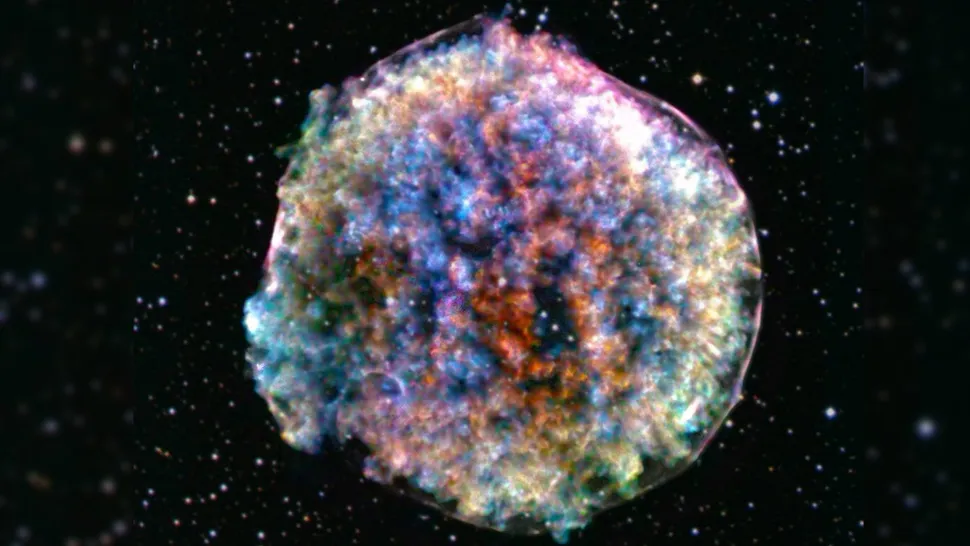
While Schuler was likely the first to notice this celestial event, the true hero of the discovery was Danish astronomer Tycho Brahe. He conducted meticulous research on the object, which would later be known as “Tycho’s Star.” Brahe detailed his observations in his seminal scientific work, De Stella Nova (“On the New Star”), which had a profound impact on the scientific community of his era. The concept of supernovae had not yet been conceived, so the appearance of a “new star” presented a significant challenge to the prevailing belief in the unchanging nature of the celestial spheres.
From “New Star” to Type Ia Supernova
The 1572 event, now recognized as supernova SN 1572, was classified as a Type Ia supernova only in the 1940s. This type of explosion occurs in a binary star system when a white dwarf star accretes matter from its stellar companion, reaches a critical mass, and detonates. Although Schuler first sighted the phenomenon, it was Brahe’s detailed records that later enabled scientists to identify “Tycho’s Star” as a Type Ia supernova by analyzing its light curve. The explosion, occurring approximately 13,000 light-years from Earth, remained visible to the naked eye for 16 months, and for two weeks, it shone so brightly it could be seen even in daylight. These observations became some of the first substantial evidence that celestial bodies were not eternal and immutable, marking a pivotal turning point at the end of the Middle Ages.
Source: space.com