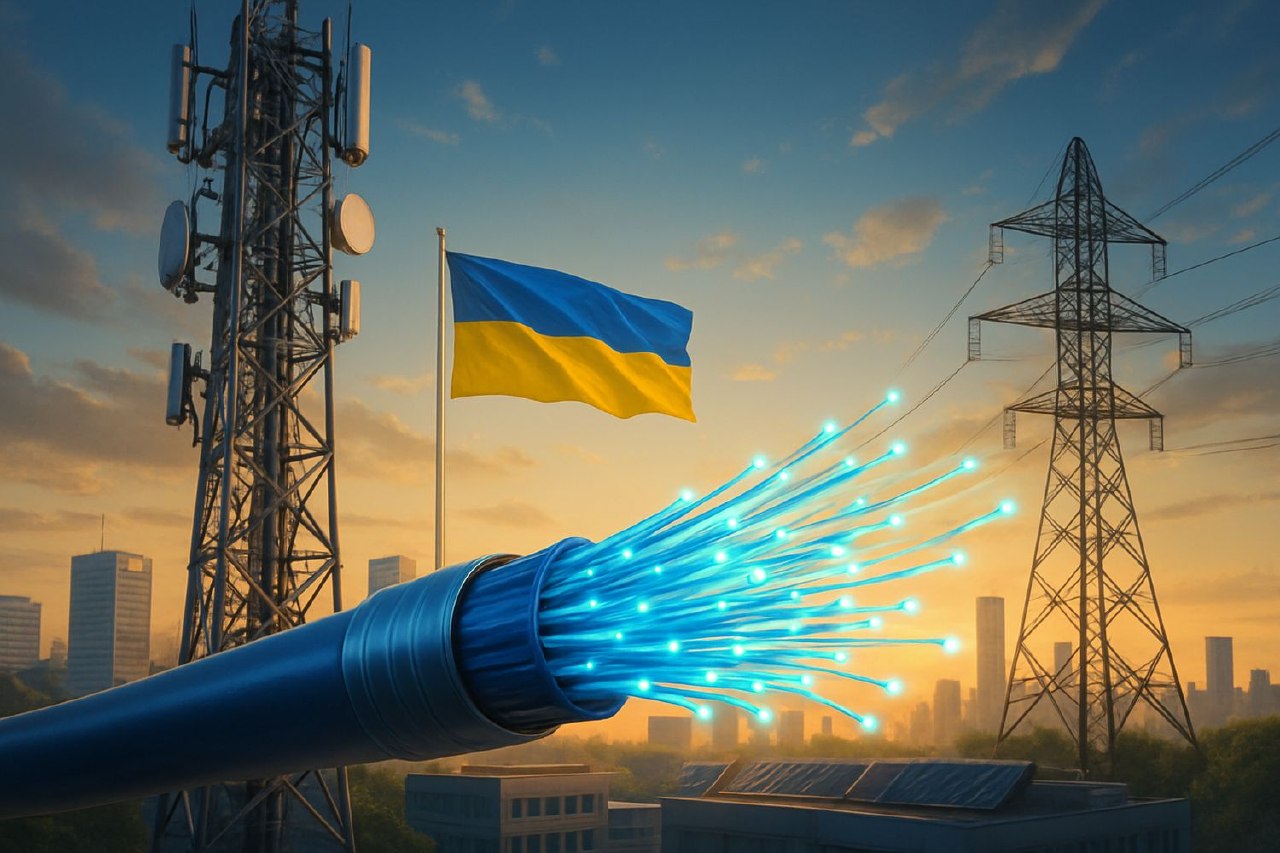
By the close of 2026, Ukraine’s telecommunications market has cemented its transition from emergency infrastructure patching to a fully optical internet landscape, leveraging GPON and XGS-PON technologies. The primary catalyst for this shift has been the critical need to ensure network access autonomy during prolonged power outages, a vulnerability that exposed traditional copper-based (xDSL) and intermediate active switch (FTTB) networks.
A telling indicator of this industry transformation is the performance of AT “Ukrtelecom,” the nation’s largest fixed-line operator. For the first nine months of 2026, the company reported a significant revenue increase, reaching 4.3 billion UAH. This growth was largely driven by the active expansion of its optical infrastructure and the gradual decommissioning of outdated copper lines.
Why Fiber Optics Are Replacing Copper: Technological and Economic Rationale
Passive Optical Network (PON) technology has become the de facto standard for households, businesses, and government institutions. Unlike traditional copper networks, fiber optic lines do not require intermediate active power supply from the provider’s node to the subscriber’s apartment or office.
Key Advantages of Optical Networks in 2026 Realities:
- Energy Independence (Up to 72-96 Hours Without Power): With industrial batteries and generators installed at the operator’s main nodes, subscribers can access the internet even during blackouts. This is achieved by powering only their own Optical Network Unit (ONU) and Wi-Fi router from a power bank or UPS.
- High Bandwidth and Symmetry: Modern GPON (up to 2.5 Gbps) and XGS-PON (up to 10 Gbps) standards easily handle the demands of cloud services, 4K streaming, and remote work.
- Immunity to Interference and Theft: Fiber optic cables are insensitive to electromagnetic interference and hold no value for scrap metal scavengers, significantly reducing operator costs for emergency maintenance.

Ukrtelecom’s Strategy: Focus on Fiber Optics and Digital Transformation
Ukrtelecom’s experience clearly illustrates a nationwide trend of replacing copper infrastructure with modern optical solutions. By the end of the first nine months of 2026, the company saw increased revenues from optical internet services across both the mass market (B2C) and corporate/government sectors (B2B/B2G).
Key Development Vectors for the Operator at the End of 2026:
- Large-Scale Connection of Social Infrastructure: The rollout of high-speed optical internet continues for medical facilities, schools, critical infrastructure sites, and local government bodies across all regions of Ukraine.
- Decommissioning of Copper Networks: The company is systematically retiring unprofitable and power-dependent copper lines, migrating subscribers to GPON. Retired exchange buildings and real estate are being leased out commercially.
- Synergy with Mobile Services: The launch of the virtual mobile operator U Mobile enables the bundling of fixed optical connectivity and mobile services into unified convergent packages for businesses and private customers.
Comparison of Fixed Internet Technologies in Ukraine (End of 2026)
| Parameter / Characteristic | Copper Networks (ADSL / VDSL) | Classic Ethernet (FTTB) | Passive Optics (GPON / XGS-PON) |
| Maximum Speed | Up to 24–100 Mbps | Up to 100 Mbps – 1 Gbps | 2.5 Gbps (GPON) – 10 Gbps (XGS-PON) |
| Operation During Blackouts | Critically Low (depends on exchange) | Requires UPS at each building | Up to 72–96 hours (only node and ONU power) |
| Durability and Interference Resistance | Low (oxidation, interference) | Medium | Maximum (lifespan over 25 years) |
| Market Outlook | Active phasing out and dismantling | Gradual replacement by optics | Main industry development standard |

Market Challenges: Staff Shortages and Regulatory Demands
Despite the rapid pace of fiber optic line construction, Ukrainian providers at the end of 2026 are facing several systemic challenges. Firstly, strict state requirements for network autonomy mandate that communication nodes must operate for at least 72 hours without centralized power. This necessitates billions of UAH in investments for lithium iron phosphate (LiFePO4) batteries and power generation.
Secondly, the market is experiencing a severe shortage of fiber optic installers and splicers. This forces companies to automate network monitoring and invest in their own training centers. Concurrently, rising equipment and energy costs are driving a gradual adjustment of tariffs (ARPU) towards a more economically sound level.
HiTech Expert Take
The results of 2026 demonstrate that optical internet in Ukraine has definitively moved beyond being just a “fast tariff” and has transformed into an element of the country’s critical resilience. Ukrtelecom’s successful transformation case—migrating subscribers from outdated copper to GPON and increasing investments in backup power—showcases the maturity of Ukraine’s telecom sector. In 2027, the primary competitive battle among providers will shift from the price per megabit to the actual hours of autonomous network operation during blackouts and the widespread adoption of the ultra-high-speed XGS-PON standard in the mass market.