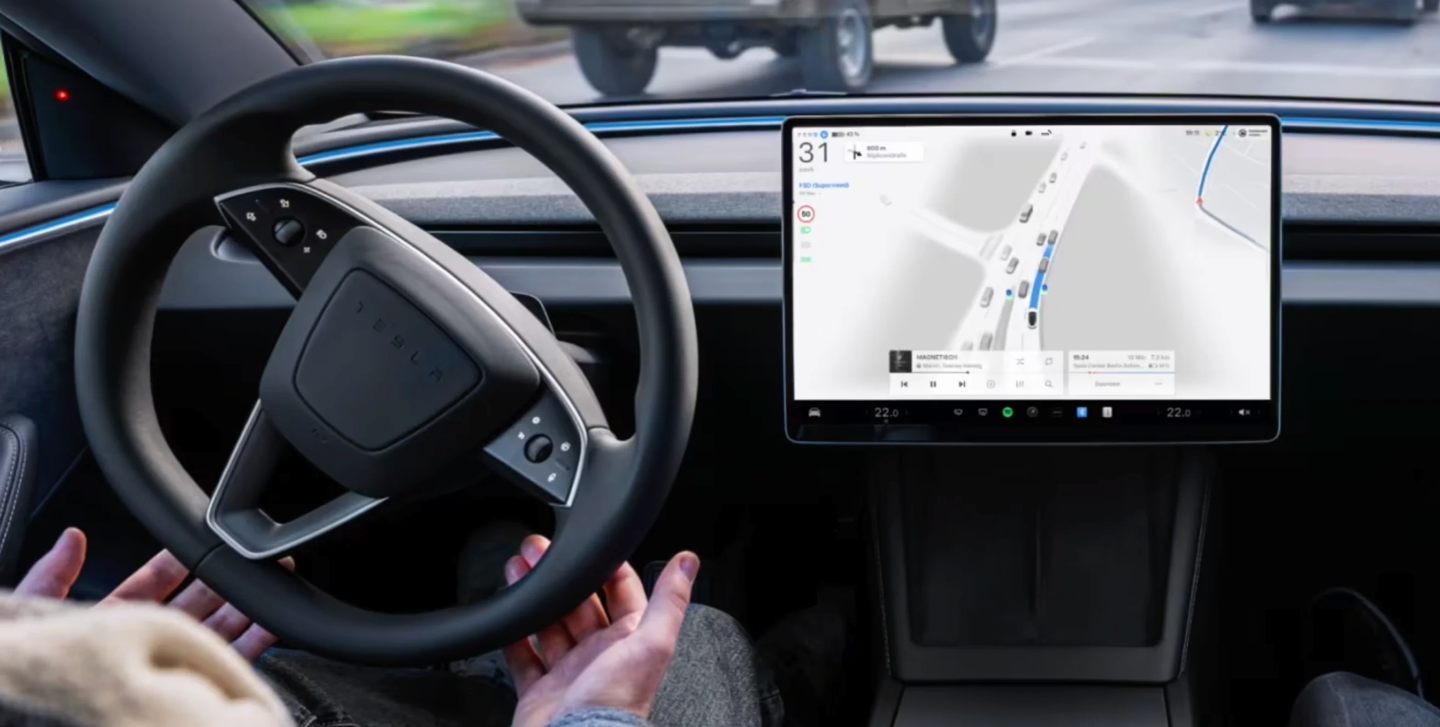
Concerns are mounting in Europe regarding Tesla’s Full Self-Driving (FSD) system, with a Belgian road safety advocacy group reporting frequent speeding and dangerous overtaking maneuvers. Johanna.be, an organization dedicated to the safety of pedestrians and cyclists, conducted a three-day test of the FSD system in Belgium covering approximately 400 kilometers.
Speeding and Misleading Information
The tests, carried out in July, revealed that FSD systems consistently exceeded speed limits, particularly in areas with restrictions of 20 km/h and 30 km/h. More alarmingly, the system reportedly displayed incorrect, higher speed limits to drivers, potentially leading them to believe they could travel faster.
According to the report, in most 30 km/h zones tested around Brussels, the FSD system exceeded the limit, with an average speed of 44 km/h. Despite the vehicle’s screen indicating recognition of 30 km/h speed limit signs, the FSD system frequently displayed a 50 km/h limit. “It is as if a passenger constantly assures the driver that the speed limit is 50 km/h on almost every 30 km/h stretch they pass,” the report stated, highlighting the potential for driver confusion and misjudgment.
Dangerous Overtaking and Regulatory Concerns
Further issues were raised concerning the system’s ability to navigate complex European road rules. Videos captured by Johanna.be show Tesla vehicles with FSD engaged attempting to overtake cyclists on roads where such maneuvers are prohibited. This aligns with previous concerns voiced by the European Transport Safety Council regarding FSD’s compliance with diverse European road regulations.
While Johanna.be acknowledged positive aspects of the system, noting that it “behaves cautiously and politely around pedestrians and cyclists, often yielding proactively,” these strengths were overshadowed by the documented violations of speed limits and bicycle street regulations. The organization has since submitted its report to the Flemish Department of Mobility and Public Works and the Dutch regulatory body RDW, urging a reassessment of their previous approvals.
Regulatory Landscape and Tesla’s Response
The FSD system, which enables vehicles to perform most driving tasks but requires constant driver supervision, has received approval in several European countries. The Dutch RDW granted approval in April, followed by Belgium and other nations. A potential EU-wide vote on the system is scheduled for October 6.
However, several EU member states, including Sweden, have already expressed reservations about FSD’s tendency to exceed speed limits. Nations that have approved the system emphasize that drivers retain full responsibility for adhering to traffic laws.
Tesla, in its own research released earlier this month, asserted that vehicles equipped with FSD do not exhibit excessive speeding and maintain speeds consistent with surrounding traffic. Xavier Lesenne, a spokesperson for the Belgian Flemish government’s transport department, which approved FSD earlier this year, described the system as a “learning system that continuously processes new, additional information” and adapts over time.
Lesenne reiterated that drivers are “100% responsible” and must be prepared to intervene at any moment should the system err or fail to execute traffic rules correctly. He also noted that Tesla’s data suggests the technology “currently has great potential in accident prevention.”
Despite Tesla’s defense and the acknowledgments of the system’s adaptive nature, the findings by Johanna.be add significant weight to the ongoing debate about the safety and reliability of advanced driver-assistance systems in real-world European conditions.