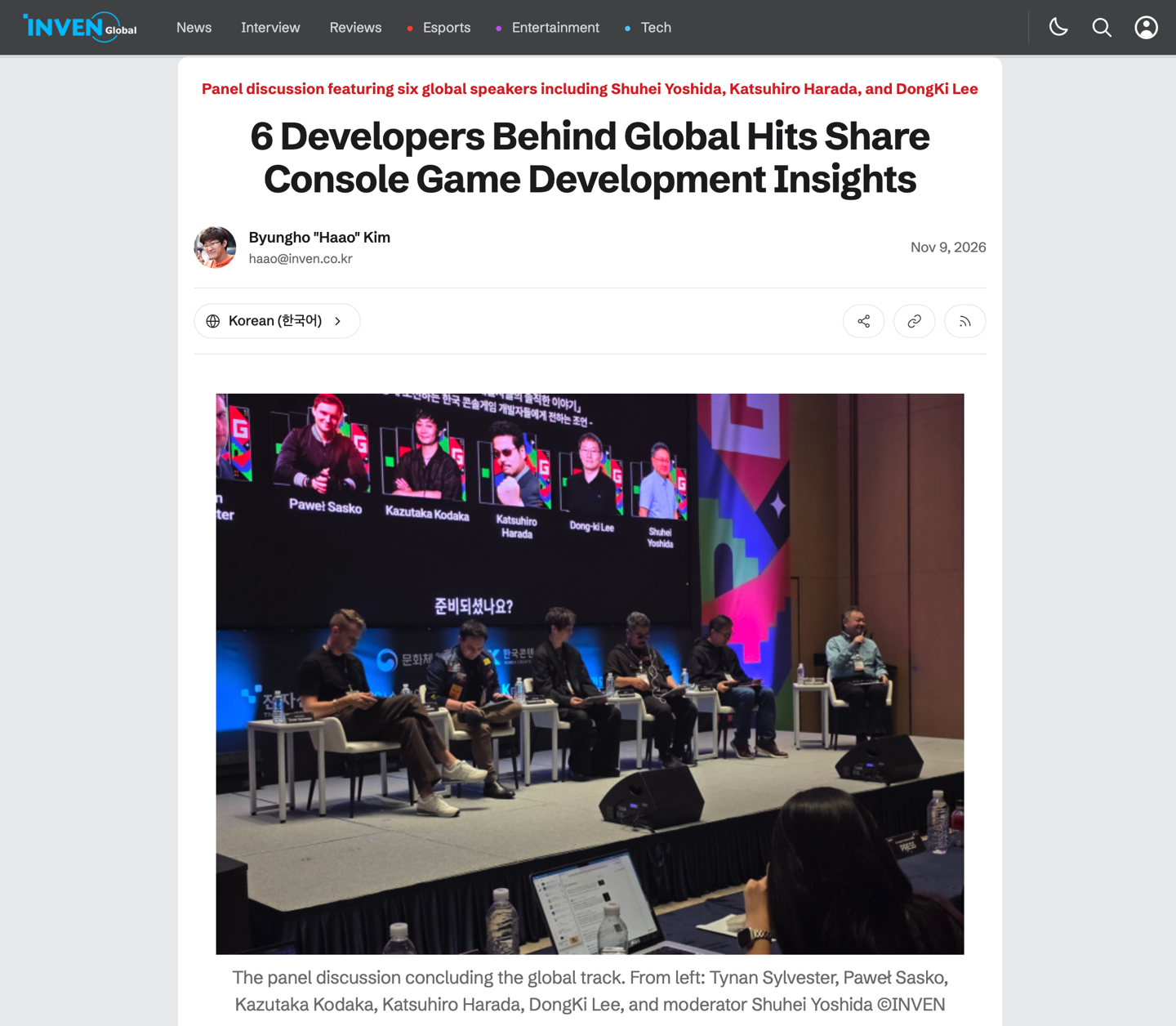
Katsuhiro Harada, the veteran director behind the iconic Tekken series and current CEO of VS Studio, has never shied away from speaking his mind. In a candid moment during a developer roundtable in South Korea, Harada directly addressed Microsoft representatives, expressing his hope that they would refrain from releasing consoles like the Xbox Series S in the future.
A Direct Plea from a Game Dev Veteran
The discussion, held at the 2026 Console Game Developers Conference, was moderated by former PlayStation president Shuhei Yoshida. The panel also featured notable figures such as Lee Dong-ki (CTO of Shift Up, developers of Stellar Blade), Kazutaka Kodaka (CEO of Too Kyo Games, creators of the Danganronpa series), Paweł Sasko (Associate Director at CD Projekt RED, behind Cyberpunk 2077), and Tynan Sylvester (CEO of Ludeon Studios, makers of RimWorld).
Initially, Harada spoke about the advantages of console hardware for fighting games, highlighting its suitability for tournaments and esports. However, he soon pivoted to express his specific concerns about the Xbox Series S.
“Since I have the opportunity, there’s something I really want to say. With Xbox executives present today, I truly hope Microsoft won’t release consoles like the Xbox Series S anymore,” Harada stated. He then turned to Paweł Sasko, asking if the Series S had caused similar frustrations during game development. Sasko, amidst laughter, admitted that the console presents challenges, forcing developers to meticulously optimize their code.
The Series S Conundrum: Performance and Developer Burden
Harada elaborated on his critique, interpreting Sasko’s polite response as a veiled criticism. “You’re being so polite, but what you really mean is ‘The Xbox Series S is terrible,’ right?” Harada posited. “The limited RAM is one thing, but the most troublesome aspect is that it looks almost identical to the Series X, yet performs significantly worse.”
He drew a contrast with porting games to the Nintendo Switch 2, suggesting that developers could frame it as adapting to a distinct platform for a different audience. “But with Xbox, it’s different. After all the effort to make a game the best it can be, you have to make it again for a less powerful child. That’s how it feels,” he explained.
The situation is exacerbated by market realities. “What’s more problematic is that in markets like the US, the Series S has more users than the Series X. We simply can’t afford to cut corners. Yet, after the game releases, Series S players don’t go to Microsoft; they come to us developers, asking, ‘Why are the textures so low-resolution only on the Series S version?'” Harada recounted.
“The limited RAM is one thing, but the most troublesome aspect is that it looks almost identical to the Series X, yet performs significantly worse.”
Optimizations and Market Expansion: A Counterpoint
Despite the frustrations, Paweł Sasko acknowledged the potential benefits of the Series S. He conceded that many players might not grasp the technical reasons behind its performance limitations. However, he pointed out that optimizing for lower-spec hardware can often lead to smoother performance on other platforms as well.
Sasko cited the development of Cyberpunk 2077, where optimization efforts for the Switch 2 port yielded noticeable improvements when applied to other platforms. Furthermore, he suggested that the lower price point of the Series S could contribute to attracting a wider player base and expanding the overall gaming market.
Looking Ahead: Hopes for Future Consoles
Harada, ever the comedian, quipped that Sasko’s gentle praise of the Series S was so effective that a Microsoft representative in the audience was nodding enthusiastically. “I’m just worried they’ll hear this and think it’s fine, and then we’ll get something like a ‘Helix S’ for the next Xbox generation,” he joked.
Concluding the session, Lee Dong-ki of Shift Up expressed enthusiasm for Microsoft’s next-generation console, playfully referred to as ‘Helix’. “Personally, I’m very much looking forward to the next-gen Xbox ‘Helix’. From an engineering perspective, if you could provide Korean developers with early access to dev kits, we would fully commit to development,” he said.
The exchange highlights the ongoing dialogue between game developers and console manufacturers, underscoring the complex balance between hardware capabilities, development challenges, and market accessibility.