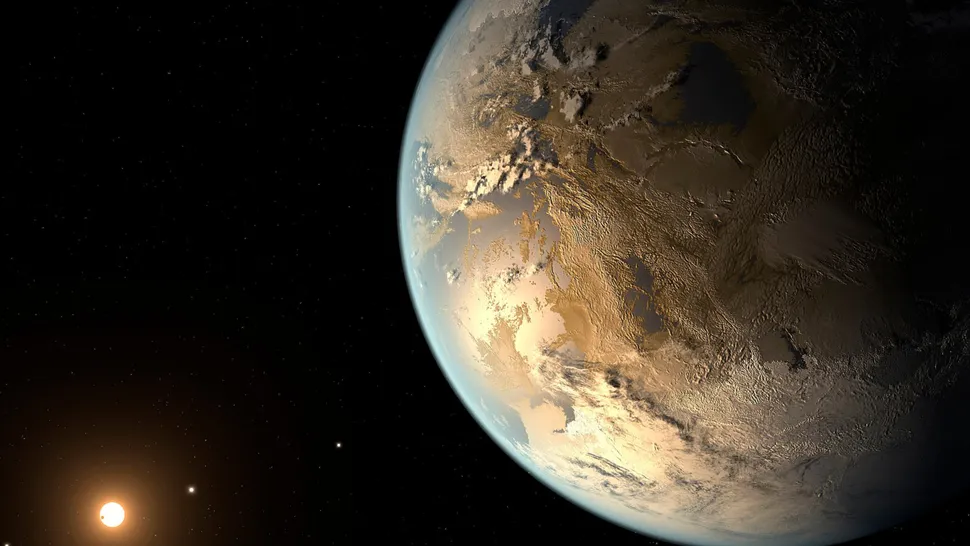
A new audio thriller, ‘Exoplanet,’ from writer Benjamin Percy, known for his work with Andy Weir, plunges listeners into a desperate fight for survival for three astronauts on an alien world. This fictional narrative touches upon one of modern astronomy’s most pressing questions: what truly makes an exoplanet a potential haven for life?
Stars as the Key to Understanding
In the audio drama ‘Exoplanet,’ the characters face extreme conditions, from a scorching sun visible without protective eyewear to volcanic landscapes. In reality, the light of a planet’s host star is one of astronomers’ most powerful tools for studying these distant worlds. Through spectroscopy, scientists analyze starlight, breaking it down into its constituent components much like a prism creates a rainbow. This process reveals the star’s temperature, composition, and other physical properties.

Where to Find the ‘Habitable Zone’?
However, a star’s temperature is only part of the equation. A key factor for potential life is a planet’s distance from its star. Astronomers define the ‘habitable zone’—an orbital range where liquid water could exist on a planet’s surface, assuming it has a suitable atmosphere.
For a planet orbiting a cool red dwarf, this zone would be much closer to the star than Earth is to our Sun. Yet, even residing within this zone doesn’t guarantee paradise. Stars, especially young ones, can emit dangerous ultraviolet and X-ray radiation capable of stripping away a planet’s atmosphere. Furthermore, powerful stellar flares could be lethal to life.

To Breathe or Not to Breathe: A Planet’s Atmosphere
Even if a planet successfully passes all previous habitability checks, the crucial question remains: can one breathe there? In the audio drama ‘Exoplanet,’ one of the characters discovers the planet’s atmosphere contains enough oxygen to breathe without a spacesuit. However, in reality, a high percentage of oxygen isn’t a guarantee of safety. Atmospheric pressure plays an equally vital role. For instance, on Earth, while the oxygen percentage remains the same at high altitudes, low pressure makes breathing difficult.