In a breakthrough for quantum computing and sensing, researchers at Stanford University have achieved a world first: the real-time observation of a single ‘phonon’ undergoing a quantum leap. This significant achievement, published on September 17th in the prestigious journal Science, marks a pivotal step in understanding and controlling quantum phenomena.
Understanding Phonons and Quantum Leaps
Similar to photons as the discrete units of light, phonons are the quantum’s smallest discrete energy units of sound or vibration. While in our everyday world vibrations like those from a ringing bell gradually fade, in the quantum realm, vibrational energy doesn’t decay smoothly. Instead, it changes in discrete steps, a phenomenon known as a ‘quantum leap’ or ‘quantum transition’.
A New Era for Quantum Computing Error Correction
The team, led by Amir H. Safavi-Naeini, a professor of applied physics at Stanford, believes that detecting these phonon quantum leaps could be instrumental in solving a critical challenge in quantum computing: identifying when errors occur during computation. In many quantum computing architectures, these quantum transitions themselves represent computational errors.
The Experimental Setup: A High-Q Resonator and Superconducting Qubit
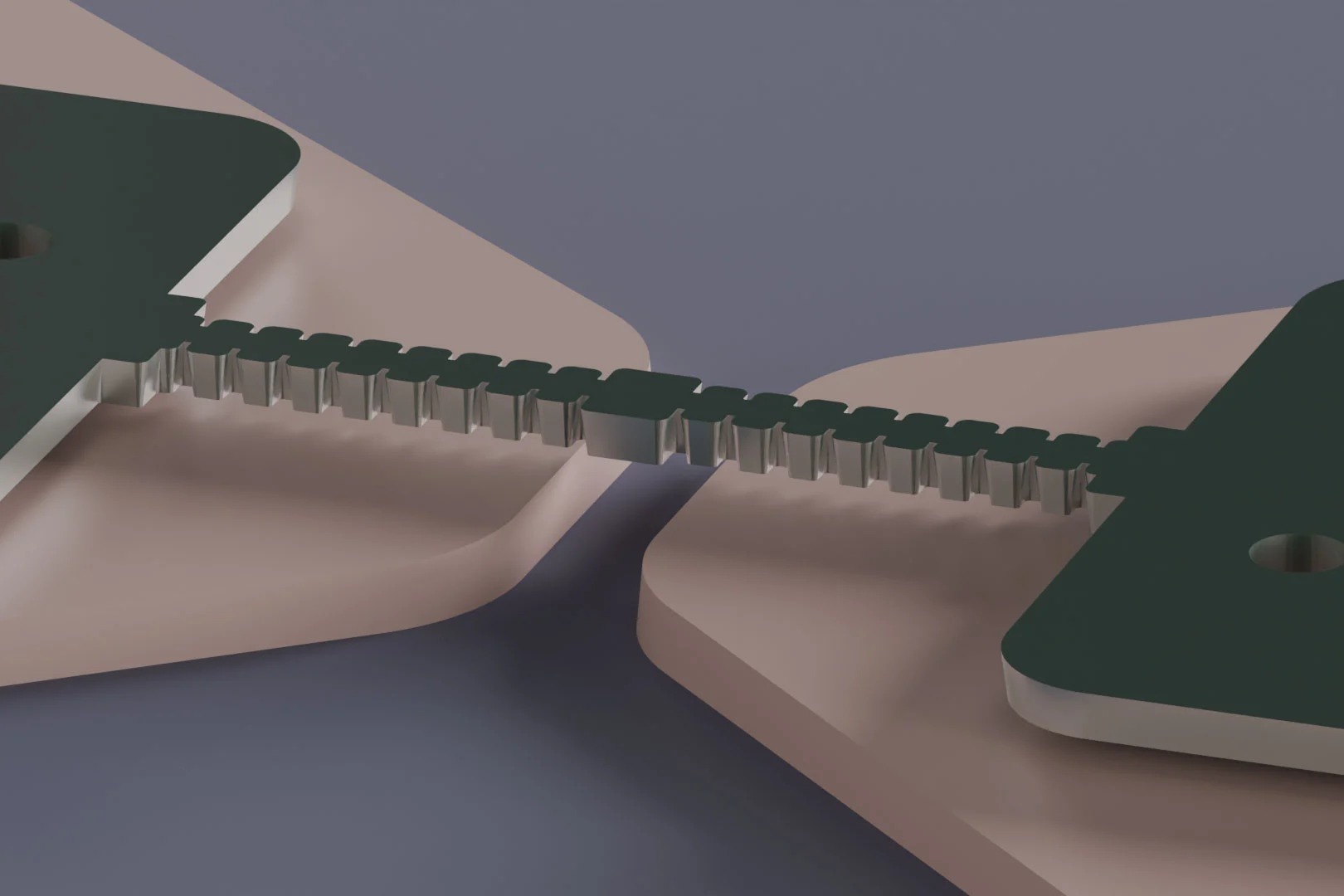
At the heart of this groundbreaking experiment was a miniature mechanical resonator, functioning much like a microscopic tuning fork. This resonator was intricately coupled with a superconducting quantum bit (qubit). Superconducting qubits, a leading technology in quantum computing research, are implemented using superconducting circuits. In this setup, the qubit served a dual purpose: storing quantum information and acting as a sensitive detector, capable of continuously reading the resonator’s state without disturbing its delicate vibrational quantum state.
Achieving Real-Time Observation: The Role of High Q-Factor
To enable real-time tracking, the researchers engineered a resonator with an exceptionally long coherence time, meaning it could sustain vibrations for approximately 2 milliseconds. To put this into perspective, a normal-sized tuning fork with a proportionally similar performance would need to vibrate for hours to achieve the same effect. This unusually long decay time allowed the team to perform hundreds of measurements continuously.
Capturing the Moment: From ‘1’ to ‘0’
Through this continuous measurement process, the superconducting qubit was able to distinguish between two distinct states: the presence of a single phonon (represented as ‘1’) and its absence (‘0’). As data accumulated, the researchers finally captured the precise moment the resonator transitioned from the ‘1’ state to the ‘0’ state – the complete disappearance of a single phonon.
A Century in the Making
This achievement builds upon over a century of research into quantum leaps. The theory of quantum leaps was first proposed in the early 20th century, experimentally verified in trapped ion experiments in 1986, and observed in photonic systems in 2007. While previous experiments had provided indirect evidence for phonon quantum leaps, none had achieved direct, real-time tracking of a single transition.
Broader Implications: Sensing and Beyond
The Stanford team suggests that this technology could significantly enhance the error-correction capabilities of quantum computers. Furthermore, it holds immense potential for advancing high-precision quantum sensing. Given that the resonators are fabricated using standard chip manufacturing processes, the possibility of integrating numerous devices onto a single chip opens doors for ultra-sensitive detection applications.
Safavi-Naeini’s team is collaborating with physicist Michael Roukes’ group at Caltech to explore using this platform for detecting and identifying proteins within cells. The researchers also noted that fine-grained quantum control over sound could potentially lead to improvements in consumer electronics that rely on acoustic technologies, such as smartphones.
For the full details of this pioneering research, you can refer to the publication in Science: https://doi.org/10.1126/science.aeh7535.