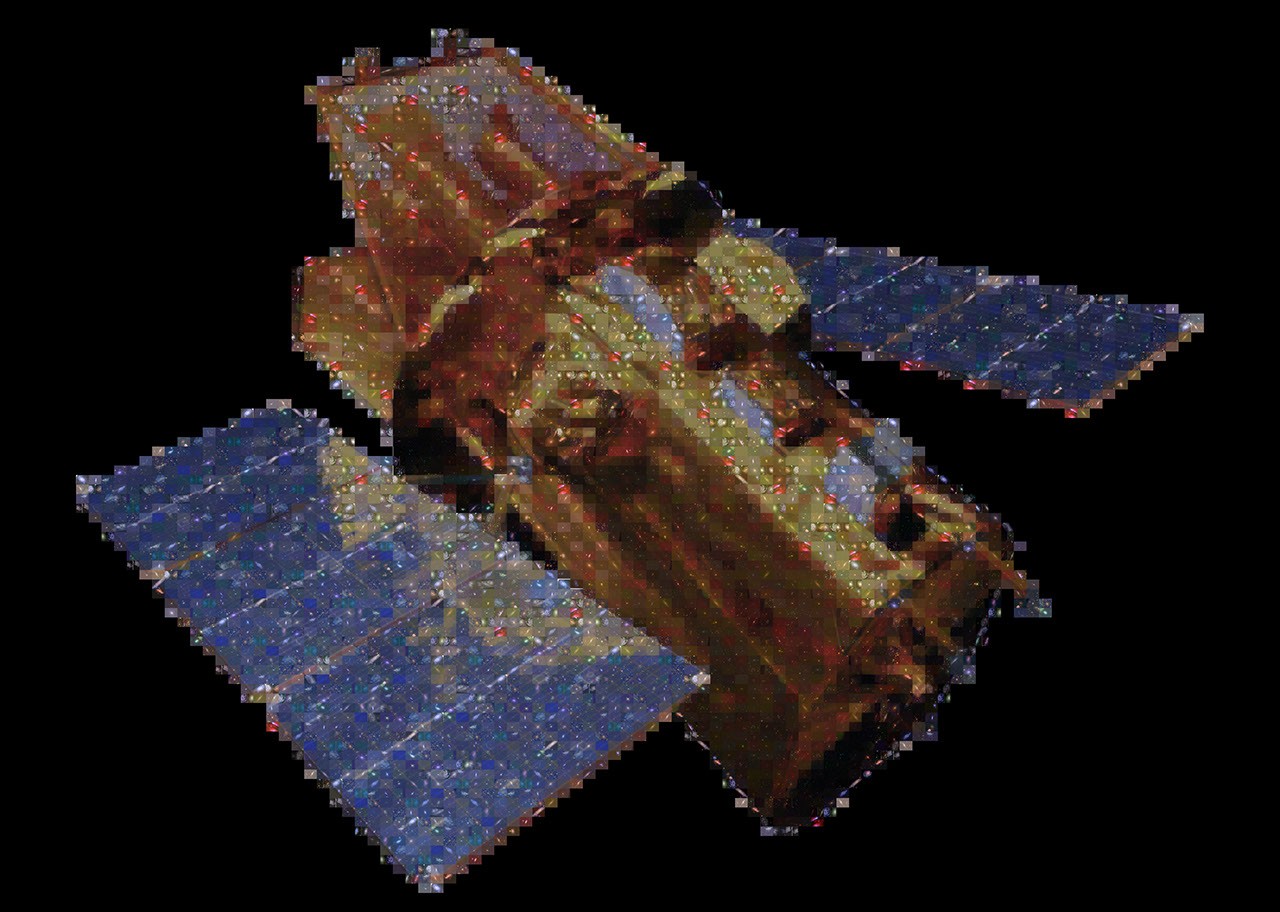
After a remarkable 22-year career observing the universe’s most energetic events, NASA’s Neil Gehrels Swift Observatory has completed its mission with a controlled re-entry into Earth’s atmosphere on November 4th. The venerable spacecraft burned up over the North Sumatra region of Indonesia, concluding a mission that provided unprecedented insights into phenomena like gamma-ray bursts. This event marks the end of an era for astrophysics, but the wealth of data Swift collected will continue to illuminate the cosmos for years to come.
A Legacy of Swift Discoveries
Launched in 2004, Swift was designed as a multi-wavelength observatory, equipped with advanced X-ray, ultraviolet, and optical telescopes. This unique combination allowed scientists to swiftly pinpoint and study the afterglow of gamma-ray bursts (GRBs) – the most powerful explosions in the universe – in near real-time. By coordinating observations across different wavelengths, Swift provided crucial data that helped unravel the mysteries of these cataclysmic events, contributing to our understanding of black holes, supernovae, and the evolution of galaxies.
The Mission’s End and Future Inspiration
The recent solar maximum, a period of heightened solar activity, accelerated the decay of Swift’s orbit, leading to its eventual de-orbit. While an ambitious plan to boost Swift’s orbit was explored, it was ultimately unsuccessful. The observatory’s fiery descent, reminiscent of a shooting star, symbolizes the end of its operational life. However, its legacy is far from over. The scientific treasures gathered by Swift will continue to be analyzed, inspiring future missions and pushing the boundaries of our cosmic understanding. The data from this pioneering observatory will undoubtedly fuel new discoveries and guide humanity’s ongoing quest to explore the unknown in space.
Source: NASA