Leveraging its extensive experience and advanced testing facilities, NASA is actively refining its approach to combat a rare but significant aviation threat: icing caused by encounters with extremely large, supercooled water droplets in clouds. These crucial investigations are designed to bolster flight safety.
The Challenge of Supercooled Large Droplets
The phenomenon known as “supercooled large droplet (SLD) icing” occurs when aircraft traverse clouds containing unusually large water droplets. Despite temperatures below freezing, these droplets remain in a liquid state. Upon impact with an aircraft, they can rapidly freeze onto surfaces not equipped with traditional anti-icing systems.
Supercooled water is a common feature in clouds. Droplets can exist at temperatures below 0°C (32°F) without freezing until they collide with dust or other microscopic particles, which act as nuclei for ice crystal formation. Aircraft are typically designed to operate safely in standard icing conditions, where droplet diameters range from 2 to 100 microns (for comparison, a human hair is approximately 70 microns wide). However, in infrequent circumstances, clouds can contain supercooled large droplets with diameters up to 2000 microns. (If you’ve ever experienced freezing rain at ground level, you’re familiar with droplets of this size). These significantly larger droplets can strike or splash onto the aft sections of aircraft, areas often outside the coverage of conventional de-icing systems.
Wind Tunnel Testing for Enhanced Understanding
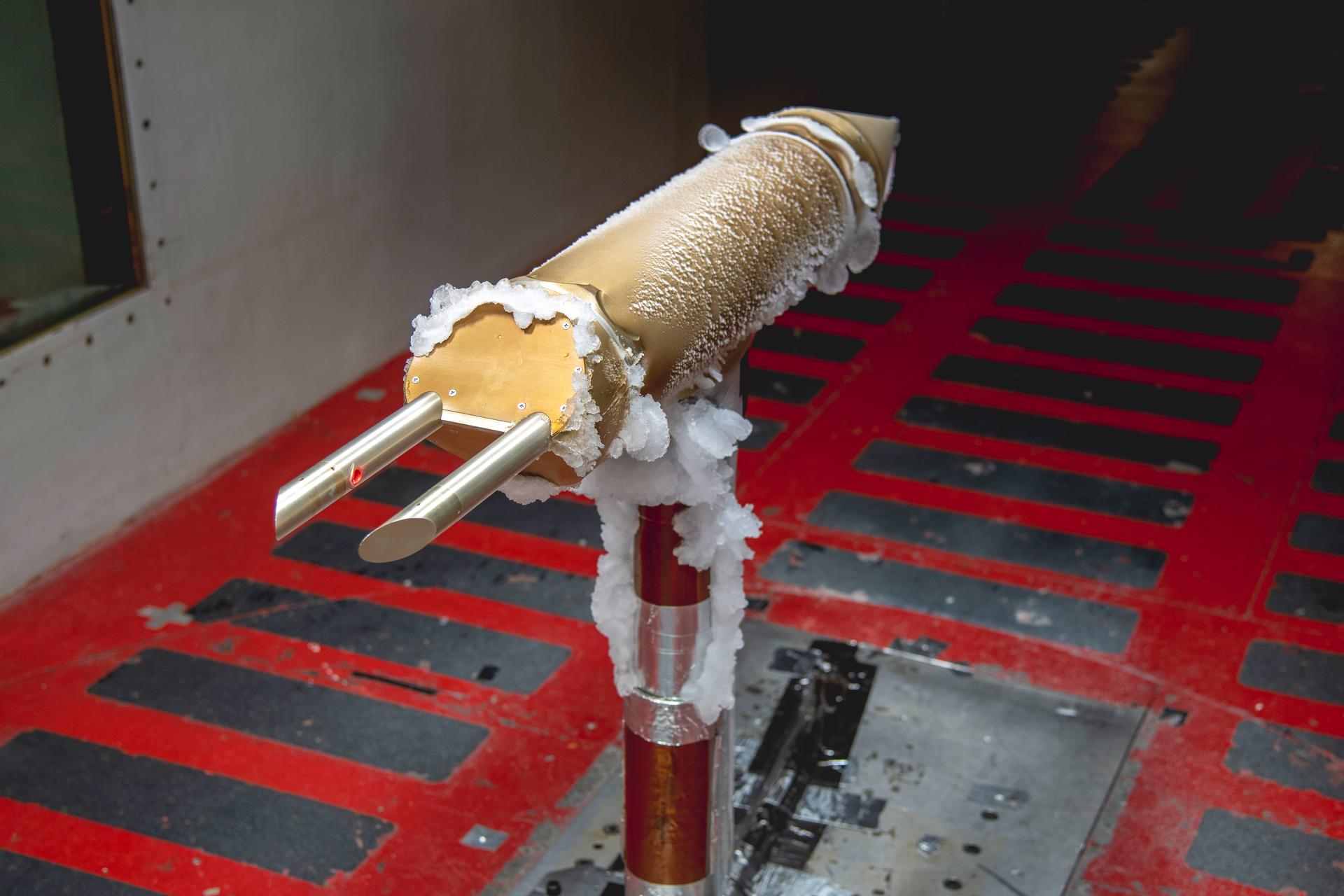
A series of tests conducted at NASA’s Icing Research Tunnel (IRT) at the Glenn Research Center is providing the U.S. aviation industry with a deeper understanding of this complex phenomenon. The aviation sector relies on engineering tools for aircraft design. While current tools perform well for typical cloud conditions, engineers question their accuracy when accounting for the physics of supercooled large droplets. To address this, NASA is upgrading its equipment used to generate and measure experimental clouds within the IRT.
NASA researchers have been experimenting with entirely new probes designed to calibrate droplet sizes in the clouds generated within the tunnel. These probes can detect droplets exceeding 45 microns in diameter and perform real-time size analysis. NASA will compare these findings, derived from careful post-processing of droplet imagery from the tunnel, with data from another probe that measures droplets smaller than 45 microns. This will establish a comprehensive spectrum of droplet size distribution.
This testing initiative marks a significant milestone for the Subsonic Flight Demonstrator (SFD) project, part of NASA’s Research and Technology Missions Directorate. Detailed analysis of the collected data is ongoing, and the NASA project team will share its findings with the broader aerospace community upon completion.