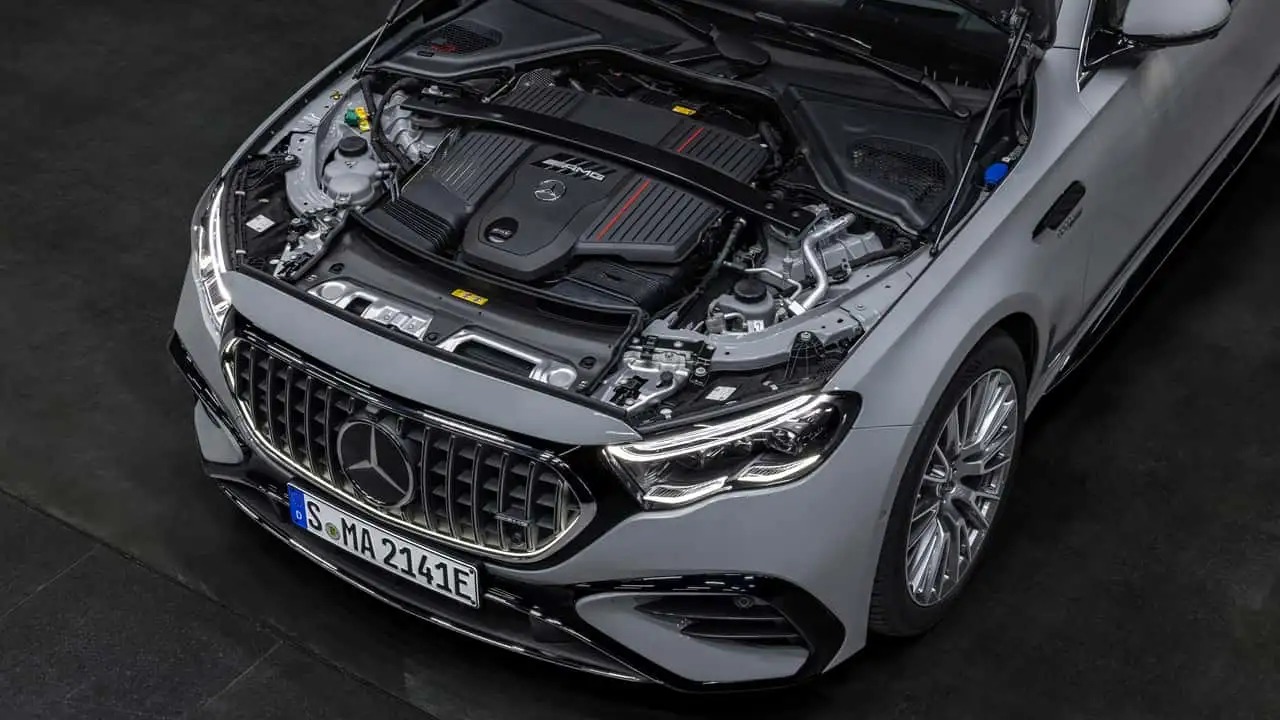
Mercedes-Benz is not ready to abandon internal combustion engines just yet. Despite the accelerating expansion of its electric vehicle lineup, the company believes gasoline and diesel engines will remain relevant for a considerable period, according to Ola Källenius, Chairman of the Board of Management of Mercedes-Benz Group AG.
Internal Combustion Engines to Persist Beyond 2030
Speaking at a media roundtable in Pune, India, Källenius shared Mercedes-Benz’s powertrain strategy, indicating that internal combustion engines (ICE) will continue to be a part of the automotive landscape for at least another decade, possibly extending to 15 years. He described the industry’s transition to electric mobility as a protracted transformation spanning 20 to 25 years, rather than an event that will conclude by 2030 or 2035.
“The internal combustion engine will be around for at least another 10, if not 15 years,” Källenius stated, as reported by Autocar India. This perspective underpins Mercedes-Benz’s ongoing investment in its ICE product lines, including the development of engines designed to meet future Euro 7 emission standards. The company currently has a range of engines it claims are Euro 7-ready, though formal certification is pending.
Among these are Mercedes-Benz’s latest V8 engines, which continue to power select high-end models. These are integrated into a diversified product portfolio that also includes plug-in hybrids and fully electric vehicles.
Market Demand Dictates Future of ICE
Källenius emphasized that the continued presence of ICE technology does not signify a change in Mercedes-Benz’s ultimate electrification goals. “As long as there is a market demand for highly technological products, for example, our ICE with electrified technology, we will continue to offer them,” he explained. This implies that consumer demand will be the primary determinant of how long these engines remain in production.
Mercedes-Benz is currently executing a three-year product plan involving 40 vehicle models, encompassing both electric and ICE vehicles. This plan includes new model launches scheduled for 2026 and 2027, ensuring that gasoline, diesel, and pure electric powertrains will coexist across the lineup.
Diesel’s Continued Relevance
Källenius specifically highlighted the enduring advantages of diesel engines, particularly in light commercial vehicles and larger passenger cars. “Our diesel engine line-up is future-proof,” he asserted, confirming that diesel powertrains will remain integral to Mercedes-Benz’s offerings for the foreseeable future.
The benefits of diesel are particularly pronounced for drivers covering substantial annual distances, such as 60,000 to 70,000 kilometers (approximately 37,000 to 43,500 miles). In such scenarios, the superior fuel economy of diesel vehicles compared to gasoline or hybrid alternatives can offer tangible financial savings. Källenius also noted that in markets like India, where diesel fuel prices are relatively lower, the economic case for high-mileage users to opt for diesel is further strengthened.
For individuals undertaking frequent long-distance journeys and fleet operators, the phasing out of diesel and efficient gasoline engines will not be an immediate occurrence. Even for drivers covering around 37,000 miles (approximately 59,546 kilometers) annually, the lower energy consumption of diesel or efficient hybrid models could potentially offset their higher initial purchase price compared to equivalent gasoline cars.
EV Adoption and Regional Considerations
In contrast, fully electric vehicles (EVs) are better positioned for widespread adoption in regions with robust charging infrastructure and cleaner energy grids. Over time, the lower running costs of electricity are expected to compensate for the higher upfront cost of EVs. However, in areas where charging facilities are scarce and the demand for long-distance, high-speed driving is prevalent, Källenius’s projected 10-to-15-year timeline suggests that consumers may still consider traditional ICE and plug-in hybrid vehicles for their next vehicle purchase.
Diversified Powertrain Strategy
Electrification remains a central pillar of Mercedes-Benz’s product strategy, with plans to offer a fully electric alternative in all key vehicle segments by the end of the decade. Källenius anticipates a further increase in the proportion of fully electric vehicles in Mercedes-Benz’s sales in the Indian market next year.
This balanced approach allows Mercedes-Benz to maintain its diverse range of ICE powertrains without compromising its electrification ambitions. The company continues to produce V12 engines for specific models while simultaneously expanding its EV portfolio, with more electric models slated for release by 2027.