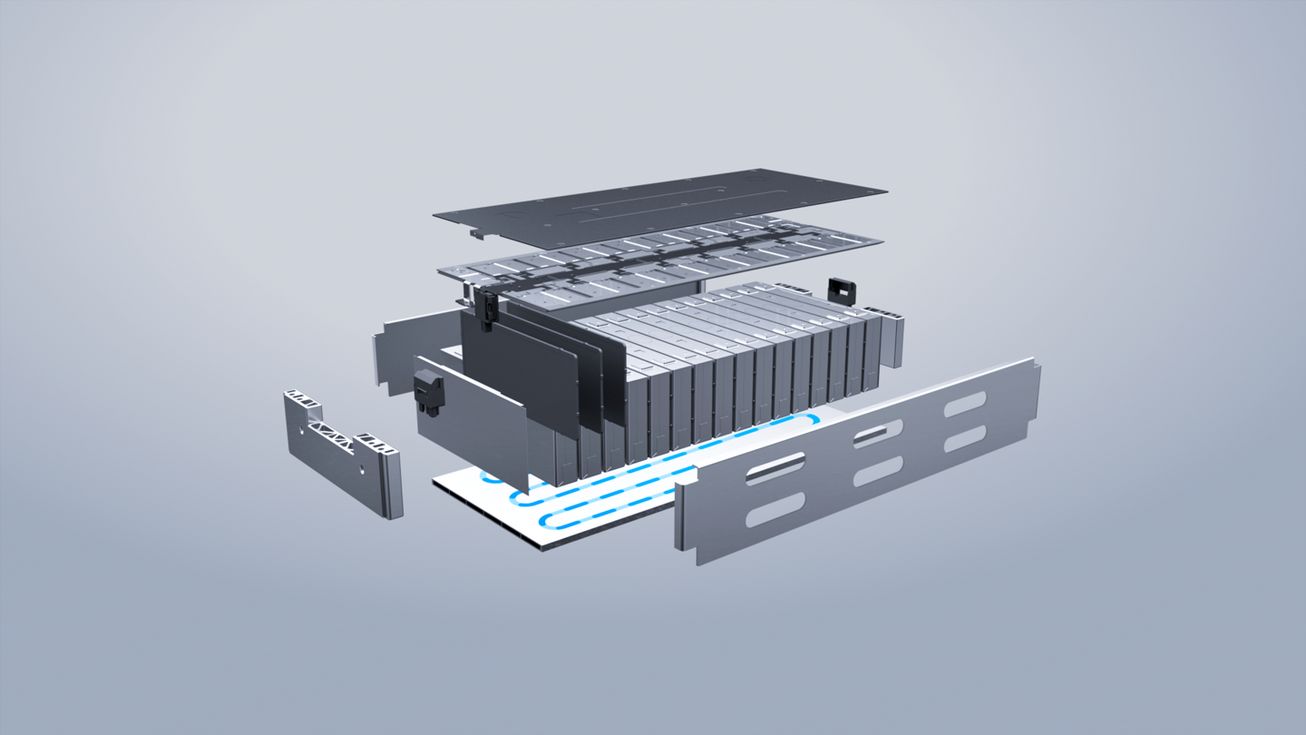
GAC Group showcased its magazine battery 3.0 technology at the 2026 Guangzhou Auto Show, focusing on enhanced protection against bottom and side impacts, common risks for electric vehicles. The new battery safety solution introduces a “two hard three protection” system that significantly upgrades structural defenses and early risk detection.
Two Hard Protections: Bottom and Side Impact Reinforcements
Wang Qingquan, head of GAC’s battery system development, explained the “two hard” aspect refers to dual structural protections. The first tackles bottom impacts. While the current national battery safety standard mandates a 150-joule impact test from below, magazine battery 3.0 boosts this to 2000 joules—a thirteenfold increase. This is comparable to a 10-kilogram hammer dropping from a seven-story height.
GAC’s tests included continuous bottom scraping during vehicle motion with the two-ton vehicle still operating normally afterward. In a remarkable demonstration, an 82-2 model hand grenade exploded directly beneath the battery pack without igniting or causing an explosion, and the vehicle maintained power.
The second structural hardening improves side impact resistance. By reinforcing the lateral structure, optimizing energy absorption pathways, and filling micro-pores with energy-absorbing materials, the battery pack experiences zero cell intrusion at 32 km/h lateral pole impacts without chassis protection.
Three Protection Systems: Advanced Active Monitoring and Alerts
The “three protection” mechanisms offer active risk warnings. Elastic wave sensor arrays on the battery bottom detect impact location and energy in real time, enabling graded alerts—from unobtrusive notifications for minor damage to mandatory warnings for severe impacts.
To prevent liquid leakage and short circuits, the technology employs area-wide liquid detection capable of sensing as little as 2 milliliters within 3 seconds, paired with water-locking materials and automatic drainage valves for immediate response. Online airtightness tests identify microscopic pores and cracks, categorizing risks and prompting timely interventions.
These three detection capabilities integrate into a closed-loop system—”impact sensing, leak confirmation, airtightness evaluation, and graded response”—with data upload to cloud platforms. This prevents damaged batteries from continuing unsafe operation.
Additionally, GAC revealed its expanding energy replenishment network covering 31 provinces and 240 cities with over 2,563 self-operated charging stations and 33,000 chargers. The network supports 1000V high-voltage DC fast charging, serving over 13 million users with monthly charging surpassing 100 million kWh. By 2027, GAC aims to cover 300 cities and develop a 100,000-terminal charging ecosystem with megawatt-level ultra-fast chargers.
Vehicle-to-grid (V2G) integration plans include ten demo parks and 1,000 V2G chargers by 2027, engaging 10,000 vehicles to achieve a cumulative discharge of over 3 million kWh.