In a challenging debugging session that Linus Torvalds described as “hellish,” the creator of Linux leveraged Artificial Intelligence to pinpoint a memory corruption vulnerability within Intel’s Xe graphics driver. The issue, which caused GNOME Display Manager (GDM) to repeatedly crash and ultimately result in a black screen on his Intel Battlemage G21 system with 16 GiB of VRAM, was resolved after extensive troubleshooting.
The Black Screen Bug
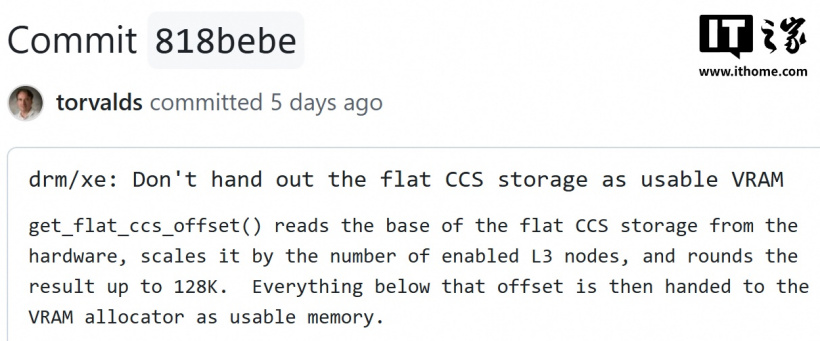
The problem originated in the Xe DRM driver’s Flat CCS memory handling, specifically within the get_flat_ccs_offset() function. This function calculated the starting position for reserved CCS storage and then aligned the address upwards to a 128 KiB boundary. The critical flaw was that the VRAM allocator subsequently treated all memory below this calculated address as available. This led to the first GPU task submission by the compositor failing, triggering GDM to restart the compositor, and ultimately plunging the system into a black screen.
A Grueling Debugging Process
While the eventual fix was remarkably simple – changing a misapplied round_up() to a round_down() – the path to identifying the root cause was far from straightforward. Torvalds reported adding 24 debugging patches incrementally to gather more information, requiring 18 kernel restarts to finally isolate the exact memory corruption issue.
AI as a Debugging Partner
Significantly, Torvalds revealed that AI played a crucial role in managing the repetitive tasks involved in this debugging ordeal. The AI assisted in adding debug code and analyzing the extensive output generated during the process. Although the AI initially suggested the problem might be unsolvable on multiple occasions, Torvalds’ persistent guidance and iterative approach guided the AI to develop new debugging tools and analyze the results, ultimately leading to the discovery of the underlying memory corruption.
Following the successful resolution, Torvalds even utilized the AI to draft a detailed commit message explaining the fix, showcasing a new level of human-AI collaboration in complex software development and maintenance.
This incident highlights not only the intricate nature of modern graphics driver development but also the emerging potential of AI tools to assist even the most experienced developers in navigating complex debugging challenges.