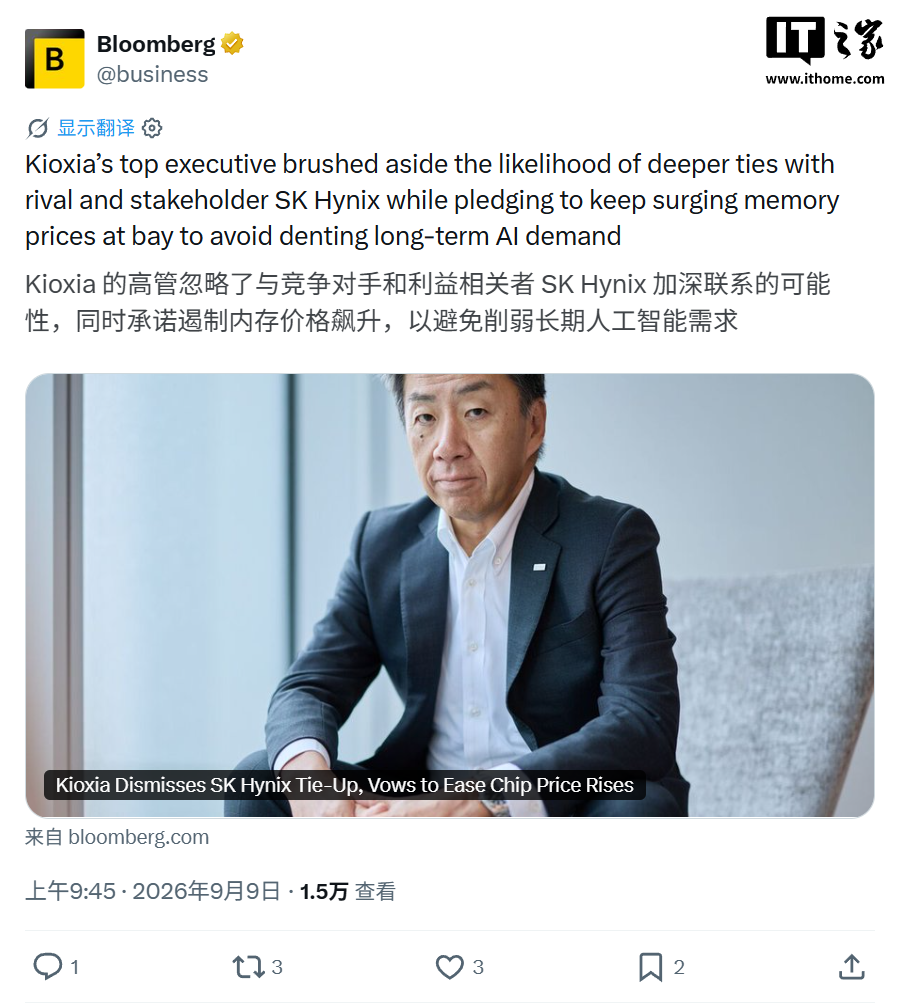
Kioxia Corporation’s CEO, Nobuo Ota, has definitively shut down speculation about a potential deepening of cooperation with its rival and shareholder, SK Hynix. Speaking in an interview with Bloomberg, Ota emphasized that while memory chip prices have seen significant increases, they have reached a point where further hikes could jeopardize long-term demand, particularly for AI services.
No Deeper Collaboration with SK Hynix
Recent months have seen memory chip manufacturers ramp up production significantly to meet the surging demand from AI service providers, leading to double-digit, and in some cases, triple-digit price increases. This surge in demand and pricing had prompted SK Group Chairman Chey Tae-won to suggest exploring manufacturing cooperation between Kioxia and SK Hynix as a potential option in a previous interview.
However, Ota cited considerable hurdles to such a deepened partnership. He pointed to potential antitrust issues and the complexities of aligning manufacturing facilities, which Kioxia currently shares with its long-time partner, Western Digital (formerly SanDisk). When pressed about the possibility of a joint production venture involving Kioxia, SK Hynix, and Western Digital, Ota expressed bewilderment, stating, “We cannot just say, ‘Okay, let’s have the three companies cooperate.’ We have no idea why Chey Tae-won made such remarks.”
The market’s interest in a closer relationship between Kioxia and SK Hynix is fueled by existing collaborations. The two companies are jointly developing non-volatile magnetic random-access memory (MRAM), and SK Hynix supplies DRAM chips used in some of Kioxia’s solid-state drives. Furthermore, SK Hynix holds bonds convertible into a 14.19% stake in Kioxia, adding another layer to their intertwined relationship.
Balancing Prices and Long-Term Demand
Regarding the soaring prices, Ota noted that Kioxia’s NAND flash memory average selling prices (ASPs) increased by 70% quarter-over-quarter in the June quarter. The previous quarter saw an even larger increase, more than doubling prices. As CEO since April, Ota has instructed the sales team to refrain from aggressive price hikes for data center operators, a move aimed at preserving investment appetite in the burgeoning AI sector.
“The prices have already risen enough,” Ota stated, suggesting that price increases of 70% quarter-over-quarter are unlikely to be repeated. He acknowledged that even hyperscale cloud service providers have budget constraints, implying that further substantial price escalations could lead to a slowdown in AI infrastructure development.
Kioxia’s Market Position and Future Strategy
Kioxia’s stock performance has been remarkable, surging 18-fold over the past year. In June, it briefly surpassed SoftBank Group and Toyota Motor to become Japan’s most valuable company. However, the stock has since seen a pullback amid market concerns about overcapacity, rising debt levels, and intense competition in the AI space.
Despite market fluctuations, Kioxia, along with Western Digital, is committed to a significant investment of over 5 trillion yen (approximately $3.4 billion USD) to expand production capacity at their joint facilities in Japan. Ota reiterated Kioxia’s strategic focus, emphasizing that the company will not “chase market share for the sake of market share.” Instead, the company aims to prioritize the development and delivery of technologies that enterprise clients are actively seeking, particularly in the rapidly evolving AI landscape.
This strategic stance suggests Kioxia is focused on value creation and innovation rather than simply volume, aiming to navigate the current market dynamics by balancing profitability with the sustained growth of crucial sectors like AI.