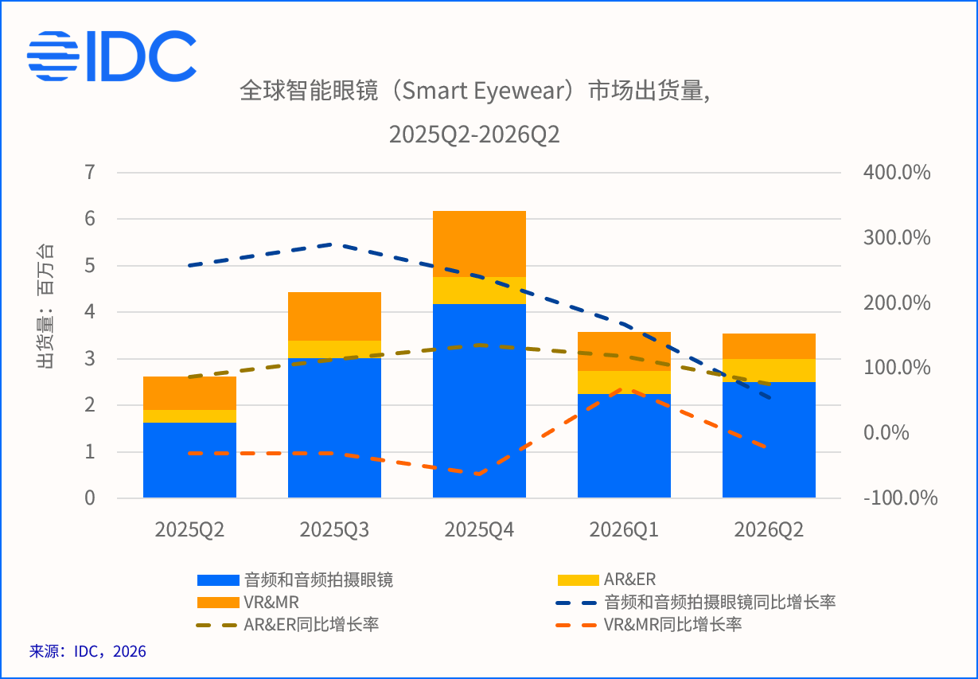
The global smart eyewear market is experiencing a significant surge, with shipments in the second quarter of 2026 climbing by an impressive 35.3% year-over-year to reach 3.547 million units. Audio and audio-capture smart glasses have emerged as the primary growth drivers, while AR/ER glasses continue their accelerated penetration. This dynamic growth contrasts with an adjustment period in the VR/MR headset market.
Market Trends and Key Players
International tech giants are continuing to shape the direction of the smart glasses industry. The focus of competition is shifting from sheer hardware sales volume towards the deep integration of ecosystems and AI-powered experiences. Meta maintains its leading position, largely due to its audio smart glasses, and is actively preparing for new product launches. Apple’s first smart glasses are reportedly nearing mass production, signaling a heightened competitive landscape.
Meanwhile, innovative Chinese manufacturers are intensifying their global expansion efforts. By diversifying product portfolios, expanding overseas distribution channels, and deepening local operations, these companies are carving out a differentiated competitive edge, particularly in the display glasses segment, and are steadily increasing their market share internationally.
Chinese Manufacturers Accelerate Global Push
- TCL RayNeo: This company is rapidly iterating on its product lineup. It has introduced the GT series, designed for high-end cinematic experiences, and the lightweight V4 AI camera glasses. The iO series of display glasses is slated for a Q3 release. RayNeo has accelerated its overseas market expansion this year, speeding up offline channel development, and maintained a leading position in the global and Chinese consumer AR/ER glasses market in the first half of the year.
- Xreal: Xreal’s overseas shipments now account for over 60% of its global total. The company is continuously enriching its product line to cover different price points and niche scenarios, including the entry-level XBX A01+ and the R1 model targeting the gaming market. In Q3, Xreal will officially launch Project Aura overseas, further enhancing its high-end display glasses offerings and expanding its global regional coverage.
Other players like Inmo and Viture are also actively expanding in international markets. Inmo plans to launch a Wang Jiaer collaboration model in Q3 to tap into fashion consumer scenarios. Viture is focusing on niche markets, continuously expanding its overseas retail channels, and showing steady performance in regions like North America.
Expanding Ecosystems and AI Integration
The expansion of ecosystems and cross-industry collaborations is driving the continuous broadening of smart glasses’ application scenarios. Manufacturers are enhancing product value through AI capabilities, content ecosystems, and multi-terminal synergy.
- Qianwen: Qianwen has rapidly gained traction in the Chinese market for smart glasses featuring cameras and AI functionalities. Its integration with large models and e-commerce and payment ecosystems has positioned it as a leader. In Q3, synergistic releases with new AI earbuds are expected to further solidify its AI hardware ecosystem.
- Rokid: Rokid is seeing an increase in overseas shipments and held a leading position in the global non-full-color glasses market in Q2. On the ecosystem front, the release of Yoda OS at Open Day 2026 aims to refine the underlying system. Future plans include integrating Tencent’s WorkBuddy AI capabilities to explore applications in the office sector.
Chinese Market Faces Headwinds, but Innovation Persists
In contrast to the global trend, the Chinese smart glasses market experienced a year-over-year decline of 8.0% in the second quarter of 2026, shipping 611,000 units. This marks the first instance of negative growth for the market. The downturn is primarily attributed to the audio glasses segment, although overall market competition remains vibrant, with manufacturers continuously optimizing product lines and channel strategies, and new entrants emerging.
Audio Segment Adjustments in China
In Q2 2026, the Chinese market for audio and audio-capture smart glasses saw a total shipment of 332,000 units, a year-over-year decrease of 35.4%. Within this segment, the market structure continues to upgrade, with audio-capture glasses surpassing audio-only glasses, accounting for 55.3% of the market share, an increase of 81.4% year-over-year. The overall market decline in this quarter is largely due to leading brands’ products nearing the end of their life cycles, putting pressure on shipments. New products introduced to the market have not yet effectively filled this gap.
Furthermore, the issue of product homogenization in the audio glasses category is prominent, with a lack of differentiated innovation impacting consumers’ willingness to upgrade. While promotional periods offered some attention, their impact on sales volume was limited. In this context, some new manufacturers are adopting a wait-and-see approach, slowing their entry into the market. The future recovery of sustained growth in this market hinges on the implementation of innovative features and the further release of user demand.
Ye Qingqing, an IDC China market analyst, commented that despite support from national subsidies and promotional activities, consumer purchasing decisions for emerging tech products like smart glasses remain cautious. Currently, smart glasses, as a crucial interactive entry point integrating terminal ecosystems and AI capabilities, have not yet fully unlocked their potential value. The continued expansion of the industry chain participants and terminal consumer base depends on the further enrichment of product experiences, content ecosystems, and practical application scenarios.