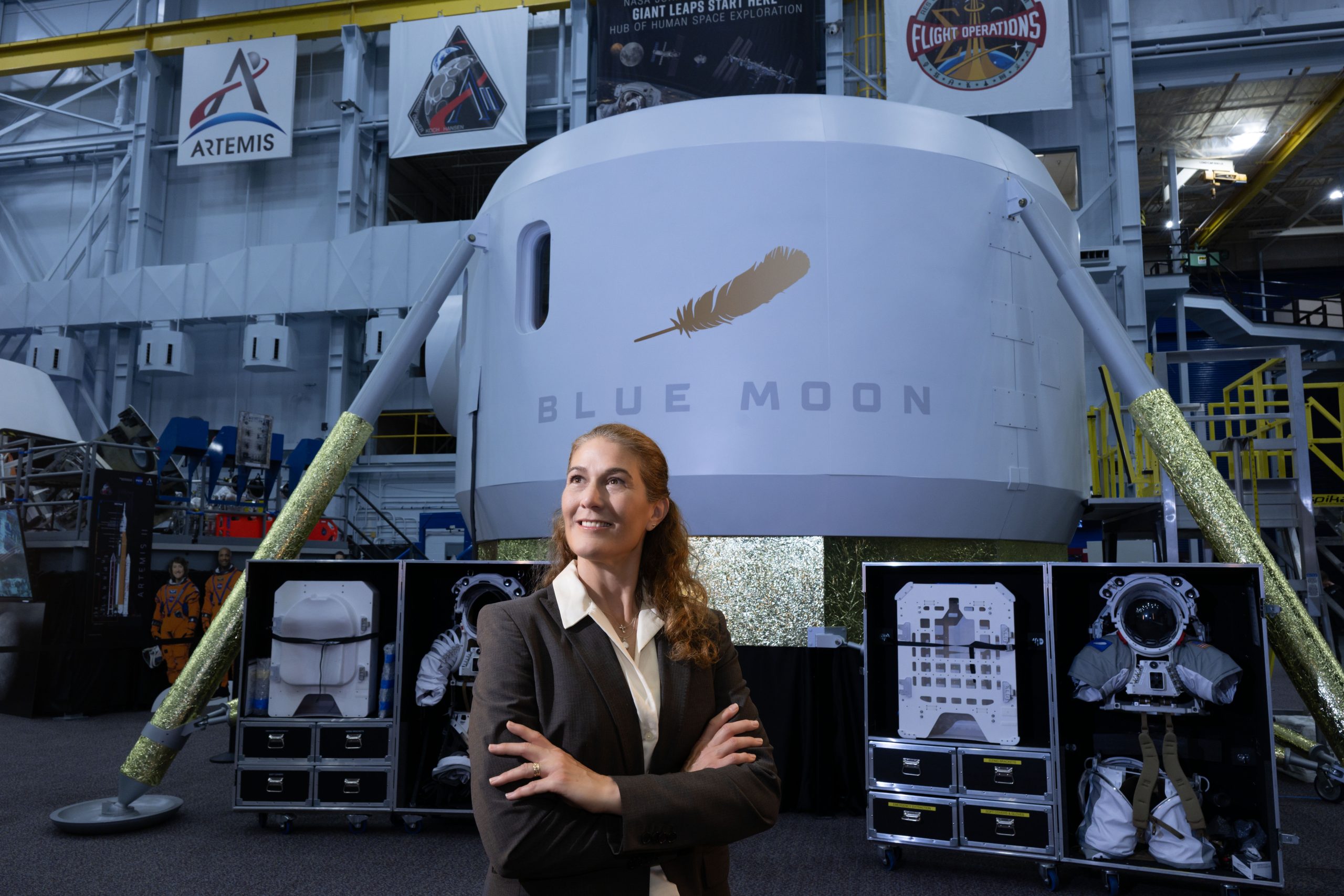
Katie Spicer, a former homemaker and dedicated mother of three, is now a pivotal figure in NASA’s ambitious Artemis program, playing a crucial role in developing the human landing systems designed to return astronauts to the Moon. As the lander integration lead for Blue Origin’s Blue Moon Mark 2 lander, Spicer’s journey showcases a remarkable career shift, demonstrating how diverse experiences can contribute to groundbreaking space exploration. Her work focuses on ensuring the lunar landers are not only technologically sound but also highly functional and user-friendly for future Artemis crews.
From Lab Assistant to Mission Control
Spicer’s path to NASA was unconventional. After dedicating years to her family, she began her space career in a part-time role at NASA’s Life Sciences Laboratory. Here, she meticulously handled tasks like cleaning equipment and assisting scientists, drawing a unique parallel between managing a household and maintaining the critical historic laboratory where Apollo crews were once quarantined and precious Moon rocks were stored. Her career progressed to working with science payloads on the International Space Station, where she gained invaluable experience in real-time space operations. This fast-paced environment ignited a passion that led her to pursue certification as a flight controller. Despite lacking a formal engineering degree, Spicer independently studied engineering principles, undergoing rigorous training and passing certification tests to earn her place in NASA Johnson’s Mission Control Center.
Ensuring Crew Comfort and Mission Success
In her current role, Spicer works within NASA’s Flight Operations Directorate, scrutinizing every aspect of Blue Origin’s Blue Moon Mark 2 lander. This includes evaluating design and development for both test articles and the fully operational lander slated for a crewed lunar landing in 2028. Her focus extends beyond mere technical requirements; she delves into the finer details that impact crew experience and mission success. Spicer considers questions such as:
- How easily can astronauts navigate and operate within the lander?
- Are controls and displays intuitive and accessible in microgravity?
- How user-friendly are the hygiene systems within the confined space?
- Are procedures and training adequate for safe and effective system operation?
By adopting a crew-centric perspective, Spicer ensures that the lander’s design facilitates seamless operations and supports the overall objectives of the Artemis program, bringing humanity one step closer to sustainable lunar exploration.
Source: NASA