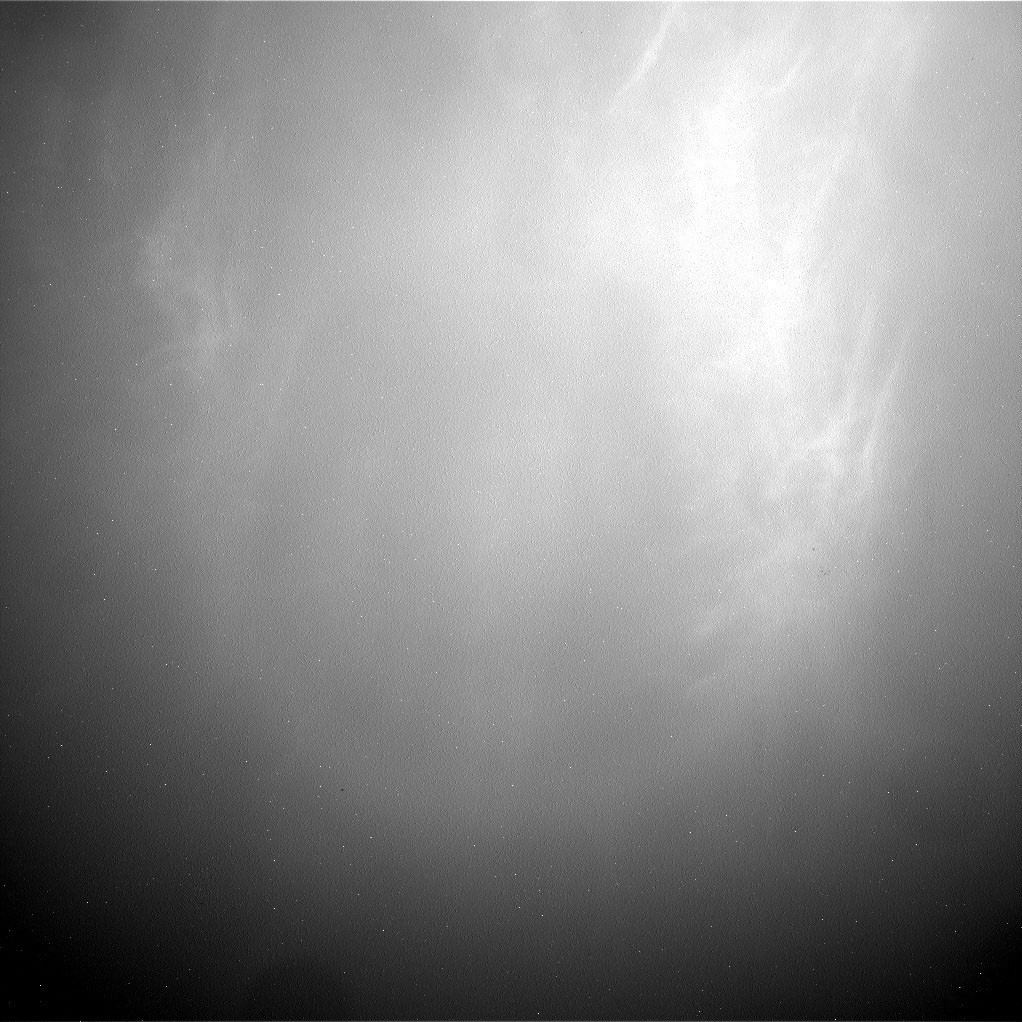
NASA’s Curiosity rover is marking the start of a new Martian year, its 39th, with the arrival of the planet’s first autumn twilight clouds. In recent weeks (sols 5036-5042), the mission team focused on completing drilling operations in the “Basque Lakes” region and analyzing the collected samples. Simultaneously, atmospheric changes on Mars have presented a captivating spectacle: the appearance of high-altitude, iridescent clouds.
Martian Year and Seasonal Shifts
Mars, much like Earth, experiences distinct seasons. The beginning of the 39th Martian year coincides with the end of September on Earth, marking the start of spring in Mars’ northern hemisphere. For Gale Crater, Curiosity’s operational area, this translates to the onset of autumn. This signifies a new observational cycle for Martian astronomers and scientists, tracked by degrees of solar longitude, with the planet’s atmosphere actively responding to these seasonal shifts.
Drilling Completed, New Observations Underway
The rover team has concluded a significant phase of research in the “Basque Lakes” area, conducting further sample analysis with its gas chromatograph/mass spectrometer (GCMS). Despite the energy-intensive nature of this process, the team had ample planning time to integrate it with remote observations using the Mastcam and ChemCam cameras, as well as analyzing drilling residue. A planned traverse to the “Chiu Chiu” region, where intriguing crystalline formations have been observed, is set to begin this weekend. However, the clouds have captured the scientific community’s most significant attention.
Twilight Clouds: A Harbinger of the Season
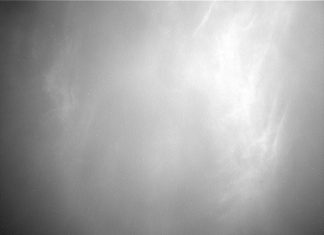
As autumn descends upon Mars, high-altitude twilight clouds are re-emerging. Unlike many other Martian clouds, which are too wispy to be seen with the naked eye or even the rover’s cameras, these clouds are remarkably bright and thus visible in imagery. They form high in the atmosphere and are beautifully illuminated by the low-angled sun at dusk. Curiosity has already captured its first images of these stunning atmospheric phenomena, providing valuable additions to the ongoing data on the Red Planet’s seasonal changes. The team eagerly anticipates further observations of these celestial vistas throughout the Martian autumn.