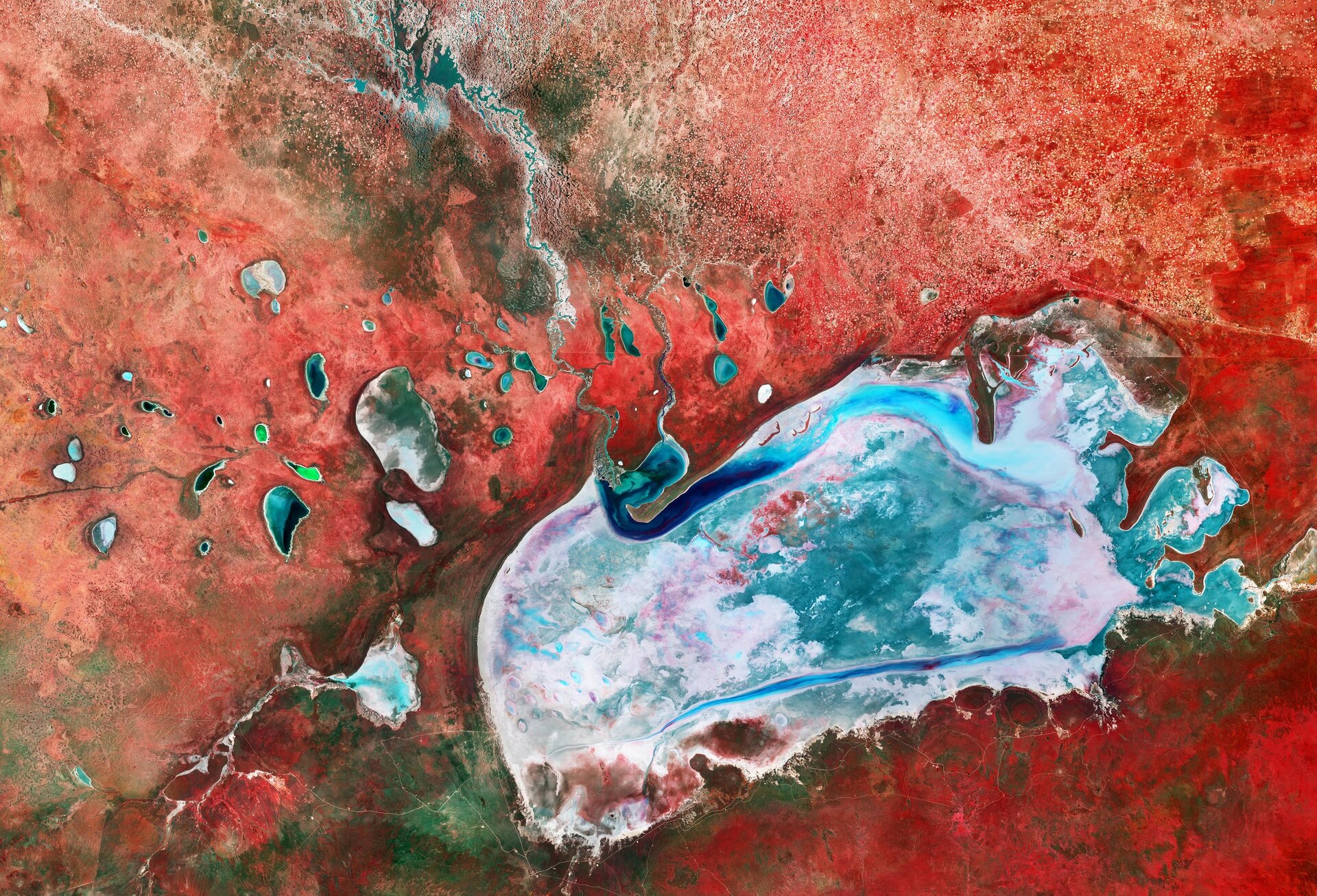
A breathtaking new image captured by the Copernicus Sentinel-2 satellite offers a vibrant, false-color view of Namibia’s Etosha National Park, highlighting its colossal Etosha Pan. This vast salt flat, a defining feature of the region, is showcased alongside numerous smaller salt pans and the surrounding diverse ecosystems. The image, taken on April 5, 2026, at the cusp of the dry season, reveals how the satellite’s advanced sensors can differentiate between salt, water bodies, and vegetation, providing unique insights into this important wildlife sanctuary.
A Shifting Landscape: From White Salt to Blue Waters
The Etosha Pan, stretching an impressive 130 km east to west and covering 4,760 sq km, dominates the landscape. While appearing as a stark white expanse to the human eye, Sentinel-2’s multispectral imaging transforms it into a canvas of blues and greens. Light blue hues indicate areas where water, likely carrying sediment, has settled in the pan, while darker blues signify clearer water. Water also persists in smaller salt pans to the northwest, such as the Natukanaoka Pan, appearing in shades of green and blue. The Ekuma River, a vital watercourse, is seen flowing southwards from Lake Oponono towards the salt flat, a journey of about 170 meters in elevation drop. Lake Oponono itself is a crucial habitat, known for supporting flamingos and cattle, and retaining water between wet seasons.
Vegetation’s Vibrant Story Told in Red
Sentinel-2’s ability to detect light beyond the visible spectrum is vividly demonstrated by the striking red hues that delineate vegetation. This false-color representation, using the near-infrared channel, clearly distinguishes the different types of plant life surrounding the salt pans. The dominant vegetation consists of grasslands, savannas, and mopane woodlands. Mopane trees, a key species in the eastern and central parts of the park, appear as dark, vibrant red, signifying their density and indicating critical habitats for iconic wildlife like elephants, giraffes, and leopards. In contrast, the western and southern savannas, home to wildebeest, lions, and springbok, are also highlighted, though with subtler red tones. Even patches of red on the Etosha Pan itself are noteworthy, suggesting the remarkable adaptation of certain life forms, such as blue-green algae and salt-tolerant grasses, to this challenging, saline environment.