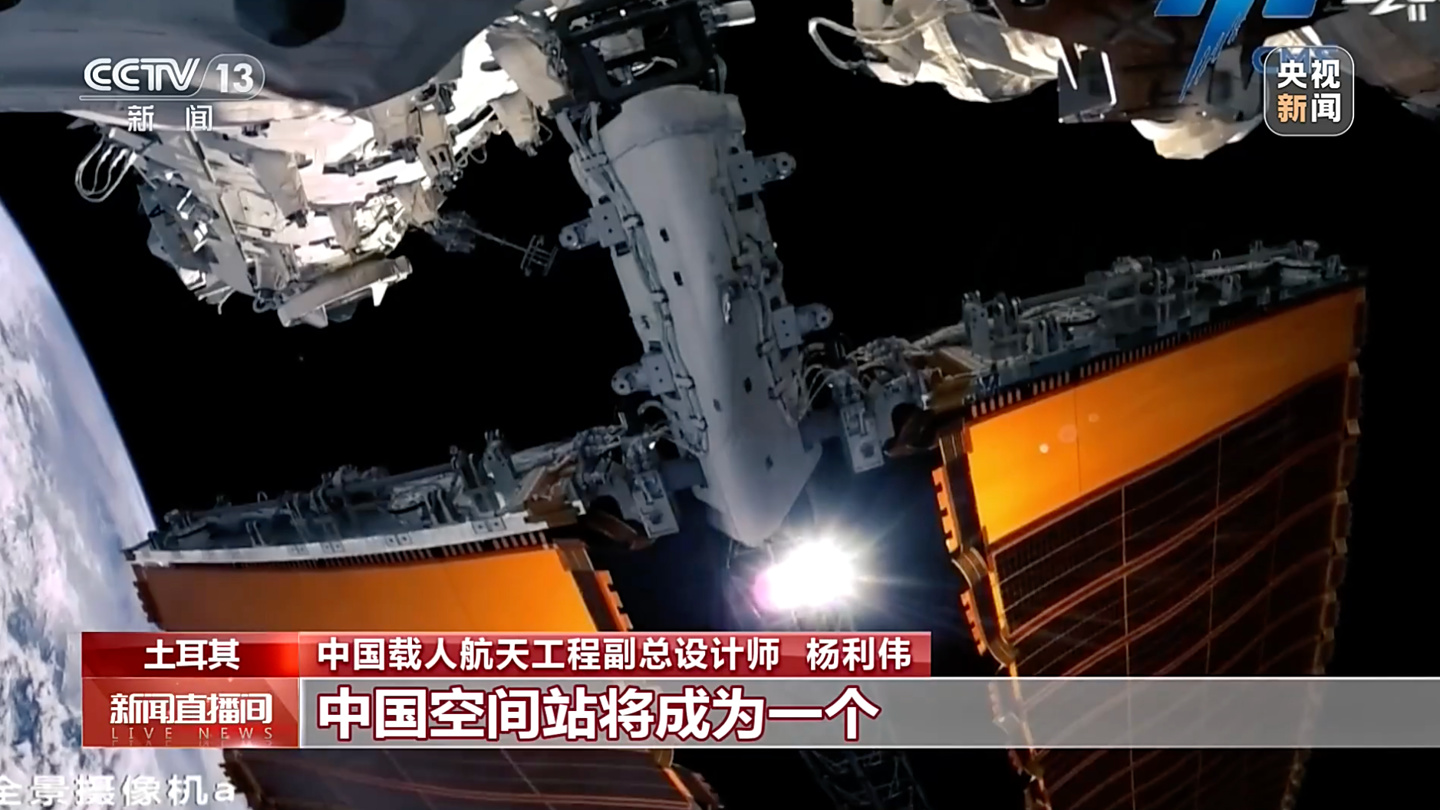
China’s space station is set to transform into a globally accessible experimental platform, welcoming its first international astronauts later this year. Yang Liwei, China’s first man in space and deputy chief designer of the country’s manned space program, made the announcement at the 77th International Astronautical Congress (IAC 2026).
Global Collaboration in Orbit
During the congress, Yang Liwei emphasized that the Chinese space station will be open to scientists worldwide for research endeavors. This initiative aims to foster deeper international cooperation in various fields, including scientific research, astronaut training, providing flight opportunities, and popularizing space science education.
First Foreign Astronauts on the Horizon
Significantly, the space station is slated to host its first batch of foreign astronauts in the second half of this year. Yang Liwei specifically mentioned two reserve astronauts from Pakistan who have demonstrated exceptional performance during their training alongside Chinese astronauts. One Pakistani astronaut is scheduled to fly as a payload specialist on a short-term mission.
Lunar Ambitions and International Partnerships
Beyond the space station, Yang Liwei also touched upon China’s ambitious plans for lunar exploration. He expressed China’s willingness to engage in collaborative efforts with other nations for lunar scientific research and development, including the establishment of a lunar research station. This underscores a broader strategy of international engagement in space exploration.
The announcement signifies a new era for China’s space program, moving towards greater openness and international collaboration. As the nation continues to expand its presence in orbit and on the Moon, partnerships with global scientific communities and space agencies are expected to become increasingly vital.
The development highlights China’s growing capabilities and its commitment to contributing to global space science and exploration efforts. The opening of the space station as an experimental platform is anticipated to accelerate discoveries and foster a new generation of international space scientists and astronauts.